



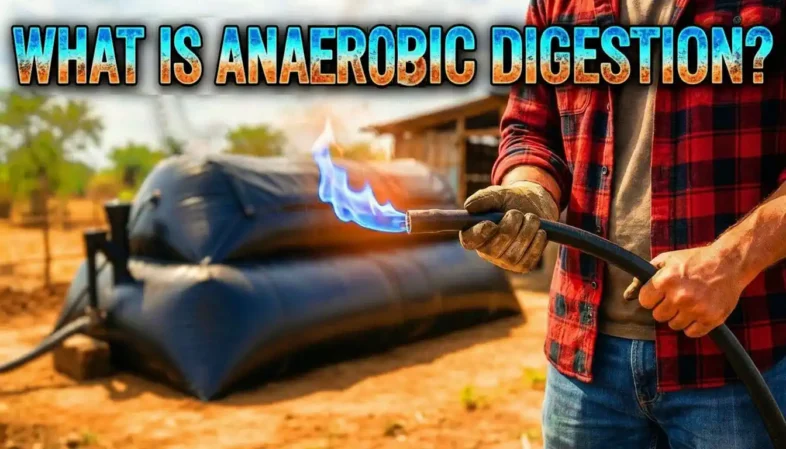
Anaerobic digestion (AD) is a controlled biological process in which communities of microorganisms break down biodegradable organic material in the absence of oxygen. The process takes place in a sealed vessel called an anaerobic digester and produces two main outputs: biogas, an energy-rich gas containing methane, and digestate, the remaining liquid and solid material containing water, nutrients and material that has not been digested.
AD is used to treat materials such as food waste, animal manure and slurry, sewage sludge, crop residues and suitable organic industrial effluents. Depending on how the plant is designed, the biogas may provide heat and electricity or be upgraded to biomethane. Digestate may be used as a fertiliser or soil improver when its quality, treatment and use comply with the relevant rules.
That is the short definition. The practical reality is that an AD plant is simultaneously a biological reactor, a waste or by-product handling facility, a gas-production system and, often, a nutrient-recovery operation. Its success depends on matching the feedstock, process design, gas use and digestate outlet very specifically to the site and the available organic waste supply.
Anaerobic digestion at a glance
Inputs: biodegradable organic materials, water where needed, and a stable population of anaerobic microorganisms.
Process: microorganisms work through a linked sequence of biological reactions inside an oxygen-free digester.
Main outputs: raw biogas – principally methane and carbon dioxide – and digestate. Carbon dioxide may form around 25-50% of raw biogas, depending on the feedstock and process. It is not merely an impurity: where biogas is upgraded to biomethane, the separated biogenic carbon dioxide may be purified for use or captured for permanent storage.
Common energy uses: heat, combined heat and power (CHP), or upgrading to biomethane for grid injection or vehicle fuel.
Common applications: farms, wastewater treatment works, food and drink factories, source-separated food-waste facilities, industrial wastewater treatment and small household or community digesters.
Central limitation: AD is not a machine into which any organic material can be tipped without consequence. Feedstock quality, contamination, loading rate, temperature, retention time, mixing, inhibition, gas leakage and digestate management all matter.
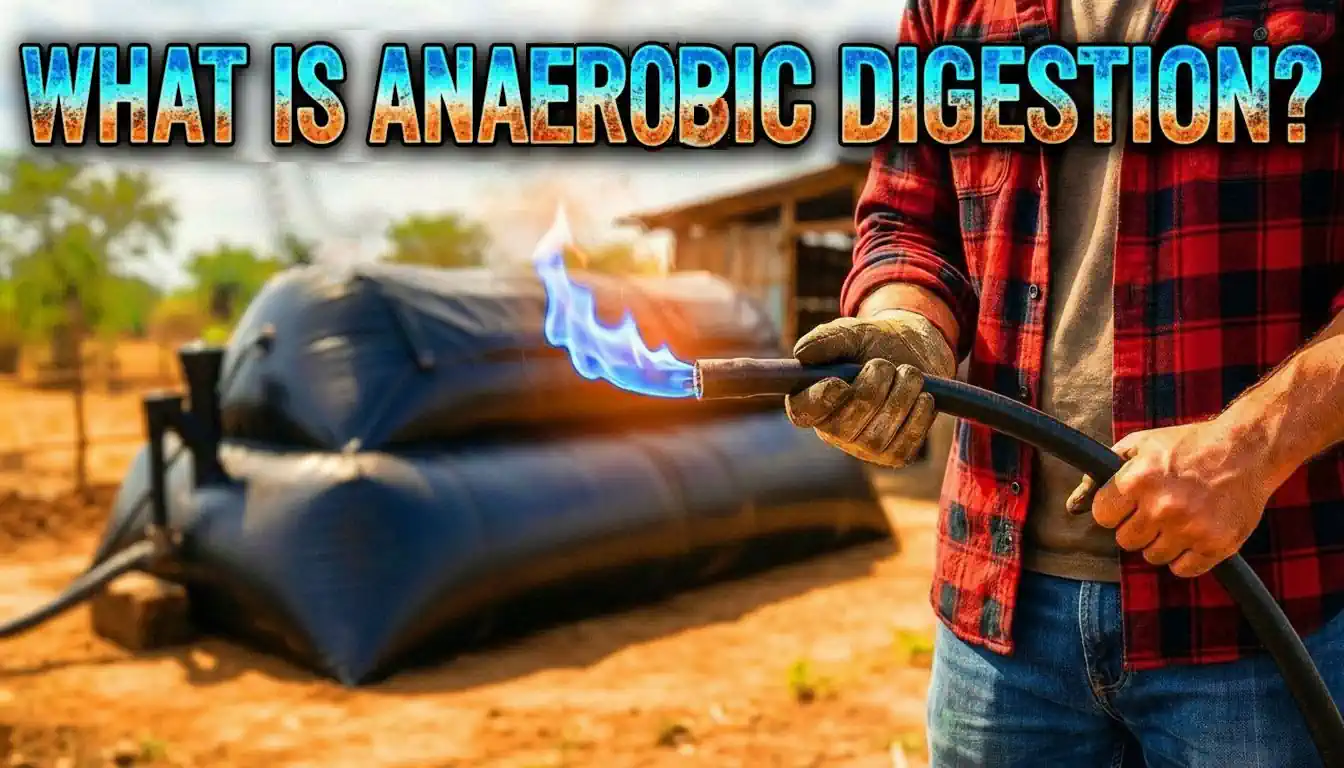
What does “anaerobic” mean?
“Anaerobic” means occurring without oxygen. Natural anaerobic decomposition happens in waterlogged soils, lake sediments, landfill deposits, animal digestive systems and other places where oxygen is absent or quickly consumed.
An engineered anaerobic digester contains and controls this natural process. The vessel is kept gas-tight so that oxygen does not enter and the biogas does not escape. Operators also control factors such as feed rate, temperature, pH, mixing and retention time. The aim is to keep the different microbial groups in balance while capturing the gas and managing the remaining material safely.
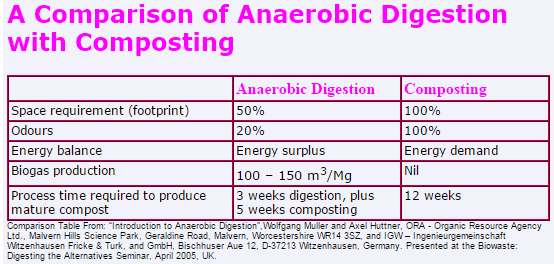
Anaerobic digestion is not the same as composting. Composting is an aerobic process and depends on a supply of oxygen. AD is anaerobic and produces a methane-rich gas. Both can have a place in organic-resource management, and digestate fibre is sometimes composted after digestion, but they are different processes.
How does anaerobic digestion work?
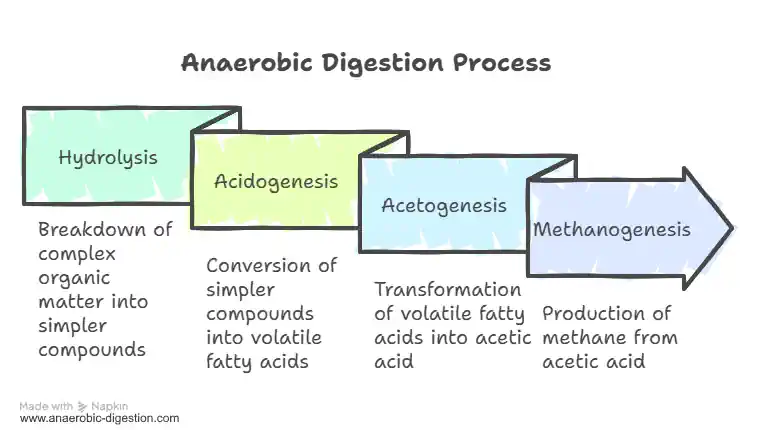
The biology is often described as four stages. They overlap in a working digester and depend on one another rather than occurring as four completely separate batches.
Video: What is Anaerobic Digestion?
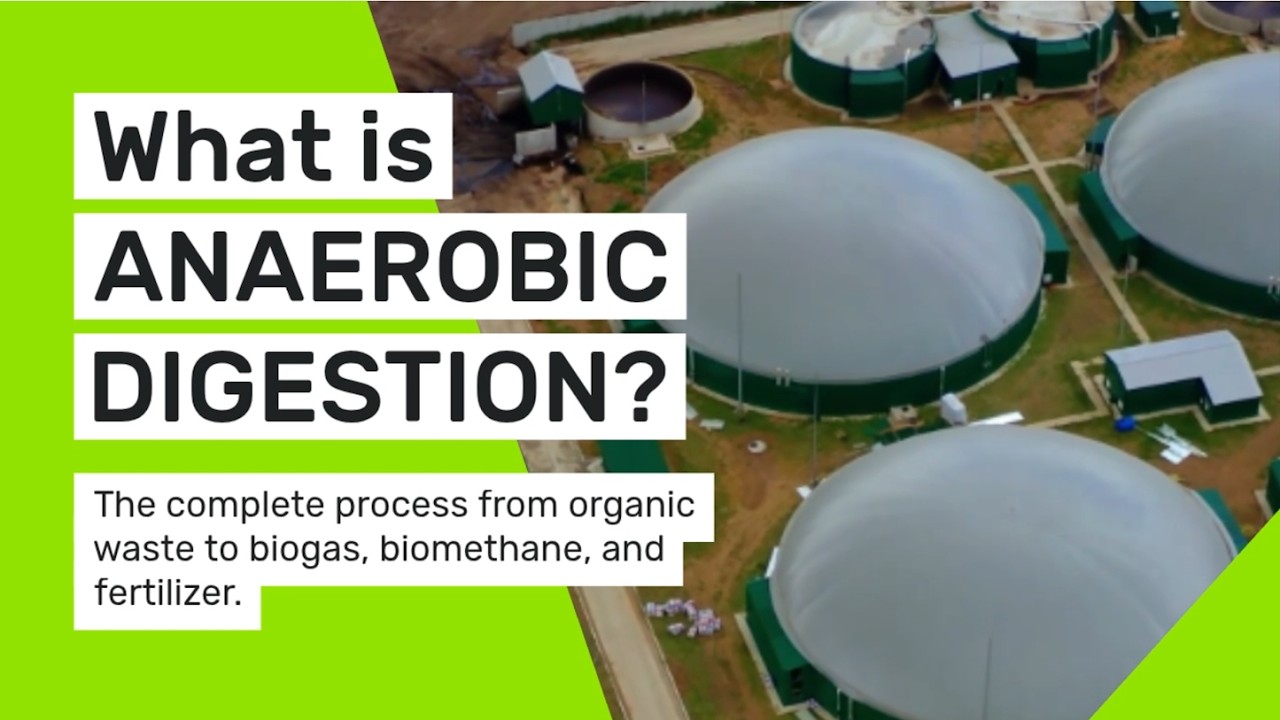
Video: How Does an Anaerobic Digester Work?

In this video, Steve Last explains how an anaerobic digester converts organic material into biogas and digestate.
1. Hydrolysis
Large organic molecules are too big to pass directly into microbial cells. Extracellular enzymes first break carbohydrates, proteins and fats into smaller soluble compounds such as sugars, amino acids and long-chain fatty acids. For fibrous or particulate feedstocks, hydrolysis can be the slow, rate-limiting step.
2. Acidogenesis
Acid-forming microorganisms ferment the soluble products into a mixture that includes volatile fatty acids, alcohols, hydrogen and carbon dioxide. Acid production can be rapid. If the digester is overloaded, acids may accumulate faster than later microbial groups can use them, the pH may fall and methane production may decline.
3. Acetogenesis
Acetogenic microorganisms convert many of the acidogenesis products into acetate, hydrogen and carbon dioxide. These reactions depend on close cooperation between different organisms. In particular, hydrogen-consuming methanogens help keep conditions favourable for the acetogens.
4. Methanogenesis
Methanogenic archaea convert acetate, hydrogen and carbon dioxide into methane and carbon dioxide. Methanogens grow more slowly than many acid-forming organisms and are sensitive to abrupt changes. Stable operation therefore depends on feeding the digester at a rate the whole microbial community can process.
For a detailed treatment of the biology, read The Anaerobic Digestion Process Steps.
What happens in a working AD plant?
The digester is the biological heart of the facility, but it is only one part of the system. A typical plant may include:
- Feedstock reception, inspection and storage.
- Removal of packaging, grit, stones, metals or other contaminants, using suitable food-waste depackaging and separation equipment where required.
- Size reduction, blending, dilution or other preparation.
- Pasteurisation or hygienisation where required.
- Controlled feeding to one or more digesters.
- Heating and mixing, depending on the process design.
- Gas collection, storage, cleaning and use.
- Digestate storage, separation, treatment and use.
- Monitoring, alarms, pressure protection, flare capacity and other safety systems.
The arrangement varies greatly. A farm slurry digester, a dry batch plant treating stackable material, a sewage-sludge digester and a high-rate industrial wastewater reactor are all anaerobic digestion systems, but they do not look or operate alike.

See the anaerobic digestion systems guide for the main configurations and selection factors, and the AD plant design guide for the wider infrastructure.
Which materials can be anaerobically digested?
AD works with biodegradable organic material, particularly wet materials that are awkward to burn or otherwise recover. Common feedstocks include:
- source-separated household and commercial food waste;
- food and drink manufacturing residues;
- cattle slurry, pig slurry, poultry litter and other manures, subject to suitable handling;
- sewage sludge and wastewater solids;
- crop residues, spoiled crops and suitable biomass;
- fats, oils and greases in controlled quantities;
- brewery, distillery and dairy effluents; and
- other biodegradable industrial wastewaters and residues.
What is anaerobic co-digestion?
Anaerobic co-digestion is the simultaneous digestion of two or more different biodegradable feedstocks in the same anaerobic digester. Examples include food waste with animal manure or slurry, food-processing residues with sewage sludge, and crop residues with manure.
The purpose is not simply to put more material through the plant. Different feedstocks can have complementary characteristics. A readily degradable, energy-rich material may be combined with another feedstock that provides buffering capacity, moisture, nitrogen, trace nutrients or a more favourable physical consistency. When the proportions are well chosen, co-digestion can improve nutrient balance, biological stability and, in some circumstances, overall methane yield.
However, combinations that look attractive on paper do not necessarily work well in a full-scale digester. A co-feedstock may introduce excessive ammonia, sulphur, fats, salts, contaminants or rapidly fermentable material. It can also upset the organic loading rate or alter digestate quality. Successful co-digestion therefore depends on feedstock compatibility, characterisation, controlled loading and process monitoring rather than simply mixing organic wastes together.
Co-digestion should not be confused with combining anaerobic digestion with aerobic composting. In co-digestion, the different feedstocks are treated together within the anaerobic process. Composting is a separate process requiring oxygen, although digestate fibre may subsequently be composted as part of an integrated organic-waste treatment system.
For a more detailed explanation, including examples of complementary feedstocks, see Anaerobic Co-Digestion: Feedstock Combinations and Why They Work.
Materials that need caution or pre-treatment
“Organic” does not automatically mean “readily digestible”. Woody material contains lignin, which passes through conventional digestion largely unchanged unless an effective pre-treatment is used. Packaging, plastics, cutlery, grit, stones and metals do not become biogas and can damage pumps, reduce working volume or contaminate digestate. High concentrations of ammonia, salts, sulphides, cleaning chemicals, antibiotics or other toxic compounds can inhibit the microbial process.
Feedstock acceptance should therefore consider:
- biochemical methane potential and realistic full-scale yield;
- dry matter and volatile solids;
- particle size, viscosity and pumpability;
- carbon-to-nitrogen balance and ammonia risk;
- sulphur and likely hydrogen sulphide production;
- physical contamination;
- seasonal variation and security of supply;
- pathogen and animal-by-product controls; and
- the effect on digestate quality and its intended outlet.
Commercial pressure must never override technical feedstock acceptance. A difficult material may arrive with an attractive gate fee, but that income can be overwhelmed by lost production, contamination, blockages, biological inhibition, clean-out costs or damage to the digestate outlet. If the plant has no proven and reliable way to receive, prepare, digest and discharge a feedstock, the correct decision is to refuse it.
What is biogas?
Raw biogas is the gas produced by anaerobic digestion. It normally contains about 50-75% methane, with most of the remainder being carbon dioxide. It may also contain water vapour, hydrogen sulphide, ammonia, nitrogen, oxygen, siloxanes and other trace compounds, depending on the feedstock and process.
Methane is the combustible component. Its concentration determines much of the gas’s energy value. Carbon dioxide does not burn, while water and trace contaminants may need to be removed to protect pipework, engines or upgrading equipment.
Raw biogas can be used in a boiler or in a CHP unit to generate electricity and useful heat. The heat is often important because the digester itself may need to be kept warm. A project that cannot use its heat may obtain less overall value from CHP than a project with a steady nearby heat demand.
For more detail, see biogas composition and the uses of biogas.
What is the difference between biogas and biomethane?
Biogas and biomethane are not interchangeable terms.
Biogas is the raw gas from the digester. It contains methane, carbon dioxide and smaller quantities of other gases and vapours.
Biomethane is produced by cleaning and upgrading biogas. Carbon dioxide, water and contaminants are removed until the gas meets the specification required for its intended use. Biomethane is a near-pure methane product and can, subject to applicable standards, be injected into a gas grid or compressed for use as a vehicle fuel.
Upgrading does not create methane; it separates and concentrates the methane already present in the biogas. The choice between CHP and biomethane depends on plant scale, gas quality, heat demand, grid access, connection cost, support arrangements and the value of the available energy markets.
Read the site’s introduction to biogas upgrading.
What is digestate?
Digestate is the material remaining after digestion. It contains water, microbial biomass, mineralised nutrients and organic or inert material that was not broken down. It is usually a slurry and may be separated into liquid and fibre fractions. In physical terms, a sample of fibrous digestate placed on a free-draining surface may form a heap of fibre while liquid drains away; other digestates remain much more uniformly liquid.
AD reduces biodegradable organic matter and transfers part of the feedstock carbon into biogas. It should not, however, be described as routinely reducing the total wet mass by 50%, because much of that mass is water. Reductions of that order may apply to biodegradable or volatile solids for particular feedstocks and operating conditions. Almost all of the phosphorus and potassium, and most of the nitrogen, remain in the digestate. Some nitrogen may be lost in gaseous emissions, while digestion usually converts a larger share of the remaining nitrogen into ammonium, changing its availability to crops and its potential for ammonia loss. This nutrient retention is why digestate can have fertiliser value. It is also why poor storage or over-application can cause ammonia emissions, nutrient loss, odour, water pollution or excessive nutrient loading.
Digestate quality depends on feedstock quality and process control. Plastic fragments, glass, persistent chemicals, pathogens or unsuitable inputs do not become harmless simply because the material has passed through a digester. A dependable outlet, adequate covered storage and a nutrient-management plan are therefore core project requirements, not afterthoughts.
Whether digestate can be used as a product, fertiliser or soil improver depends on its feedstocks, treatment, quality and the law that applies where it will be used. The more detailed regulatory context is covered in the UK section below.
Digestate characteristics also depend on the type of digester and its associated pre-treatment and separation equipment. It may be a pumpable liquid with very little visible fibre, a slurry that separates readily, or a thick paste containing substantial fibrous material. The following distinctions help explain why digestates from different plants can look and behave so differently.
What types of anaerobic digesters are used?
Digesters can be classified in several overlapping ways.
Wet and dry systems
Wet systems handle pumpable slurries and are common for manure, sewage sludge, food-waste slurries and industrial effluents. Dry or high-solids systems handle material with a higher solids content. Some are mixed continuously; others operate as batch tunnels or garage-type digesters.
Batch and continuous systems
A batch digester is loaded, sealed, allowed to digest and then emptied. A continuous or semi-continuous digester receives feed and removes digestate regularly. Continuous operation can provide steadier gas production but requires dependable feeding and process control.
Common reactor configurations
Examples include covered lagoons, plug-flow digesters, continuously stirred tank reactors (CSTRs), dry batch systems, upflow anaerobic sludge blanket (UASB) reactors and other high-rate wastewater processes. In a plug-flow digester, relatively thick material moves through an elongated reactor in sequence, with newer feed entering behind material already undergoing digestion. Ideally there is limited longitudinal mixing, so the contents progress in a broadly plug-like manner from inlet to outlet. The right configuration depends on solids content, degradability, contamination, flow, climate, required treatment and available capital.
For one practical comparison, see covered lagoon versus plug-flow digesters. The high-solids anaerobic digestion guide covers dry material in more detail.
Mesophilic and thermophilic digestion
Most heated commercial digesters operate in one of two temperature bands.
Mesophilic digestion commonly operates at about 30-40°C, with many plants running near 35-40°C. It is widely used because it can offer robust operation with moderate heating demand.
Thermophilic digestion commonly operates at about 50-60°C. Reaction rates and pathogen reduction can be higher, but heating demand and sensitivity to operating changes may also increase.
These temperature bands reflect adaptation by different microbial communities over evolutionary time. Mesophilic methanogens include organisms adapted to moderate natural environments and to the digestive systems of warm-blooded animals, commonly around 37-40°C. Thermophilic and hyperthermophilic methanogens occur in hotter environments such as hot springs, geothermal subsurface habitats and hydrothermal systems. That evolutionary context helps explain why temperature selects a different community, but it does not prove that one group will tolerate rapid operational change better than the other. In an engineered digester, both communities perform best when temperature and loading are kept stable.
Lower-temperature and ambient digesters are also used, particularly where climate, long retention time or simple construction makes them appropriate. Temperature is only one design variable. Retention time, organic loading rate, mixing, solids retention and feedstock characteristics must be considered together.
Where is anaerobic digestion used?
Agriculture
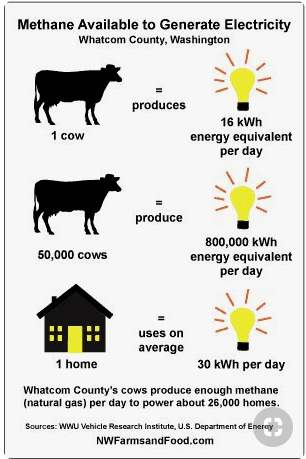
Farm digesters can treat manure and slurry, often with crop residues or permitted co-feedstocks. Biogas may supply farm heat and power or be upgraded, while digestate returns nutrients to land. The project still needs suitable storage, spreading land or another outlet, and controls for odour, ammonia, nutrient loss and methane leakage.
Food and drink manufacturing
Factories may have concentrated, predictable organic residues and a steady demand for heat or gas. On-site treatment can reduce disposal and effluent loads, but cleaning chemicals, variable production and high-strength wastes must be understood.
Municipal food waste
Source-separated food waste can be depackaged and digested at a central plant. Collection quality is crucial. Plastic contamination can damage equipment and reduce confidence in digestate products.
Wastewater treatment
Sewage works use AD to stabilise sludge, reduce volatile solids and recover energy. In a conventional municipal works, the digesters normally treat the concentrated primary and secondary sludges separated from the sewage; they do not receive the full dilute sewage flow. Holding the whole flow for the long retention time used for sludge digestion would require very large heated reactor volumes. High-rate anaerobic wastewater reactors do exist for suitable concentrated effluents and in some warmer-climate applications, but they are different from conventional sewage-sludge digesters. Wastewater plants may also co-digest selected external organic wastes. See anaerobic digestion of sludge.
Industrial wastewater
High-rate anaerobic reactors can treat suitable soluble industrial effluents while producing biogas. These systems can be very different from a farm or food-waste CSTR and may retain microorganisms for much longer than the wastewater itself.
Household and community systems
Small digesters can treat kitchen scraps, animal manure and, in appropriately designed sanitation systems, human excreta. They can provide cooking gas and a liquid effluent in suitable climates and operating conditions. They are not miniature versions of every commercial plant, and gas safety, pathogen control, feedstock hygiene, climate and the safe treatment or use of the effluent still matter. Read Do Home Biogas Digesters Work? before choosing a system.
What are the main benefits of anaerobic digestion?
The benefits are real, but they depend on what AD replaces and how well the whole system is managed.
Capturing methane
Manure stores, lagoons and landfilled organic material can generate methane that escapes to the atmosphere. A well-designed digester captures that methane so it can be used or safely destroyed. The climate benefit is strongest when the alternative would have caused substantial uncontrolled methane emissions and the AD plant itself has low leakage.
Recovering biogenic carbon dioxide
Carbon dioxide commonly makes up roughly one-quarter to one-half of raw biogas. At a CHP plant it leaves mainly in the exhaust after combustion. At a biomethane plant it is separated during upgrading and can potentially be purified for food, beverage, horticultural or industrial use. If biogenic carbon dioxide is captured and stored durably rather than returned to the atmosphere, the arrangement may form part of a bioenergy with carbon capture and storage (BECCS) system. Read more about biogenic carbon capture from biomethane production.
Returning recent carbon rather than fossil carbon
The carbon in food, manure, crops and other recently produced biological material has circulated through the atmosphere, plants, animals and soils on a relatively short timescale. When biogas is burned, its carbon dioxide returns biogenic carbon to that cycle. Burning fossil gas instead releases carbon that was stored underground for geological timescales and adds it to the active atmosphere-ocean-land system. This is why biogenic carbon dioxide is accounted for differently from fossil carbon dioxide. It does not make every biogas project automatically carbon neutral: land-use change, crop production, transport, plant energy, methane leakage and digestate emissions must still be counted across the lifecycle.
Producing controllable renewable energy
Unlike wind and solar generation, stored biogas can be used when required within the limits of the plant’s gas storage and equipment. It can provide heat, power or a renewable gaseous fuel for uses that are difficult to electrify.
Treating wet organic material
AD is particularly useful for wet biodegradable materials that are unsuitable for direct combustion. It can reduce odour and volatile solids and form part of an integrated treatment system.
Recycling nutrients
When digestate is clean, appropriately treated and applied at the right rate, it can return nutrients and some organic matter to land and reduce demand for manufactured fertiliser.
Supporting local resource recovery
AD can connect local waste producers, farms, energy users and nutrient markets. It can turn a disposal liability into useful products, but only where contracts and outlets remain reliable over the project’s life.
What are the disadvantages and risks?
Capital and operating complexity
AD plants require tanks, pumps, pipework, gas storage, gas treatment, controls, safety systems and skilled operation. Feedstock reception and digestate infrastructure can cost as much attention as the digester itself. For a project overview, see anaerobic digestion costs.
Biological instability
Sudden changes in feedstock, overloading, ammonia, sulphide, salinity, toxic chemicals, temperature shocks or inadequate mixing can reduce gas production or cause process failure. Operators need useful monitoring and the authority to reduce or stop feed when the biology is under stress.
Methane leakage
Biogas is beneficial only when it is contained and used or destroyed. Leaks can occur from digesters, pressure-relief devices, pipework, upgrading equipment and digestate storage. The International Energy Agency warns that poor methane control can undermine or even eliminate the climate advantage over fossil natural gas. Gas-tight construction, covered storage, monitoring and leak detection and repair are therefore essential.
For practical methods and the distinction between process releases and leaks, see the site’s guide to fugitive emissions testing for biogas plants.
Safety
Methane is flammable. Hydrogen sulphide is toxic and corrosive. Carbon dioxide can displace oxygen, and gas spaces create pressure and confined-space hazards. AD facilities require competent design, hazardous-area assessment, gas detection, pressure protection, safe isolation, emergency planning and trained operators. Never enter a tank or enclosed space on the assumption that a bad smell will warn you: dangerous gases can overwhelm a person rapidly, and smell is not a reliable control.
Digestate and contamination
Digestate must have a lawful, agronomically appropriate outlet. Contaminants in the feedstock may persist into the digestate. Nutrient application must match crop and soil need, and storage must control methane, ammonia, odour and runoff.
Transport and local impacts
Centralised plants may require many vehicle movements. Poor siting or management can cause noise, odour, mud and traffic problems. The feedstock collection radius and digestate destination belong in the feasibility study.
Is anaerobic digestion renewable and carbon neutral?
Biogas is generally classed as renewable when it is produced from replenishable biological materials. That does not mean every AD project is automatically sustainable or carbon neutral.
A lifecycle assessment should consider:
- what would have happened to the feedstock without the project;
- methane captured or avoided;
- fossil energy displaced;
- energy used by the plant and transport fleet;
- methane leakage from production, upgrading and digestate storage;
- nitrous oxide and ammonia associated with digestate use;
- land-use and fertiliser impacts of any purpose-grown crop; and
- the durability and efficiency of the final energy use.
Waste and residue feedstocks often avoid the food-versus-fuel and land-use concerns associated with purpose-grown energy crops. The public is right to question the use of food crops where it competes with food or feed production, affects food prices or causes damaging land-use change. The climate performance of crop-fed AD must therefore be demonstrated rather than assumed. Evidence from lifecycle studies supports substantial greenhouse-gas benefits for well-managed projects using sustainable wastes and residues, particularly where they avoid uncontrolled methane emissions, but the result remains feedstock- and site-specific. Even then, low leakage and responsible digestate management are necessary for a strong climate result.
Is anaerobic digestion suitable for every organic waste?
No. AD should be selected because it fits the material and the site, not simply because the feedstock contains carbon.
Before proceeding, a developer should be able to answer:
- Is there a secure, well-characterised feedstock supply?
- Can contaminants be prevented or removed?
- Has realistic gas yield been tested rather than assumed?
- Is there a dependable and valuable use for the gas?
- Is there a lawful, practical outlet for all digestate in every season?
- Are grid, road, water, heat and electrical connections adequate?
- Can the operator control biological, mechanical and gas-safety risks?
- Do planning, environmental, animal-by-product and fertiliser rules allow the proposed arrangement?
- Does the business case remain viable under conservative assumptions?
- Is there enough working capital and technical support for commissioning and upset recovery?
The practical guide to increasing biogas production is useful after the fundamentals are sound. Optimisation cannot rescue a project with unsuitable feedstock, no digestate outlet or a weak energy market.
Anaerobic digestion in the UK
UK requirements depend on the feedstock, plant scale, location and use of the outputs. A project may need planning permission, an environmental permit or registered exemption, animal-by-product approval, DSEAR assessment, gas-grid agreements and compliance with rules governing digestate storage and land application.
In England, the Environment Agency publishes standard rules and appropriate-measures guidance for biological treatment. It also publishes separate resource frameworks for digestate and biomethane from waste. Where animal by-products or catering waste are accepted, Animal By-Products rules can require approval, hygienisation, validation, sampling and controls intended to protect animal and public health. Related EU rules apply across the European Union, although national implementation and competent authorities differ. These documents change, so a static introductory article should link to current guidance rather than reproduce detailed thresholds that may become obsolete.
The future potential of anaerobic digestion
Anaerobic digestion has repeatedly been dismissed by parts of the energy industry as too small to matter. That view misses its broader role. AD is not only an electricity technology; it can manage organic residues, cut methane emissions, supply renewable gas, recycle nutrients and support wastewater treatment.
In my experience, estimates of the usable resource have tended to expand as more organic streams are recognised and better collection, pre-treatment and conversion methods are developed. Agricultural residues, unavoidable food waste, manures, industrial effluents, algae and some forestry or processing residues may all contribute, although each needs an honest assessment of sustainability and digestibility.
The industry’s practical ceiling is therefore not a single fixed number. It is shaped by the organic resources society chooses to collect, the materials it can produce sustainably, the technology it develops and, crucially, the standard to which plants control methane and recycle nutrients. The size of the opportunity is, to a meaningful extent, a result of the choices we make.

Frequently asked questions
What is anaerobic digestion in simple terms?
It is the breakdown of biodegradable material by microorganisms without oxygen, inside a controlled system that captures biogas and produces digestate.
What are the main products of anaerobic digestion?
The two principal outputs are biogas and digestate. Biogas contains methane and carbon dioxide. Digestate contains water, nutrients and undigested material.
How long does anaerobic digestion take?
There is no single retention time. High-rate wastewater reactors may retain the liquid for hours or days, while slurry, crop and food-waste digesters commonly retain material for weeks, and low-temperature lagoons may require much longer. Design depends on feedstock, temperature, reactor type and treatment objective.
Does anaerobic digestion remove pathogens?
It can reduce pathogens, especially when temperature and time are controlled, but it should not be assumed to sterilise every feedstock. Required pasteurisation or hygienisation steps depend on the material and local rules.
Does an anaerobic digester smell?
The sealed digestion process contains odorous material, but reception, pre-treatment, digestate storage and spreading can create odour if poorly designed or managed. Odour control is a whole-site responsibility.
Can woody biomass be anaerobically digested?
Most untreated woody material is a poor conventional AD feedstock because lignin is resistant to anaerobic breakdown. Some forestry and processing residues may become usable after suitable pre-treatment or through other conversion routes, but “biomass” should not be treated as a synonym for “digestible”.
Is biogas the same as natural gas?
No. Raw biogas contains substantial carbon dioxide and trace contaminants. Biomethane is upgraded biogas that can be made suitable for uses similar to fossil natural gas.
Can anaerobic digestion replace all fossil gas?
No single organic resource should be presented as limitless. Sustainable biogas and biomethane can make a valuable contribution, particularly from wastes and residues and in hard-to-electrify uses, but supply is constrained by feedstock availability, competing uses, sustainability, infrastructure and cost.
What is the first step in assessing an AD project?
Start with a defensible feedstock and outlet assessment: quantity, composition, seasonality, contamination, likely gas yield, energy use and digestate destination. Technology selection comes after those fundamentals.
Continue your research
- The Anaerobic Digestion Process Steps
- Anaerobic Digestion Systems
- Anaerobic Digestion Plant Design
- Biogas Composition
- Uses of Biogas
- Home Biogas Digesters
About the author
Steve Last, CEng, MICE, MCWIM, is a UK-based environmental engineering consultant with over 25 years’ experience in anaerobic digestion, biogas, landfill gas and waste management projects. Through IPPTS Associates he has worked on waste treatment, resource recovery and environmental protection projects in the UK and internationally.
If you are assessing an AD project, troubleshooting an existing facility or need independent technical input, contact Steve Last. The contact page also provides an email alternative.
Authoritative sources and further reading
- US Environmental Protection Agency, Basic Information about Anaerobic Digestion.
- US Environmental Protection Agency, AgSTAR Project Development Handbook.
- US Environmental Protection Agency, Environmental Benefits of Anaerobic Digestion.
- US Environmental Protection Agency, Frequent Questions about Anaerobic Digestion.
- International Energy Agency, Outlook for Biogas and Biomethane: Key Issues Affecting Projects.
- International Energy Agency, Assessing the Sustainable Potential and Cost of Feedstocks.
- Intergovernmental Panel on Climate Change, Treatment of biogenic carbon dioxide in greenhouse-gas inventories.
- Environment Agency, Biological Waste Treatment: Appropriate Measures.
- Environment Agency, Anaerobic Digestate Resource Framework.
- Environment Agency, Biomethane from Waste Resource Framework.
- Animal and Plant Health Agency, Using animal by-products at compost and biogas sites.
- European Union, Commission Regulation (EU) No 142/2011: animal by-products in biogas and composting plants.
- Health and Safety Executive, Disposal and Energy Recovery – Anaerobic Digestion.
- Microorganisms, Isolation of a Novel Thermophilic Methanogen and the Evolutionary History of the Class Methanobacteria.
- Engineering in Life Sciences, Effects of anaerobic digestion on digestate nutrient availability and crop growth.



This is the most suitable blog for anyone who wants to find out about the topic of anaerobic digestion which most people call biogas.
Rarely I leave a comment/ review
Well presented material
Millions of people will get benefit of this amazing material
Thanks a million