



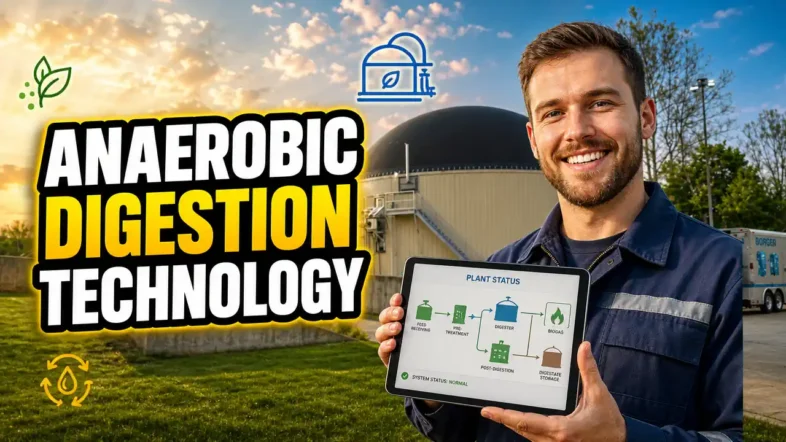
Anaerobic digestion technology covers the biological, mechanical and process-engineering systems used to convert organic materials into biogas and digestate in the absence of oxygen. It includes far more than the digester vessel itself.
Modern AD technology can involve feedstock preparation, pasteurisation, pumps, mixers, process monitoring, biological control, gas cleaning, biomethane upgrading, digestate separation, nutrient recovery and increasingly sophisticated automation.
The correct technology depends on what is being treated and what the project is intended to achieve. A dairy-slurry digester, a food-waste plant, an industrial wastewater reactor and a sewage-sludge digestion facility can all use anaerobic digestion while relying on very different reactor designs and operating strategies.
This guide provides an overview of the principal anaerobic digestion technologies in use today, explains how they differ, and links to our more detailed guides where each specialist subject is covered in depth.
Originally published in 2014. Completely revised and expanded for 2026.
Key Takeaways
- Anaerobic digestion is not one single technology. It is a family of biological treatment processes using different reactor types, temperatures, solids concentrations and process configurations.
- CSTR digesters remain one of the most widely used technologies for pumpable agricultural, food-waste and sewage-sludge feedstocks.
- Plug-flow and high-solids systems can be better suited to thicker or fibrous substrates where conventional complete mixing would require excessive dilution or pumping.
- UASB and other high-rate reactors are particularly important for soluble industrial wastewater because they retain active biomass while allowing relatively short hydraulic retention times.
- Two-stage anaerobic digestion separates acid-forming and methane-forming stages so that different microbial communities can be operated under more suitable conditions.
- Modern AD plants increasingly integrate gas upgrading, advanced monitoring and digestate treatment rather than treating the digester as an isolated vessel.
- There is no universally “best” digester technology. Feedstock characteristics, solids content, biodegradability, contamination, scale, energy use, digestate requirements and operating competence should determine the process choice.
What Is Anaerobic Digestion Technology?
Anaerobic digestion technology is the engineering application of naturally occurring anaerobic microbial processes to treat biodegradable material and recover useful products.
The biological process itself proceeds through four linked stages:
- Hydrolysis – complex organic materials are broken into soluble compounds.
- Acidogenesis – those compounds are converted into volatile fatty acids, alcohols, hydrogen and carbon dioxide.
- Acetogenesis – intermediate products are converted mainly into acetate, hydrogen and carbon dioxide.
- Methanogenesis – methanogenic archaea convert suitable intermediates into methane-rich biogas.
For a general explanation of the biology itself, see our main guide to What Is Anaerobic Digestion?.
This page focuses instead on how engineers configure the technology around that biological process.
Anaerobic Digestion Technology Is a Complete Process Train
An AD plant should not be thought of simply as a tank in which waste produces methane.
A modern installation may include:
- feedstock reception;
- screening and contaminant removal;
- depackaging;
- maceration or size reduction;
- pasteurisation;
- feed pumps;
- mixers;
- one or more digesters;
- heating systems;
- pH and process-control instrumentation;
- gas holders;
- hydrogen sulphide removal;
- biogas drying;
- CHP engines;
- biogas upgrading;
- digestate separation;
- nutrient recovery; and
- storage and export systems.
The performance of the whole plant therefore depends on how these technologies work together.
For more detail on individual plant components, see our Anaerobic Digestion Equipment guide.
Main Types of Anaerobic Digestion Technology
AD technologies can be classified in several different ways.
The most useful distinctions include:
- wet vs dry digestion;
- continuous vs batch operation;
- mesophilic vs thermophilic operation;
- single-stage vs multi-stage digestion;
- complete-mix vs plug-flow reactors;
- low-rate vs high-rate systems; and
- suspended-growth vs retained-biomass reactors.
These categories overlap. For example, a plant may be a continuous, mesophilic, wet, single-stage CSTR, while another may be a batch, high-solids, dry digestion system.
For a plant-type comparison, see our guide to Types of Biogas Plants.
1. Continuous Stirred Tank Reactors – CSTR Digesters
The continuous stirred tank reactor, or CSTR, is one of the most important anaerobic digestion technologies used for pumpable organic slurries.
Feedstock is added regularly while an approximately equivalent quantity of digestate leaves the reactor.
Mixing is used to keep the contents reasonably homogeneous and distribute:
- fresh feed;
- microorganisms;
- heat;
- alkalinity; and
- trace nutrients.
CSTR technology is widely used for:
- food waste;
- farm slurries;
- energy-crop silage;
- sewage sludge;
- mixed organic wastes; and
- co-digestion.
Advantages include flexibility and familiarity.
Potential disadvantages include:
- energy demand for mixing;
- possible grit and sediment accumulation;
- scum formation;
- large tank volume; and
- mechanical-maintenance requirements.
Mixer selection itself is an important specialist subject. See our guide to Anaerobic Digester Mixing Systems.
2. Plug-Flow Anaerobic Digesters
Plug-flow digesters are designed so that substrate moves progressively through the reactor rather than being fully mixed throughout the whole tank volume.
They can be well suited to thicker materials, including some:
- manures;
- crop residues;
- fibrous substrates; and
- high-solids agricultural feedstocks.
One attraction is that a plug-flow process can reduce the degree of complete mixing required.
However, successful operation depends heavily on:
- consistent feed rheology;
- adequate solids movement;
- prevention of short-circuiting;
- temperature control; and
- avoidance of blockages.
Plug-flow and covered-lagoon systems are particularly important in agricultural AD technology, especially where manure is the principal feedstock.
3. Covered Anaerobic Lagoons
Covered lagoons are among the simplest large-scale anaerobic digestion technologies.
A lined lagoon receives dilute organic material, usually manure or wastewater, and a gas-tight cover captures methane generated within the lagoon.
Advantages can include:
- low mechanical complexity;
- relatively low capital cost per unit of treatment volume;
- large hydraulic capacity; and
- good suitability for warm climates and dilute feedstocks.
Limitations include:
- large land requirement;
- lower volumetric loading;
- strong dependence on temperature;
- less process control than heated tank digesters; and
- limited suitability for thick or highly contaminated feedstocks.
Covered lagoons remain particularly relevant to manure management in suitable climates.
4. High-Solids and Dry Anaerobic Digestion
High-solids or dry anaerobic digestion is designed for substrates that are too thick to behave like conventional pumpable slurry.
Typical feedstocks can include:
- source-separated organic municipal waste;
- garden waste mixtures;
- crop residues;
- fibrous organic material; and
- stackable biodegradable solids.
Dry digestion systems may be:
- batch tunnel systems;
- garage-style digesters;
- vertical plug-flow systems; or
- two-stage dry/wet processes.
Batch systems commonly use recirculated percolate to distribute microorganisms and soluble organic matter through the solid feedstock.
One advantage is reduced dilution-water demand.
However, solids handling, loading, percolate distribution and gas-tight doors can add their own mechanical and operational challenges.
See our specialist guide to High-Solids Anaerobic Digestion.
5. Batch Anaerobic Digestion
In a batch process, a defined quantity of substrate is placed in a digester, sealed and allowed to digest for a specified period before the reactor is emptied.
Batch technology is particularly common in dry digestion.
Several reactors are often operated out of phase so that:
- one is being filled;
- several are producing gas; and
- another is being emptied.
This can provide an approximately continuous total gas output even though each reactor operates in batches.
6. Two-Stage Anaerobic Digestion
Two-stage anaerobic digestion separates the acid-forming stages from the main methane-producing stage.
In a conventional single-stage digester, hydrolysis, acidogenesis, acetogenesis and methanogenesis all occur within the same reactor environment.
But the organisms responsible for those processes do not all have identical preferred conditions.
By separating the stages, operators may be able to optimise:
- pH;
- retention time;
- loading;
- mixing; and
- microbial conditions
for each phase independently.
Potential benefits include:
- greater process stability;
- improved hydrolysis of difficult substrates;
- better protection of methanogens from rapid acidification; and
- higher conversion under suitable circumstances.
The trade-off is additional reactor volume, pumps, controls and capital cost.
See our dedicated guide to Two-Stage Anaerobic Digestion.
7. UASB and High-Rate Anaerobic Wastewater Reactors
Upflow Anaerobic Sludge Blanket – UASB – technology is fundamentally different from a conventional mixed-tank digester.
Wastewater flows upward through a dense bed of biologically active anaerobic sludge granules.
The microorganisms are retained inside the reactor while treated liquid leaves the system.
This allows the solids retention time to be much longer than the hydraulic retention time.
That is why high-rate anaerobic reactors can treat large soluble organic loads using comparatively compact vessels.
They are particularly relevant to industrial effluents from sectors such as:
- brewing;
- distilling;
- food and beverage production;
- starch processing;
- pulp and paper; and
- other industries producing high-strength soluble wastewater.
Other retained-biomass technologies include:
- EGSB reactors;
- anaerobic filters;
- fixed-film reactors; and
- anaerobic membrane bioreactors.
These should not be regarded as direct substitutes for conventional CSTR digesters treating fibrous solids.
8. Anaerobic Membrane Bioreactors
Anaerobic membrane bioreactors – AnMBRs – combine anaerobic biological treatment with membrane solids separation.
The membrane allows treated liquid to leave while retaining biomass and suspended solids.
This can provide:
- very long solids retention;
- high biomass concentration;
- good effluent quality;
- compact process volume; and
- improved treatment of some difficult wastewaters.
Challenges include:
- membrane fouling;
- energy demand;
- membrane cleaning;
- capital cost; and
- process complexity.
AnMBRs are an important example of how anaerobic digestion technology is increasingly overlapping with advanced wastewater-treatment technology.
Wet vs Dry Anaerobic Digestion Technology
The distinction between wet and dry digestion is fundamentally about solids concentration and material handling.
Wet AD
Wet systems use material that can be pumped and mixed as slurry.
Advantages include:
- well-established pumps and pipework;
- continuous feeding;
- good process mixing; and
- wide commercial experience.
Dry AD
Dry systems treat higher-solids material that may be stackable or difficult to pump.
Advantages can include:
- less dilution water;
- smaller liquid volumes;
- good compatibility with source-separated organic waste; and
- reduced pumping of fibrous material.
The boundary is not absolute. The practical dividing point depends partly on rheology and on what the available pumps and mixers can handle reliably.
Mesophilic vs Thermophilic Anaerobic Digestion
Most engineered AD systems operate in either the mesophilic or thermophilic temperature range.
Mesophilic Digestion
Mesophilic digestion commonly operates around the mid-30s °C.
Advantages often include:
- good biological stability;
- lower heating demand;
- broad operating experience; and
- less sensitivity to rapid process changes than some thermophilic systems.
Thermophilic Digestion
Thermophilic digestion operates at higher temperatures, often around the low-to-mid 50s °C.
Potential advantages include:
- faster reaction rates;
- improved pathogen reduction;
- potentially shorter retention times; and
- enhanced breakdown of some substrates.
Potential disadvantages include:
- greater heat demand;
- higher sensitivity to ammonia and process upset in some applications; and
- greater control requirements.
Technology selection should therefore consider both energy balance and biological stability.
Anaerobic Digestion of Biomass
Plant biomass can be an effective AD feedstock, but fibrous lignocellulosic material can be comparatively slow to hydrolyse.
Technology options can include:
- size reduction;
- ensiling;
- mechanical pretreatment;
- thermal pretreatment;
- biological pretreatment; and
- co-digestion with more readily degradable substrates.
Agricultural energy-crop digesters do not normally rely on fresh crop being available continuously through the year. Crops such as maize are typically ensiled and stored in silage clamps so that feed can be supplied consistently outside the harvest period.
See our guide to Anaerobic Digestion of Biomass.
Anaerobic Digestion of Sewage Sludge
Sewage-sludge digestion is one of the longest-established industrial applications of AD.
Modern sludge-digestion technology may combine:
- sludge thickening;
- thermal hydrolysis;
- mesophilic or thermophilic digestion;
- gas storage;
- CHP or biomethane production;
- dewatering; and
- biosolids treatment.
Thermal hydrolysis is particularly important in some large sludge-treatment centres because it can disrupt sludge structure before digestion, improving biodegradability and changing the rheology of the feed.
See our dedicated guide to Anaerobic Digestion of Sludge.
Food-Waste Anaerobic Digestion Technology
Food-waste plants usually require more front-end processing than simple manure digesters.
Typical technology may include:
- weighing and reception;
- depackaging;
- screening;
- grit removal;
- maceration;
- pasteurisation where required;
- buffer storage;
- controlled feeding;
- CSTR digestion;
- gas storage;
- gas utilisation or upgrading; and
- digestate treatment.
Removing plastics, grit and other contaminants before digestion is increasingly important because these materials can accumulate in tanks, damage pumps and mixers, and contaminate digestate.
Co-Digestion Technology
Co-digestion means processing more than one feedstock within the same anaerobic digestion system.
It can provide benefits where different substrates complement one another in terms of:
- carbon-to-nitrogen ratio;
- moisture;
- trace nutrients;
- alkalinity;
- biogas yield; and
- seasonal availability.
However, technical suitability does not automatically mean regulatory permission.
No operator should introduce a new co-digestion feedstock unless the plant’s environmental permit or other applicable authorisation allows it.
This is particularly important where an agricultural AD plant operating under a relatively light regulatory regime proposes to accept food waste or another controlled waste stream.
Anaerobic Digestion Process Control Technology
Modern AD plants increasingly rely on instrumentation and data rather than operator judgement alone.
Common measurements include:
- temperature;
- pH;
- alkalinity;
- volatile fatty acids;
- FOS/TAC;
- feed flow;
- organic loading;
- gas flow;
- methane concentration;
- hydrogen sulphide;
- tank level;
- gas pressure; and
- electrical output.
PLC and SCADA systems can combine these measurements into automated control strategies.
But automation does not remove the need to understand the biology.
For example, pH can remain apparently normal while volatile fatty acids accumulate in a strongly buffered digester.
For more detail, see our guides to biogas pH control equipment and FOS/TAC process control.
Anaerobic Digestion Mixing Technology
Mixing technology can have a major influence on effective digester volume and process performance.
Options include:
- submersible mixers;
- side-entry mixers;
- top-entry mixers;
- external pumped recirculation;
- gas mixing; and
- combined systems.
Mixing should be sufficient to distribute substrate and prevent excessive settling or crust formation without wasting unnecessary energy.
More mixing is not automatically better.
The correct approach depends on tank geometry, substrate rheology, solids concentration and process requirements.
Anaerobic Digestion Pumping Technology
AD feedstocks can be difficult to pump because they may contain:
- fibres;
- high solids;
- grit;
- viscous slurry;
- food particles; and
- occasional contaminants.
Pump types used in AD include:
- centrifugal pumps;
- chopper pumps;
- progressive-cavity pumps;
- rotary-lobe pumps; and
- submersible pumps.
Pump technology should be selected for the actual feedstock and duty rather than simply by nominal flow rate.
See our guide to Anaerobic Digestion Pumps.
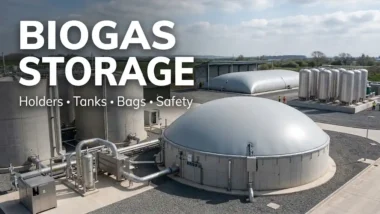
Biogas Storage Technology
AD plants usually produce gas continuously, while downstream gas use may fluctuate.
Storage therefore provides a buffer between production and consumption.
Modern commercial plants commonly use:
- double-membrane gas holders;
- stand-alone membrane holders; or
- integrated digester-roof gas storage.
Gas storage is normally measured in hours of production rather than intended as long-term raw-gas storage.
For the full overview, see our Biogas Storage pillar.
Biogas Cleaning and Upgrading Technology
Biogas technology no longer ends with CHP generation.
Raw biogas can now be upgraded to biomethane by removing carbon dioxide and unwanted contaminants.
Commercial upgrading technologies include:
- membrane separation;
- water scrubbing;
- pressure swing adsorption;
- amine scrubbing;
- physical solvent systems; and
- cryogenic methods.
This enables biomethane to be used for:
- gas-grid injection;
- Bio-CNG;
- Bio-LNG;
- industrial heating; and
- replacement of fossil natural gas.
Recent 2026 reviews continue to identify biogas upgrading as one of the major areas of AD technology development, alongside process intensification, pretreatment and advanced monitoring. See this 2026 review of recent AD advances.
For a full comparison, see our pillar on Biogas Upgrading Technologies.
Digestate Processing Technology
Digestate is not merely a residue to be discarded.
Modern plants increasingly use technology to:
- separate fibre and liquor;
- dewater solids;
- recover nutrients;
- concentrate ammonium;
- reduce transport volume;
- produce fertiliser products; and
- improve storage and spreading characteristics.
The best approach depends on nutrient demand, land availability, digestate quality, transport distance and regulation.
Technology that produces more biogas but creates an unmanageable digestate problem is not necessarily a successful overall process.
Feedstock Pretreatment Technology
Hydrolysis can be the rate-limiting stage for some difficult feedstocks.
Pretreatment technologies aim to make organic material more accessible to microorganisms.
Methods include:
- mechanical size reduction;
- thermal treatment;
- thermal hydrolysis;
- chemical treatment;
- enzymatic treatment;
- ultrasound;
- pressure disruption; and
- biological pretreatment.
But more pretreatment is not always better.
The additional methane yield must justify:
- energy use;
- capital cost;
- maintenance;
- chemical consumption; and
- process complexity.
Recent reviews continue to identify pretreatment and hydrolysis improvement as important areas of process intensification, particularly for complex biomass.
Fixed-Dome and Floating-Drum Digesters
Simple AD technologies remain highly important globally.
Fixed-Dome Digesters
Fixed-dome digesters are commonly built from masonry or concrete and incorporate gas storage within a rigid dome above the digestion chamber.
Advantages include:
- few moving parts;
- local construction;
- long potential service life; and
- low electrical requirement.
Floating-Drum Digesters
Floating-drum designs use a movable gas holder that rises and falls according to gas volume.
They provide relatively stable gas pressure but can require more maintenance because exposed metal gas drums may corrode.
These systems should not simply be dismissed as obsolete “low-tech” alternatives. Modern research continues to examine improvements in fixed-dome, floating-drum and tubular biodigester designs, including better thermal control, materials and mixing.
Tubular and Flexible Biogas Digesters
Flexible tubular digesters can provide low-cost AD where:
- climate is suitable;
- feedstock is relatively simple;
- low gas pressure is acceptable; and
- local operating requirements favour simplicity.
Modern polymer materials have improved substantially compared with early polyethylene systems.
They remain especially relevant to small farms, rural communities and decentralised energy applications.
Modern Anaerobic Digestion Technology Is Becoming More Integrated
The most important development in AD technology may not be one new reactor design.
It is the increasing integration of:
- feedstock preparation;
- biological process control;
- gas upgrading;
- nutrient recovery;
- emissions monitoring;
- digital automation;
- renewable-electricity integration; and
- energy-market optimisation.
Recent research increasingly treats anaerobic digestion as an integrated system rather than simply a methane-producing tank. A 2026 systems review of biomethane production highlights feedstock selection, pretreatment, digester operation, upgrading, methane slip and digestate management as interconnected parts of the same value chain.
Digital Monitoring, Sensors and Machine Learning
AD plants are also becoming more data-driven.
Potential developments include:
- online VFA measurement;
- continuous gas-quality monitoring;
- automatic feed-rate optimisation;
- predictive maintenance;
- digital twins;
- machine-learning models; and
- advanced alarm systems.
The objective is not automation for its own sake.
The value lies in detecting instability earlier, reducing methane losses, improving equipment availability and optimising feed and energy output.
Biological Methanation and Power-to-Gas
One emerging technology connects anaerobic digestion with renewable hydrogen.
Hydrogen can be supplied to suitable methanogenic microorganisms, which convert carbon dioxide into additional methane:
CO2 + 4H2 → CH4 + 2H2O
This can potentially:
- increase methane output;
- reduce CO2 reject gas;
- provide a use for renewable hydrogen; and
- link renewable electricity with the gas system.
It remains less mature than conventional gas upgrading, but it illustrates how AD technology is moving beyond its traditional boundaries.
Carbon Dioxide Recovery
The carbon dioxide removed during biomethane upgrading was historically treated mainly as a waste stream.
Increasingly, projects investigate recovering biogenic CO2 for:
- food and beverage use;
- greenhouses;
- industrial applications;
- synthetic fuels;
- mineralisation; and
- carbon capture and storage.
This can turn another process stream into a potential product where purity and market conditions justify recovery.
How to Choose an Anaerobic Digestion Technology
Technology selection should begin with the feedstock and project objectives, not with a preferred digester supplier.
Questions should include:
- What feedstocks are available?
- Are they wastes, agricultural materials or industrial effluents?
- What is the solids concentration?
- Are they fibrous?
- Are plastics, grit or packaging present?
- How variable is composition?
- What methane yield is realistically expected?
- Is pasteurisation required?
- How much land is available?
- What heat is available?
- What operator skills are available?
- Will gas be used in CHP or upgraded?
- Where will digestate go?
- What environmental permit is required?
- What redundancy is justified?
- How important are capital cost and whole-life operating cost?
For detailed project-development considerations, see our Anaerobic Digestion Plant Design guide.
Anaerobic Digestion Technology vs Anaerobic Digestion Systems
These terms overlap but are useful to distinguish.
Anaerobic digestion technology describes the individual biological and engineering approaches available.
An anaerobic digestion system describes how those technologies are combined into a complete process configuration.
For example:
A food-waste AD system might combine:
- depackaging technology;
- pasteurisation;
- mesophilic CSTR digestion;
- mechanical mixing;
- membrane biogas upgrading; and
- digestate separation.
For system-level configurations, see our Anaerobic Digestion Systems pillar.

Current Trends in Anaerobic Digestion Technology
Important technology trends in 2026 include:
- greater biomethane production rather than CHP-only operation;
- membrane and other modular gas-upgrading systems;
- lower methane slip;
- better fugitive-emissions monitoring;
- more advanced feedstock pretreatment;
- higher-rate reactors;
- greater use of co-digestion;
- nutrient recovery;
- biogenic CO2 recovery;
- biological methanation;
- digital process control; and
- integration with local energy and resilience strategies.
Recent reviews published in 2026 emphasise the same broad direction: pretreatment, improved reactor design, microbial/process regulation, advanced monitoring and biogas upgrading are becoming increasingly integrated rather than treated as separate technologies.
Anaerobic Digestion Technology and Energy Security
AD technology is increasingly relevant not only to waste treatment and decarbonisation but also to local energy resilience.
Unlike some renewable-energy resources, biogas is produced as a storable combustible gas.
That means it can be:
- held temporarily in gas storage;
- used when required in CHP or boilers;
- upgraded to biomethane;
- injected into the gas grid; or
- compressed or liquefied for transport.
This gives anaerobic digestion an unusual ability to combine:
- organic-waste treatment;
- renewable gas production;
- dispatchable energy;
- nutrient recycling; and
- local energy production.
Further Reading on Anaerobic Digestion Technology
- What Is Anaerobic Digestion? – biological process and fundamentals.
- Anaerobic Digestion Systems – complete process configurations.
- Anaerobic Digestion Plant Design – engineering and project-design considerations.
- Anaerobic Digestion Equipment – pumps, mixers and plant components.
- Types of Biogas Plants – comparison of common plant configurations.
- Two-Stage Anaerobic Digestion.
- High-Solids Anaerobic Digestion.
- Anaerobic Digestion of Biomass.
- Anaerobic Digestion of Sludge.
- Biogas Upgrading Technologies.
- Biogas Storage.
- Anaerobic Digestion System Innovations.
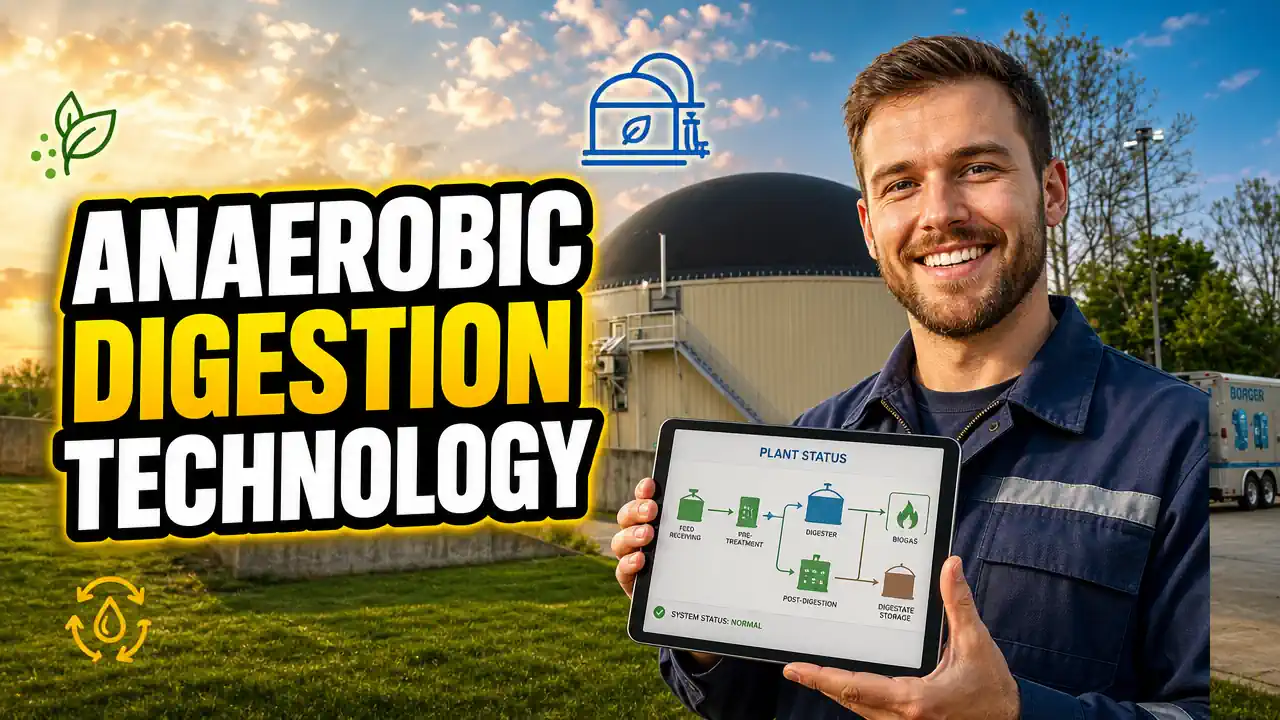
Anaerobic Digestion Technology: Frequently Asked Questions
What is anaerobic digestion technology?
Anaerobic digestion technology is the collection of biological and engineering systems used to treat biodegradable material without oxygen and produce biogas and digestate. It includes digester designs, feedstock preparation, pumps, mixers, control systems, gas treatment and digestate processing.
What are the main types of anaerobic digesters?
Main types include continuously stirred tank reactors, plug-flow digesters, covered lagoons, high-solids batch digesters, fixed-dome digesters, floating-drum digesters and high-rate wastewater reactors such as UASB systems.
What is a CSTR anaerobic digester?
A continuous stirred tank reactor is a mixed digester that receives feed regularly while digestate is removed at a similar rate. It is widely used for food waste, manure, sewage sludge and other pumpable feedstocks.
What is the difference between wet and dry anaerobic digestion?
Wet AD uses pumpable slurry, while dry or high-solids digestion processes thicker material that may be stackable or difficult to pump. The practical distinction depends on solids concentration and rheology.
What is the difference between mesophilic and thermophilic digestion?
Mesophilic digesters typically operate around the mid-30s °C, while thermophilic systems commonly operate around the low-to-mid 50s °C. Thermophilic digestion can provide faster reactions and improved pathogen reduction but may require more heat and tighter process control.
What is two-stage anaerobic digestion?
Two-stage AD separates acid-forming processes from methane formation so that the different microbial stages can be operated under more suitable conditions.
What is a UASB reactor?
A UASB reactor is a high-rate anaerobic wastewater-treatment system in which wastewater flows upward through a biologically active granular sludge bed. It is particularly suited to soluble industrial wastewater rather than fibrous solid feedstocks.
What technology is used to make biomethane from biogas?
Biogas can be upgraded using membrane separation, water scrubbing, PSA, amine absorption and other technologies that remove CO2 and unwanted contaminants.
What technology is used to control an anaerobic digester?
Modern plants use sensors and PLC/SCADA control for parameters such as temperature, pH, VFA/alkalinity, feed flow, gas production, methane concentration, gas pressure and equipment status.
Which anaerobic digestion technology is best?
There is no universally best technology. Selection depends on feedstock characteristics, solids content, contamination, scale, climate, gas use, digestate requirements, operator competence, regulation and whole-life cost.
Is anaerobic digestion technology still developing?
Yes. Important development areas include process intensification, membrane reactors, advanced monitoring, machine learning, lower methane emissions, biomethane upgrading, biological methanation, nutrient recovery and biogenic CO2 recovery.
Conclusion
Anaerobic digestion technology has developed from relatively simple biological waste treatment into a diverse family of integrated resource-recovery systems.
The digester remains central, but modern AD performance depends increasingly on what happens before and after it: feedstock preparation, process control, pumping and mixing, gas treatment, biomethane upgrading and digestate management.
The correct technology is therefore not simply the reactor with the highest theoretical methane yield.
It is the system that can reliably process the available feedstock, meet regulatory and product requirements, minimise emissions, produce useful energy and digestate, and remain maintainable throughout its operating life.
+++++++++++++++
For a concise foundation before exploring these technologies, see anaerobic digestion explained.
For our Anaerobic Digestion Technology Section, we have included the following pages:
Anaerobic Digestion System Innovations
Anaerobic Digestion of Biomass
Anaerobic Digestion of Sludge
Two-Stage Anaerobic Digestion
High Solids Anaerobic Digestion
Biogas Technology in the Industrialising Nations and Remote Rural Regions
 The plants built using anaerobic digestion technology in the industrialising nations, and the “low economy” off-grid rural regions are, by comparison, much smaller and “low tech”. What they lack in size, they make up for in sheer numbers.
They are almost without exception manually operated, without any electrical power needed to operate them.
The “industry” is largely “craft-based”, and the designs used are often tailored to the available local skills and materials, geological conditions, and climate.
Click for a free book based upon the contents of this page!


Interesting page. You may like to know that biogas is successfully used for heating and electricity generation at a range of sites around Australia. Enhar assists clients with feasibility studies both technical and financial, and project implementation.
Good writing but I still don’t know how to make some basic decisions. Has someone written a step by step process technology selection guide? This is the difficulty for me so I can make some progress on my project.
Isn’t it fact that this tech anaerobic digestion, which I think is just another word for biogas, will never be as efficient in energy conversion as gasification?
Great article. I firmly believe the salvation of the planet will come from natural things which man helps to make better with technology. Its simple, do research, find out how nature works, make nature better with minimum impact. Not like fracking, that’s interfering with nature which we do not know how it works. Heck, we only just discovered it was there man.. Who knows what goes on down there miles underground?
I like this site because so much useful material is on here : D. The tech is also on sale in Mexico, for the very high power biogas outputting.
Hi. We have An anaerobic digester that produces megawAtt energy. But we don’t know that best balance of substrate to feed the digester.
Technicians have identified that we currently have ammonia poisoning. I don’t know how to fix that either
I think that you need an experienced biogas plant operator to look at your digester. Where is the digester? If in the UK I may be able to suggest a suitable person who might act as your troubleshooter. Use the form on our Contact Us page to contact me. What pH are you running the digester at? Ammonia inhibition is sensitive to pH so pH adjustment may be needed, but the solution probably needs more than that, and studying in detail. Sounds like you need expert advice.
No. I don’t know of any emails from you. The Contact Form should be working.
Are you still having problems? I ran a thermophylic anerobic digester site for two years and it worked great. Had six digesters each one holding 22,500 gallons each. Let me know if you still need advice.