



Renewable energy sites are playing an increasingly important role in the UK’s energy future. From anaerobic digestion plants and sprawling solar farms to towering wind turbines and battery storage facilities, these sites are helping to generate cleaner electricity and reduce reliance on fossil fuels. However, while the technology behind renewable energy gets plenty of attention, there’s another aspect of running these sites that shouldn’t be overlooked: clear, effective signage.
Whether you’re managing a solar farm, overseeing a wind energy project, or operating a battery storage facility, good signage does far more than point people in the right direction. It helps keep workers safe, protects expensive equipment, and ensures your site operates as smoothly as possible.
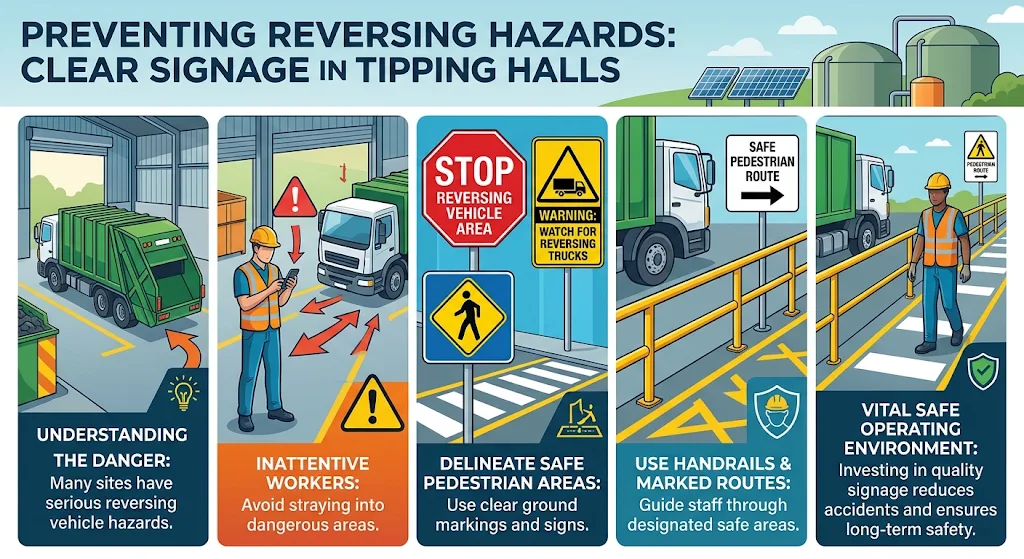
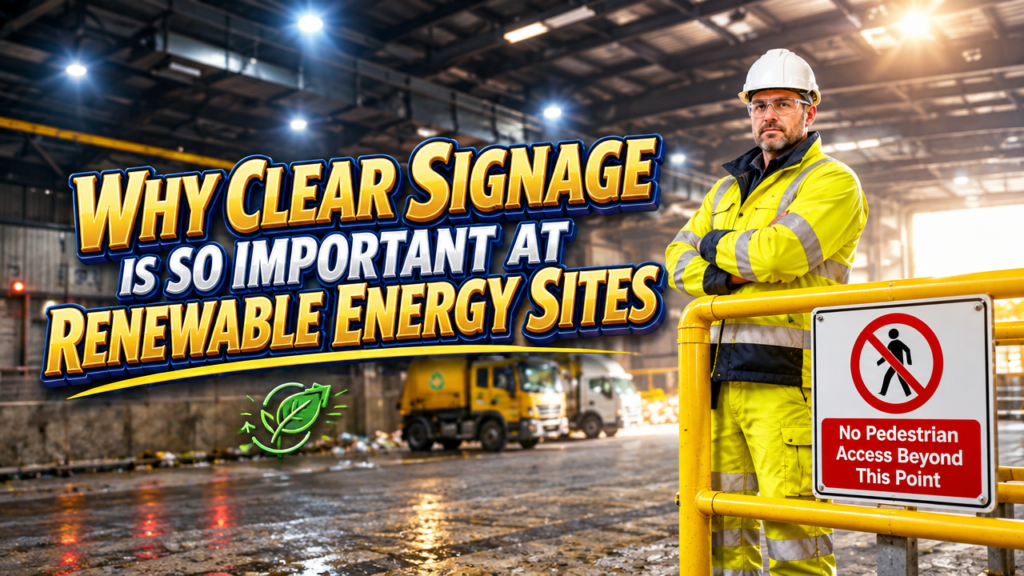
Many renewable energy sites present a particular hazard for which clear signage can be a matter of life or death. The danger comes from reversing vehicles and all too often results in death.
Every year there are a few cases of vehicle reversing accidents in energy-from-waste tipping halls, of which there are many at anaerobic digestion plants. Clear signage in these facilities is essential to avoid inattentive workers straying into the path of reversing tipping trucks.
Keeping Everyone Safe Around Potential Hazards
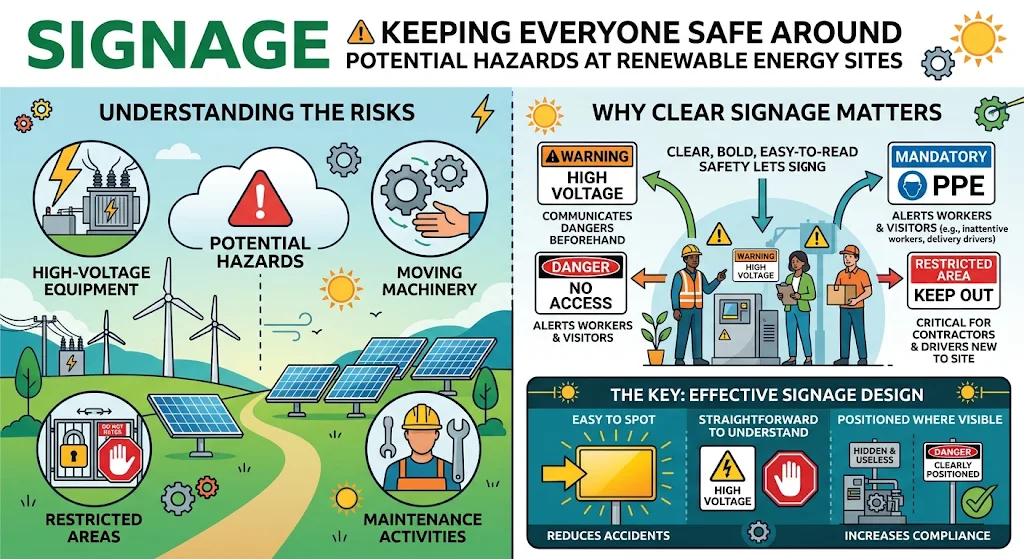
Renewable energy sites might be associated with clean, sustainable power, but that doesn’t mean they’re free from hazards. High-voltage electrical equipment, moving machinery, restricted areas, and maintenance activities can all present serious risks if people aren’t aware of their surroundings.
Clear safety signage helps communicate these dangers before someone finds themselves in a hazardous situation. Warning signs near electrical substations, for example, can alert workers to the presence of high-voltage equipment, while signs around wind turbines can identify restricted access areas.
This is especially important when contractors, delivery drivers, or visitors arrive on site and may not be familiar with the layout or potential risks.
Signs need to be easy to spot, straightforward to understand, and positioned where people will actually notice them. After all, even the most detailed safety warning won’t be much use if it’s hidden behind equipment or difficult to read.
Making Large Sites Easier To Navigate
Have you ever tried finding your way around a large industrial site without clear directions? It can be surprisingly frustrating, especially when buildings, access roads, and equipment all look similar.
Renewable energy facilities can cover enormous areas, making navigation a genuine challenge. Solar farms often stretch across multiple fields, while wind farms might have turbines positioned miles apart.
Without appropriate directional signage, workers and contractors can waste valuable time searching for the right location. Maintenance teams might struggle to identify a particular piece of equipment, while delivery drivers could end up travelling down the wrong access road.
Clearly marked routes, equipment identification signs and numbered locations can make everyday operations much easier. They also help emergency services reach specific areas more quickly if an incident occurs. When you’re responsible for a busy renewable energy facility, these small improvements can make a noticeable difference to efficiency.
Supporting Health And Safety Compliance
Health and safety regulations are another important reason to take site signage seriously. Renewable energy operators are responsible for identifying potential hazards and communicating relevant safety information to workers and visitors.
In the UK, the Health and Safety (Safety Signs and Signals) Regulations 1996 set out requirements for safety signage where significant risks remain after other protective measures have been put in place. This means you can’t rely on verbal instructions or assume that everyone understands the dangers associated with your site.
Proper signage might include mandatory personal protective equipment notices, prohibition signs, emergency exit directions and warnings about electrical hazards. Of course, signs are only one part of an effective safety strategy. They should complement proper training, risk assessments and physical safety measures rather than replace them. Regularly reviewing your signage can also help you identify damaged, outdated or missing notices before they become a problem.
Choosing Signage That Can Handle Tough Conditions
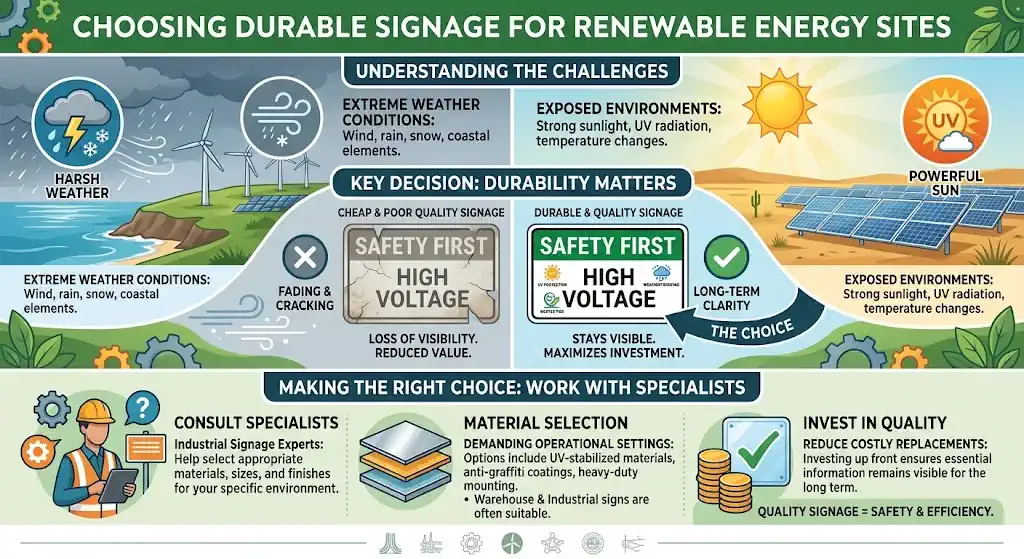
One challenge with renewable energy sites is that they’re often exposed to the elements year-round. Wind farms can experience particularly harsh weather, while solar installations may be situated in exposed rural locations with little protection from rain, strong sunlight, or temperature changes.
This makes durability an important consideration when choosing signage. A sign that fades, cracks, or becomes unreadable after a few months isn’t going to provide much long-term value. Instead, you need materials and finishes designed to withstand the conditions they’ll encounter.
Industrial signage specialists can help you select appropriate materials, sizes, and finishes for different environments. Providers offering warehouse signage solutions and other industrial signs may also be able to produce durable, clearly printed notices suitable for demanding operational settings. Investing in quality signage can reduce the need for frequent replacements while keeping important information visible.
Protecting Equipment And Preventing Costly Mistakes
Renewable energy equipment represents a huge financial investment. Solar panels, transformers, turbines and battery storage systems all require careful handling, maintenance and operation.
Something as simple as an incorrectly identified switch or poorly marked access point could cause unnecessary disruption, equipment damage, or serious safety concerns. Equipment identification labels, operating instructions and clear warning notices help reduce the likelihood of mistakes. They can also make maintenance activities more straightforward by helping engineers quickly identify the correct equipment.
For sites with numerous identical components, consistent labelling is particularly valuable. Rather than relying on memory or complicated descriptions, workers can use clear identifiers to locate exactly what they need. This can be especially useful when maintenance teams change, or external contractors are brought in for specialist work.
Helping Visitors And Local Communities
Not everyone arriving at a renewable energy site will be an engineer or maintenance technician. Some facilities receive visits from inspectors, landowners, educational groups or other authorised guests.
Clear signage can help these visitors understand where they’re permitted to go, which areas are restricted and what precautions they need to follow.
Signage can also serve an informative purpose beyond the site’s boundaries. Public information boards explaining how a solar farm or wind installation works can help local communities better understand renewable energy generation.
You might even use signs to explain environmental initiatives, biodiversity improvements, or the role a particular development plays in producing renewable electricity. These details can help create a more welcoming and informative experience while maintaining appropriate safety standards.
Why Signage Should Be Part Of Your Long-Term Site Strategy
It’s easy to think of signage as something you install when a renewable energy facility first opens and then forget about. However, sites evolve, equipment gets upgraded, and operational requirements can change.
As your facility develops, your signage needs to keep pace. A warning notice that was accurate five years ago might no longer reflect the equipment or activities taking place in that area.
Building regular signage inspections into your maintenance schedule can help ensure information remains accurate, legible, and relevant. It’s also worth gathering feedback from workers who use the site every day, as they’ll often notice unclear directions or missing labels before anyone else.