



Do home biogas digesters work? Yes. A correctly sized and well-operated home biogas digester can turn food scraps or animal manure into useful cooking gas and nutrient-containing digestate. However, these systems do not produce unlimited free energy; they are not equally effective in every climate, and they require appropriate installation, feeding and maintenance.
If you are new to the subject, our guide to what anaerobic digestion means explains the biology, feedstocks, biogas and digestate before you assess a household system.
Online videos often claim that a home biodigester can be built for less than $200, convert five pounds of food waste into two hours of cooking gas and operate indefinitely without external energy. Some go further and suggest that the gas industry and regulators have deliberately prevented the technology from becoming commonplace.
There is a substantial core of truth beneath the sensational presentation. Home biogas digesters do work, and millions of small anaerobic digesters have been installed worldwide. Modern household systems can process kitchen scraps, manure and other suitable organic materials while providing a useful quantity of low-pressure biogas.
Nevertheless, the answer to the question “do home biogas digesters work?” depends heavily on feedstock, temperature, loading rate, retention time, biological stability and gas storage capacity. Digestate must also be handled responsibly. This article explains what domestic systems can realistically achieve and where the most dramatic online claims become misleading.
Nevertheless, the performance of a home biogas digester depends on its feedstock, temperature, loading rate, retention time, biological stability and gas storage capacity. The resulting digestate must also be handled responsibly. This article examines what these systems can realistically achieve and where the online claims go too far.
What Is a Home Biogas Digester and How Does It Work?
A home biogas digester is a sealed vessel in which microorganisms break down organic material in the absence of oxygen. The process is known as anaerobic digestion.
The principal outputs are:
- Biogas, normally consisting mainly of methane and carbon dioxide, together with water vapour and small quantities of other gases.
- Digestate, comprising the water, nutrients and organic material that remain after digestion.
Raw biogas is not identical to the natural gas supplied through a public gas grid. The US Energy Information Administration states that biogas typically contains approximately 45% to 65% methane, although its precise composition varies with the feedstock and operating conditions.
The carbon dioxide in raw biogas lowers its calorific value compared with fossil natural gas or upgraded biomethane. It may also contain hydrogen sulphide, which is toxic, odorous and corrosive, as well as moisture that can condense in pipework.
For household cooking, the gas is normally used at low pressure in a burner designed or adapted for biogas. It should not be connected directly to an ordinary domestic natural-gas installation.
How Do Home Biogas Digesters Turn Food Waste Into Gas?
The digestion process is often described as occurring in four interconnected stages:
- Hydrolysis: complex organic materials are broken into smaller soluble compounds.
- Acidogenesis: fermentative microorganisms convert these compounds into organic acids, alcohols, carbon dioxide, hydrogen and other products.
- Acetogenesis: further organisms convert intermediate products into acetate, hydrogen and carbon dioxide.
- Methanogenesis: specialised microorganisms known as methanogens produce methane, principally from acetate or from hydrogen and carbon dioxide.
These stages are not four completely separate events taking place one after another. They occur together within a microbial community, and the stability of the whole process depends on the different groups remaining in balance.
Methanogens are particularly sensitive to sudden changes in temperature, pH, loading rate and chemical conditions. A digester can therefore be described loosely as an artificial stomach. Still, it should not be treated as a bin into which any quantity of waste can be deposited without consequences.
In practical terms, home biogas digesters work best when they receive a steady daily supply of suitable material rather than occasional large batches.>
For a fuller explanation covering both domestic and larger installations, see our guide to making biogas from food waste at home.
Do Home Biogas Digesters Work in Real Households?
Yes. Household digesters are not an experimental or recently rediscovered technology. Small digesters have been used internationally for decades to process cattle manure, pig manure, human excreta, crop residues and household organic wastes.
IEA Bioenergy describes biogas facilities as ranging from micro-scale household digesters to farm, community and large centralised plants. The underlying biological process is the same at every scale, although the engineering, instrumentation and degree of process control differ greatly.
A well-operated home unit can:
- provide gas for a purpose-designed cooking burner;
- divert suitable organic material from disposal;
- reduce uncontrolled methane emissions from manure or organic waste that would otherwise decompose anaerobically;
- produce a nutrient-containing digestate;
- reduce dependence on LPG, firewood, charcoal or grid-supplied gas in appropriate circumstances.
That does not mean every household will achieve the advertised output. The decisive question is not simply whether the technology works, but whether a particular household has enough suitable feedstock, sufficient warmth, adequate outdoor space and a safe use for the gas and digestate.

How Much Cooking Gas Can a Home Biogas Digester Produce?
The claim is possible under favourable conditions, but it should not be treated as a universal conversion rate.
Commercial home-digester specifications provide a useful benchmark. HomeBiogas currently states that one of its smaller systems can accept up to approximately 2 kilograms of kitchen waste per day and provide up to about two hours of cooking on a single burner. Its published technical specifications also show larger systems accepting greater daily inputs and providing longer potential cooking periods.
These are maximum or design figures rather than guarantees for every user. Actual gas output depends on:
- the amount of volatile organic material in the waste;
- whether the feed contains fats, carbohydrates or relatively fibrous material;
- digester temperature;
- retention time;
- microbial health;
- how steadily the unit is fed;
- gas leakage and storage losses;
- the methane content of the biogas;
- burner size and efficiency.
Fat-rich material can have a high theoretical methane yield but may cause operational problems if added too rapidly. Fibrous vegetable residues may digest more slowly. Large quantities of acidic material can destabilise a small unit, while excessive oil, salt, cleaning chemicals or non-biodegradable contamination can also cause trouble.
A household should therefore measure its recoverable scraps before buying a system. One of the most useful lessons in our article on practical tips for using a home biogas plant is that many families overestimate how much suitable material they generate.
Do Home Biogas Digesters Produce Free Energy?
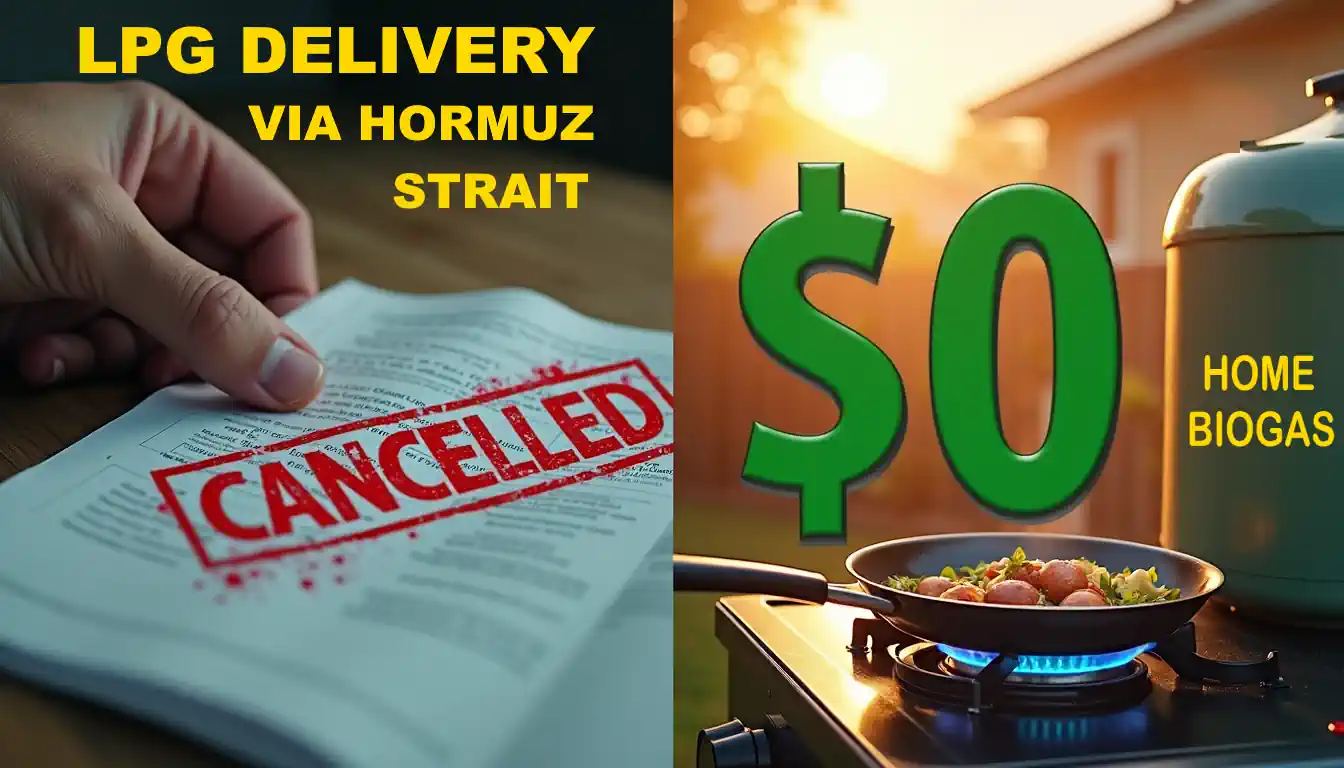
The fuel does not require the purchase of fossil gas once it has been generated, but calling it “free gas forever” is misleading.
Whether home biogas digesters work economically depends on the cost of the fuel displaced, the quantity of gas actually produced and whether the digestate has a useful outlet.
A home digester requires:
- the original equipment or construction materials;
- a reliable supply of suitable organic feedstock;
- water where dilution is necessary;
- time spent sorting, preparing and feeding material;
- inspection of pipework, valves and connections;
- management of condensate and digestate;
- occasional replacement of flexible membranes, hoses, filters or fittings;
- additional heat or seasonal shutdown in cold climates.
The economic case is strongest where the feedstock is already available, an expensive cooking fuel is being displaced, and the digestate can be used beneficially. It may be weaker where mains gas or electricity is inexpensive, food scraps are scarce, the climate is cold, or the owner has no useful outlet for digestate.
Claims of a fixed three-year payback should consequently be treated with caution. Payback depends on local fuel prices, achieved gas production, equipment life, installation costs and the value genuinely obtained from the digestate.
Should Edible Food Be Put Into a Digester?
Preventing food waste remains preferable to digesting it.
Anaerobic digestion recovers some energy and nutrients after food has become waste, but it does not recover all the energy, land, water, labour, refrigeration and transport invested in producing that food. The preferred sequence is normally to prevent surplus food, redistribute edible food where practicable and use anaerobic digestion for material that cannot reasonably be eaten.
The US Environmental Protection Agency reports that food is the largest single component of material sent to American landfills and incinerators. The agency also estimates that an average US family of four spends almost $3,000 each year on food that is not eaten.
A digester should therefore not become an excuse to over-purchase food. Its best household feedstocks are unavoidable preparation residues, spoiled food that cannot safely be consumed and, where the system is designed for it, suitable animal manure.
How Much of a Family’s Cooking Fuel Can It Replace?
There is no defensible percentage that applies to every household.
A warm-climate household with a consistent supply of animal manure or several kilograms of suitable organic waste each day may obtain a substantial share of its cooking energy from biogas. A household producing only a small quantity of vegetable peelings may obtain enough gas to boil water or cook one component of a meal, but not enough to replace its main cooking fuel.
Gas demand also varies enormously. Simmering food for a long period consumes more gas than brief high-temperature cooking. Burner ratings differ, and some households cook multiple meals each day while others use ovens, electric appliances or pre-prepared food.
The more honest calculation begins with the measured daily mass and composition of available feedstock. From that, a cautious gas yield can be estimated and compared with the intended burner demand. Advertised maximum cooking hours should be regarded as an upper operating target, not as a guaranteed daily entitlement.
Do Home Biogas Digesters Work in Cold Climates?
Small unheated digesters generally perform best in consistently warm conditions. As temperature falls, biological reactions slow and gas output declines.
Some proprietary operating instructions advise users to stop feeding when average temperatures fall below approximately 18°C. That is not because all methanogens suddenly die at that temperature. Rather, the digestion rate may become too slow for the intended loading, increasing the risk that acids accumulate faster than the methanogens can consume them.
Home biogas digesters work most reliably in warm conditions because the microorganisms responsible for methane production become less active as temperatures fall.
For this reason, the question “do home biogas digesters work in Britain?” must be answered seasonally: summer performance may be acceptable while winter gas production can fall sharply.
This is a major limitation in Britain, northern Europe, Canada and cooler regions of the United States. An exposed flexible digester that performs well in summer may produce little useful gas through winter.
Possible measures include:
- placing the unit in a sunny and sheltered position;
- using a greenhouse enclosure;
- insulating the digester and exposed pipework;
- reducing the organic loading during cold periods;
- using solar-heated water or another carefully controlled heat source;
- installing a purpose-designed heated system.
Heating can keep digestion active, but it also changes the energy balance and undermines claims of completely free gas. The heating system must be safe and should not overheat the microbial process or damage a flexible digester.
How Much Does a Home Biogas Digester Cost?
A basic DIY digester can sometimes be assembled for around $200 where a suitable used container and inexpensive local fittings are available. The claim is plausible as a low-end materials estimate, but it is not a dependable installed price.
A DIY arrangement may require:
- a sound tank or intermediate bulk container;
- gas-tight bulkhead fittings;
- an inlet and displacement outlet;
- safe gas storage;
- biogas-compatible hose or pipework;
- isolation valves;
- a condensate trap;
- pressure relief or other overpressure protection;
- a flame-resistant, purpose-designed biogas stove;
- protection against accidental damage and unauthorised access;
- possibly hydrogen-sulphide treatment;
- insulation or a greenhouse enclosure.
Once all these components are included, the cost can rise substantially. A used IBC may also have contained an unsuitable chemical, may be damaged by ultraviolet light or may not be designed for the intended gas and liquid pressures.
A tank that can hold water is not automatically gas-tight, safe for biological processing or appropriate for combustible-gas service.
Readers who decide to construct a unit should follow a technically competent design rather than improvising from a short social-media video. Our separate mini biogas plant construction guide is the appropriate place for detailed build information; the present article is intended to help readers decide whether such a project is suitable in the first place.
Packaged HomeBiogas and Puxin Systems Versus DIY Digesters
Commercial systems cost more than the simplest DIY build, but the price normally includes an integrated digester, gas holder, feed inlet, digestate outlet and compatible cooking equipment. Instructions, replacement parts and manufacturer support can also reduce some of the uncertainty involved in self-building.
Flexible-bag systems are relatively straightforward to assemble and transport. More rigid modular or enclosed systems may provide advantages in certain climates and installations, but can require more permanent construction work.
Before buying, compare:
- the recommended daily feed quantity;
- the minimum operating temperature;
- gas-holder capacity;
- expected continuous burner time;
- acceptable and prohibited feedstocks;
- system footprint;
- freeze protection;
- maintenance and replacement-part availability;
- warranty conditions;
- local installation and planning requirements.
Our detailed comparison of HomeBiogas versus Puxin home biogas digesters examines the differences between two of the best-known approaches.
Readers considering the flexible commercial option can also review our earlier assessment of the HomeBiogas low-cost domestic biogas plant.
Are Home Biogas Digesters Safe?
Is Low-Pressure Biogas Harmless?
No. The comparison between a low-pressure digester and a high-pressure propane cylinder is incomplete and potentially dangerous.
It is true that many household gas holders operate at only a small fraction of the pressure inside a propane cylinder. Lower pressure reduces the amount of mechanically stored pressure energy and may reduce the severity of some vessel-failure scenarios.
However, low pressure does not make methane non-flammable. A leak can still allow a combustible mixture to form wherever gas accumulates. Methane can displace oxygen, and hydrogen sulphide can be acutely toxic even when the system operates at little more than atmospheric pressure.
Home biogas digesters work safely only when combustible gas, condensate, hydrogen sulphide and digestate are managed properly.
The principal risks include:
- fire or flashback;
- gas accumulation in sheds, rooms, drains or other enclosed spaces;
- asphyxiation;
- hydrogen-sulphide exposure;
- overpressure caused by blockage, incorrect valves or excessive weighting of a gas bag;
- unsafe modification of cooking appliances;
- leakage from poor joints or degraded hoses;
- pathogen exposure while handling feedstock or digestate.
The US EPA states that a properly designed and operated anaerobic digestion system can be very safe, but expressly warns that methane and hydrogen sulphide burn readily and are harmful to inhale.
A household digester should be outdoors in a well-ventilated location, separated from ignition sources and protected from damage. Gas should not be piped into a dwelling unless the complete arrangement complies with applicable requirements and has been assessed by a competent person.
For more detail, read our guidance on how to store biogas safely at home and our explanation of the home biogas storage bag or gas balloon.
Does Anaerobic Digestion Make Digestate Safe?
Anaerobic digestion can reduce pathogen numbers, but ordinary household digestion does not guarantee sterilisation.
Pathogen reduction depends on:
- temperature;
- retention time;
- digester design;
- feedstock;
- whether fresh material can pass quickly to the outlet;
- post-digestion storage and handling.
Commercial plants processing animal by-products may be required to pasteurise material under specified conditions. A small ambient-temperature household unit does not automatically provide an equivalent treatment.
This distinction is particularly important where human waste, animal manure, meat waste or potentially contaminated material is fed to the digester. Digestate should not be assumed safe for direct application to salad crops or other food that may be eaten raw.
Where a toilet is connected, the system becomes a sanitation installation as well as an energy system. Read our separate article about the HomeBiogas bio-toilet and the conversion of human waste into biogas before considering this option.
Does a Digester Preserve Every Nutrient?
The suggestion that anaerobic digestion preserves almost 100% of all nitrogen, phosphorus and potassium is too absolute.
Most mineral nutrients are not consumed when methane is produced, so a large proportion remains in the digestate. Digestion also converts some organically bound nitrogen into ammonium, which may be more immediately available to plants.
However, nutrient losses can still occur through:
- ammonia volatilisation during storage and spreading;
- spillage or leakage;
- run-off and leaching;
- poor storage;
- inappropriate application;
- losses associated with separated solids or sediments.
Digestate quality also reflects the input materials. Anaerobic digestion does not destroy metals, glass, plastic fragments, persistent chemicals or excess salts. If undesirable contaminants enter the digester, they may remain in the output.
Digestate can be a valuable fertiliser, but describing every litre as the “highest-quality garden food on the planet” is promotional language rather than a scientifically defensible conclusion.
Do Home Biogas Digesters Reduce Greenhouse-Gas Emissions?
They can, but the result depends on what would otherwise have happened to the feedstock and whether the digester leaks.
Methane is a powerful greenhouse gas. The often-repeated statement that it is “25 times more potent than carbon dioxide” comes from older assessment values. Current climate assessments use values that vary according to the time horizon, source of methane and calculation method. The important point is that preventing methane leakage can provide a substantial near-term climate benefit.
From a climate perspective, home biogas digesters work best where they capture methane that would otherwise escape from manure or decomposing organic waste.
The clearest benefit occurs when a digester captures methane that would otherwise escape from unmanaged manure, sewage or another anaerobic waste store. Burning methane converts it principally into carbon dioxide and water while releasing useful heat.
Biogenic carbon dioxide released when biogas burns is part of the relatively short biological carbon cycle. By contrast, burning fossil natural gas transfers additional geological carbon into the atmosphere.
Nevertheless, a digester is not automatically climate-positive. The benefit can be reduced by:
- leaks from the digester, gas holder or pipework;
- deliberate venting of excess gas;
- energy used to heat the system;
- using edible food that should have been consumed;
- poor digestate storage that releases methane or nitrous oxide;
- buying new equipment with a high embodied environmental cost for very little gas production.
Good gas-tightness and a dependable daily use for the gas are therefore central to the environmental case.
Are Home Biogas Digesters Legal?
There is no simple national answer in either the United States or the United Kingdom.
Requirements may arise from planning or zoning controls, building and fire codes, waste regulations, environmental permitting, plumbing rules, sanitation requirements, gas-safety provisions and neighbourhood nuisance laws.
A small digester accepting only material generated by its own household may be treated differently from a system accepting waste from neighbours, businesses or farms. Connecting a toilet, importing waste, storing large quantities of digestate or selling gas may also change its regulatory status.
Local controls are not evidence of a gas-industry conspiracy. Methane is flammable, hydrogen sulphide is toxic, decomposing feedstock can create odour and vermin problems, and poorly managed digestate can pollute land and water. Regulators therefore have legitimate reasons to control some installations.
There may still be a policy case for proportionate rules written specifically for very small, low-pressure domestic systems. Industrial permitting requirements should not be applied thoughtlessly to a small backyard unit. However, that argument should be made using evidence rather than an unsupported allegation that utilities secretly wrote the rules to suppress competition.
Before installation, owners should confirm whether home biogas digesters are permitted under the planning, waste, building, sanitation and fire-safety rules applying locally.
Before buying or building, householders should contact the relevant planning, building-control, environmental-health and fire-safety authorities. Written confirmation is preferable to relying on online assurances that a system is “too small to need permission”.
Should Baking Soda or Wood Ash Be Used to Correct pH?
Adding an alkaline material can sometimes help a digester recover from acidification, but casual dosing is not a substitute for diagnosing the cause.
A falling pH is often a symptom of overfeeding, a sudden feedstock change, low temperature or an accumulation of volatile fatty acids. Adding too much alkali may create a different imbalance, and wood ash varies greatly in composition. It can also contain unwanted substances depending on what was burned.
A safer response is normally to:
- stop or sharply reduce feeding;
- check the temperature;
- measure pH using a suitable test method;
- allow the methanogenic population time to recover;
- follow the manufacturer’s restart procedure;
- resume feeding gradually.
Operators should not assume that every interruption in gas production is caused by low pH. A leak, blocked gas line, empty gas holder, cold digester or exhausted supply of readily degradable feedstock may produce similar symptoms.
Who Should Consider a Home Biogas Digester?
A household digester is most likely to be successful where:
- the climate is warm for most of the year;
- there is adequate outdoor space;
- the owner has a steady supply of manure or suitable unavoidable food scraps;
- the gas can be used regularly for cooking;
- there is a safe and useful outlet for digestate;
- the owner is prepared to monitor and maintain the system;
- local authorities permit the installation.
It is less attractive where:
- winter temperatures remain low;
- the household produces very little suitable feedstock;
- the only available position is close to doors, windows or ignition sources;
- there is no garden or agricultural use for digestate;
- neighbours are likely to be affected by odour or poor siting;
- the owner expects a maintenance-free replacement for all household gas.
Home biogas is also only one of several cooking-energy options. Our comparison of LPG alternatives for cooking places biogas alongside electrical and other gaseous alternatives.
Home Biogas Myths: A Quick Verdict
| Claim | Verdict |
|---|---|
| A home digester can make cooking gas from food scraps. | True. This is a well-established application of anaerobic digestion. |
| About 2 kg or 5 lb of food waste can provide two hours of cooking. | Plausible under favourable conditions. It is comparable with some manufacturers’ maximum specifications, but not guaranteed. |
| A digester can be built for less than $200. | Sometimes. This may cover a basic DIY build using low-cost or recovered materials, but not necessarily a complete, durable and safely installed system. |
| The gas is free forever. | False or seriously misleading. Feedstock, labour, water, maintenance and eventual component replacement all have a cost. |
| Digestate retains useful nutrients. | True. However, nutrient losses and contamination are still possible. |
| Household digestate is sterile. | False. Anaerobic digestion may reduce pathogens but does not necessarily eliminate them. |
| Low pressure makes biogas harmless. | False. Methane remains flammable, and hydrogen sulphide and oxygen displacement remain hazards. However, the majority of injuries are minor. |
| Utilities have hidden home biogas technology. | Unsupported. Household biogas has been widely documented and promoted by governments, NGOs, researchers and manufacturers. |
| Regulations exist only to protect gas-company revenue. | Unsupported. Some rules may be disproportionate, but genuine fire, health, odour and pollution risks exist. |
| A home digester works equally well in every climate. | False. Temperature is one of the most important limitations. |

Conclusion: A Useful Technology, Not a Perpetual-Energy Machine
Home biogas digesters work. Under suitable conditions, they can transform unavoidable kitchen scraps or animal manure into a practical quantity of renewable cooking gas while returning much of the feedstock’s nutrient content in digestate.
That is impressive enough without claiming that the gas is free, unlimited or deliberately hidden by the energy industry.
The most successful users are likely to be those who begin with a realistic feedstock survey, choose a correctly sized system, account for their climate, provide safe gas storage and plan in advance how the digestate will be used. They also recognise that a digester is a living biological process rather than an appliance that can be neglected after installation.
In warm climates and on properties with a dependable manure supply, household digestion can provide meaningful energy independence. In a cold British garden supplied only with occasional vegetable peelings, its contribution may be modest unless heat, insulation and additional feedstock are provided.
The balanced verdict is therefore clear: a home biogas digester can be a valuable small-scale waste and energy system, but its performance must be judged from measured inputs, local conditions and safe engineering—not from the most dramatic promise in a YouTube title.
Authoritative Sources and Further Reading
- US Environmental Protection Agency: Basic Information About Anaerobic Digestion
- US Environmental Protection Agency: Anaerobic Digestion Safety and Frequently Asked Questions
- US Energy Information Administration: Landfill Gas and Biogas
- IEA Bioenergy: Integrated Biogas Systems
- IEA Bioenergy: Quality Management of Digestate
- Food and Agriculture Organization: Bioslurry as a Fertiliser
- US Environmental Protection Agency: Food Waste Data
- US Environmental Protection Agency: Environmental Impacts of US Food Waste
- United Nations Environment Programme: Food Waste Index Report 2024
- Intergovernmental Panel on Climate Change: Sixth Assessment Report
- HomeBiogas: Published System Technical Specifications
Safety notice: This article provides general information and is not a substitute for site-specific engineering, planning, environmental-health, plumbing, fire-safety or gas-safety advice. Check the rules applying in your location and use competent assistance before installing or modifying a combustible-gas system.