Expanded 40-page biogas production PDF
Biogas Production PDF: Understand the Process Step by Step
This expanded biogas production PDF explains the complete process step by step, from feedstock preparation and anaerobic digestion to gas cleaning, biomethane upgrading and digestate management.
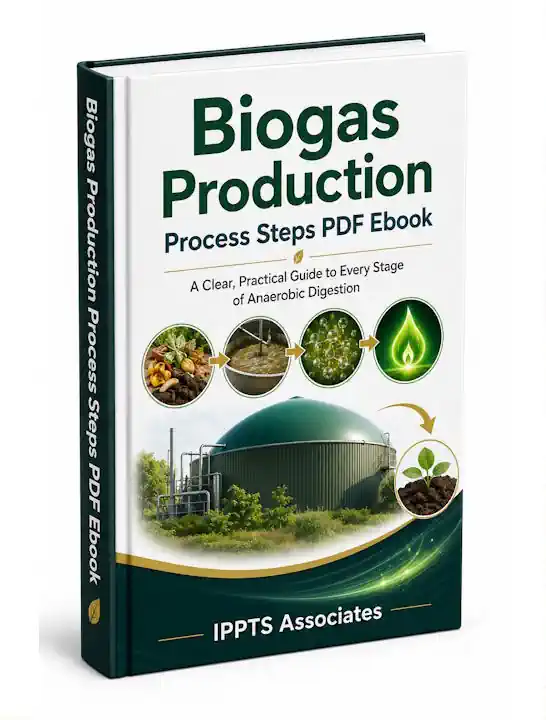
Instant PDF download – $4.70
Download the Biogas Production PDF
Secure payment and immediate digital delivery through Gumroad.
The original short edition of this guide was downloaded 4,447 times after its publication in 2019.
That strong response demonstrated a clear demand for an accessible explanation of how biogas is produced.
The original six-page version has now been replaced by a substantially expanded and updated 40-page edition covering the complete biogas production process in much greater detail.
Biogas production is often described simply as placing organic waste in a sealed tank and allowing microorganisms to create methane.
What Is Included in This Biogas Production PDF?
This biogas production PDF provides a structured introduction to the complete anaerobic digestion process. It explains the biological stages of digestion while also covering feedstock preparation, plant operation, process monitoring, gas cleaning, energy recovery, biomethane upgrading and digestate management.
The guide is intended for readers who need more detail than a short free introduction but do not require a full engineering design manual.
In practice, a successful anaerobic digestion plant depends on a connected sequence of biological, mechanical and operational stages.
Feedstocks must be selected, inspected and prepared. The digester must provide stable conditions for several groups of microorganisms. Gas must be collected, cleaned and used safely. The remaining digestate must be stored, treated and applied or disposed of responsibly.
Biogas Production Process Steps explains this sequence in practical language for readers who want a clear overview without having to work through a highly specialised engineering textbook.
This guide will help you understand:
- which feedstocks can be used for biogas production;
- how feedstocks are received, inspected and prepared;
- the four main biological stages of anaerobic digestion;
- how digesters are fed, heated and mixed;
- which operating conditions affect process stability;
- how raw biogas is collected and cleaned;
- how biogas can be used for heat and electricity;
- how biogas is upgraded to biomethane;
- how digestate is stored and used;
- and the principal commercial and environmental considerations affecting a biogas project.
From Organic Material to Renewable Gas
Biogas can be produced from many biodegradable materials, including livestock manure, sewage sludge, food-processing residues, separately collected food waste, crop residues and other permitted organic materials.
These materials are not identical. Their moisture content, methane potential, nitrogen concentration, contamination level and handling requirements vary considerably.
The guide explains how feedstock characteristics affect:
- gas yield;
- digester stability;
- pumping and mixing;
- pretreatment requirements;
- digestate quality;
- and the overall economics of the plant.
The Four Biological Stages of Anaerobic Digestion
Anaerobic digestion is not one single reaction. It is a sequence of biological processes carried out by different groups of microorganisms.
1. Hydrolysis
Complex organic materials such as carbohydrates, proteins and fats are broken down into smaller soluble compounds that microorganisms can use.
2. Acidogenesis
The soluble compounds are converted into organic acids, alcohols, hydrogen, carbon dioxide and other intermediate products.
3. Acetogenesis
Intermediate compounds are further converted into acetate, hydrogen and carbon dioxide.
4. Methanogenesis
Methanogenic microorganisms convert acetate, hydrogen and carbon dioxide into methane-rich biogas.
The guide explains why these stages must remain in balance and how excessive loading, temperature changes, ammonia, volatile fatty acids and other factors can disrupt methane production.
Download the expanded 40-page guide for $4.70
The complete guide is available immediately after purchase.
What Is Covered in the Guide?
Chapter 1: Introduction to Biogas Production
An overview of anaerobic digestion, renewable gas and the role of biogas in waste management and energy production.
Chapter 2: Feedstocks and Organic Materials
Common biogas feedstocks, their principal characteristics and the importance of selecting compatible materials.
Chapter 3: Feedstock Reception and Preparation
Inspection, storage, contaminant removal, depackaging, maceration, blending and other preparation stages.
Chapter 4: The Anaerobic Digestion Process
Hydrolysis, acidogenesis, acetogenesis and methanogenesis, together with the conditions needed to keep them in balance.
Chapter 5: Digester Operation and Monitoring
Temperature, pH, loading, retention time, mixing, alkalinity, volatile fatty acids and other important operating indicators.
Chapter 6: Biogas Collection and Cleaning
Gas storage, moisture removal, hydrogen sulphide control and preparation for energy use.
Chapter 7: Biogas Use and Biomethane Upgrading
Combined heat and power, boilers, vehicle fuel, gas-grid injection and the principal biomethane upgrading methods.
Chapter 8: Digestate Management
Digestate storage, separation, nutrient value, land application and environmental responsibilities.
Chapter 9: Economics and Practical Examples
The principal cost and revenue considerations influencing biogas projects, supported by practical examples and case-study information.
Who Is This Guide For?
The guide is suitable for:
- students studying renewable energy, environmental engineering or waste management;
- farmers considering anaerobic digestion;
- new biogas plant operators;
- waste managers and recycling professionals;
- junior engineers and consultants;
- project developers and investors seeking an introductory overview;
- local authority and regulatory staff;
- and anyone who wants to understand how biogas is produced.
It is written to be accessible to newcomers while providing enough technical detail to explain why each stage of the process matters.
Why the Guide Goes Beyond the Basic Biology
Many introductory explanations stop after describing hydrolysis, acidogenesis, acetogenesis and methanogenesis.
Those stages are essential, but a real biogas plant must also address:
- feedstock contracts and quality;
- storage and reception;
- physical contaminants;
- mixing and pumping;
- temperature control;
- process monitoring;
- gas safety;
- hydrogen sulphide and moisture removal;
- energy conversion;
- biomethane upgrading;
- digestate storage and use;
- environmental compliance;
- and commercial viability.
The expanded guide connects the biological process with these practical plant operations.
Frequently Asked Questions
Is this the same as the original free ebook?
No. The original edition was a short six-page introduction. This is a substantially expanded and updated 40-page guide covering the complete process in much greater detail.
Is this a downloadable biogas production PDF?
Yes. The guide is supplied as a downloadable 40-page PDF through Gumroad. Access is provided immediately after successful payment.
What format will I receive?
You will receive the guide as a downloadable PDF. Gumroad provides access immediately after successful payment.
Do I need technical knowledge before reading it?
No. The guide explains the main concepts in an accessible language and is suitable for readers who are new to anaerobic digestion and biogas.
Does the guide explain the four biological stages?
Yes. It explains hydrolysis, acidogenesis, acetogenesis and methanogenesis, together with the need to keep the stages biologically balanced.
Does it cover food waste and manure?
Yes. The guide discusses common agricultural, municipal and industrial feedstocks, including manure, food waste, sewage sludge and organic processing residues.
Does it explain biomethane production?
Yes. It introduces the principal methods used to remove carbon dioxide, moisture, hydrogen sulphide and other contaminants from raw biogas before biomethane use.
Does it cover digestate?
Yes. The guide explains digestate production, storage, nutrient value, separation and responsible land application.
Is this a plant design manual?
No. It is an introductory and practical process guide. Detailed plant design, biological troubleshooting and safety decisions require site-specific assessment by suitably qualified professionals.

30-Day Money-Back Guarantee
We take great care in preparing our ebooks. If you experience a problem or are not completely satisfied, contact steve.last@ippts.com within 30 days and describe the issue.
We will refund your purchase in full. Contacting us directly is the quickest way to resolve any problem.
Learn the Complete Biogas Production Process
Follow the process from organic feedstock preparation and anaerobic digestion through to gas use, biomethane upgrading and digestate management.
Instant 40-page PDF download – $4.70
Important: This guide is provided for educational and general informational purposes. Anaerobic digestion plants involve biological, mechanical, electrical, chemical, confined-space, fire and explosion hazards. Site-specific designs, operating changes and safety decisions should be assessed by suitably qualified professionals and implemented in accordance with applicable regulations, permits, equipment instructions and safe working procedures.
© 2026 IPPTS Associates. Published through the IPPTS Anaerobic Digestion division. All rights reserved.