




Anaerobic digestion can make a substantial contribution to UK climate-change mitigation, particularly when it processes unavoidable food waste, animal manures, slurries and sewage sludge.
Its climate benefit comes from more than producing renewable energy. A well-designed anaerobic digestion plant can capture methane that might otherwise escape from decomposing organic waste, replace some fossil natural gas with biomethane and return nutrients to agriculture through properly managed digestate.
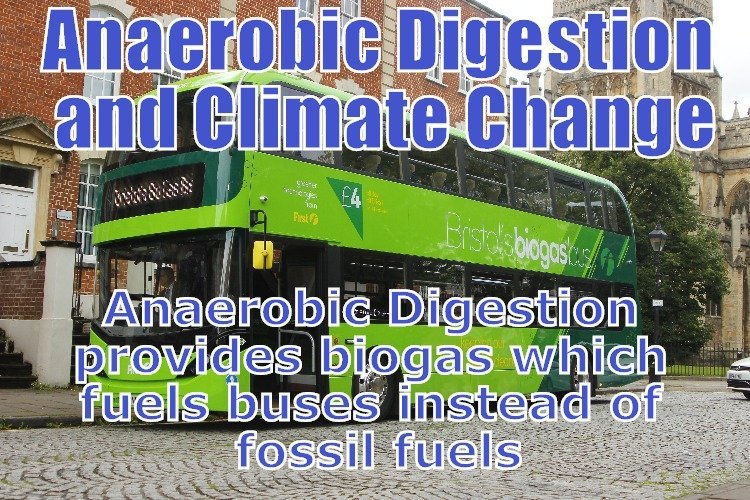
However, these benefits are not automatic. Feedstock selection, methane leakage, digestate storage, transport distances and the final use of the biogas all affect the result.
Recent UK government publications therefore present anaerobic digestion as a valuable but conditional climate technology: one that can deliver significant emissions savings when waste and residue feedstocks are prioritised, and methane losses are properly controlled.
For a wider assessment covering water, soil, air quality, resource recovery and other environmental considerations, see our guide: Is Anaerobic Digestion Good for the Environment?
Key Takeaways
- Anaerobic digestion can prevent methane emissions from manure, slurry, sewage sludge and unavoidable food waste.
- Upgraded biogas, known as biomethane, can replace fossil natural gas in the grid, transport, industry and flexible power generation.
- The UK government prioritises waste and residue feedstocks because they generally deliver greater carbon savings than purpose-grown crops.
- Digestate can replace some manufactured fertiliser, but it must be stored and applied according to crop and soil needs.
- Fugitive methane can significantly reduce the climate benefit, making measurement, maintenance and leak detection essential.
- Biogas should not simply be described as “carbon neutral”. Its full lifecycle emissions must be considered.
- Capturing biogenic carbon dioxide from biomethane production could eventually enable some plants to deliver greenhouse-gas removals as well as avoided emissions.
How Does Anaerobic Digestion Help Reduce Climate Change?
The anaerobic digestion process uses microorganisms to break down organic material in an oxygen-free vessel. It produces two principal outputs:
- Biogas, consisting mainly of methane and carbon dioxide.
- Digestate, containing water, organic matter and plant nutrients.
The biogas can be burned in a combined heat and power unit or boiler. It can also be upgraded by removing carbon dioxide, water and other contaminants to produce biomethane suitable for grid injection or use as a vehicle fuel.
The principal climate benefits fall into four connected areas.
1. Capturing Methane from Organic Wastes
Organic material can produce methane when it decomposes in oxygen-poor conditions. This occurs naturally in manure stores, slurry lagoons, sewage systems and landfill sites.
A controlled anaerobic digestion system captures much of that gas so that it can be used as energy rather than released directly into the atmosphere.
This can be especially valuable for livestock manure and slurry. Without suitable treatment, these materials may continue producing methane during storage. Sending them through a sealed digester creates an opportunity to capture the gas and use its energy content.
The government’s Biomass Strategy 2023 recognises these upstream emissions savings. It states that processing organic wastes through AD can reduce methane emissions from materials that would otherwise decompose in the open or in landfill.
2. Replacing Fossil Natural Gas
Raw biogas can provide heat and electricity, while upgraded biomethane is chemically similar to fossil natural gas.
Injecting biomethane into the gas grid does not eliminate gas combustion, but it reduces the amount of additional fossil carbon extracted from geological reserves and introduced into the active carbon cycle.
The UK government describes grid injection as a cost-effective way to contribute to near-term carbon budgets and reduce reliance on fossil methane.
Biomethane may be particularly useful where direct electrification remains difficult, including some industrial processes, heavy transport and flexible power generation. Its role will change as the wider energy system decarbonises, so it should complement electrification rather than delay it.
3. Recycling Nutrients Through Digestate
Anaerobic digestion does not remove the principal plant nutrients from its feedstock. Much of the nitrogen, phosphorus and potassium remains in the resulting digestate.
When digestate is stored safely and applied according to crop and soil requirements, it can replace some manufactured fertiliser. This may avoid emissions associated with fertiliser manufacture while returning nutrients and organic matter to agricultural land.
Digestate is not automatically a climate benefit, however. Poor storage can release residual methane, while inappropriate spreading can contribute to ammonia, water pollution and nitrous-oxide emissions.
The climate case therefore depends on covered or otherwise well-controlled storage, nutrient planning and accurate application.
4. Creating Opportunities for Carbon Capture
Biogas contains biogenic carbon dioxide that is separated during biomethane upgrading. Capturing and permanently storing this carbon dioxide could turn some biomethane plants into sources of greenhouse-gas removals.
In its 2026 response to the independent review of greenhouse-gas removals, the UK government recognised biomethane production from sustainable AD feedstocks as a potentially “low-regret” route to producing biomethane and capturing biogenic carbon dioxide.
The government also recognised opportunities for improved nutrient management and circular-economy benefits where digestate is properly stored and spread. Read the government response on greenhouse-gas removals.
This does not mean every existing digester can immediately deliver negative emissions. Carbon capture, transport and permanent storage infrastructure would be required, along with robust accounting to demonstrate that removals are genuine and durable.
What Does UK Policy Say About Anaerobic Digestion and Climate Change?
The policy position has developed considerably since this article was first published in 2018.
The UK government now identifies biomethane as a flexible energy source that can contribute to waste management, agriculture, energy security and net-zero targets.
Waste and Residues Are Prioritised
The Biomass Strategy prioritises several feedstocks for biomethane production through AD:
- Unavoidable food waste
- Animal manures and slurries
- Sewage sludge
- Agricultural residues
- Suitable landfill gas for upgrading
These materials tend to provide the strongest climate case because their use can combine renewable-energy production with the avoidance of emissions from their previous management.
The strategy says waste and residue feedstocks generally lead to higher carbon savings. It identifies AD as the preferred destination for unavoidable food waste that cannot be redistributed, used as animal feed or converted into higher-value materials.
This distinction is important. Preventing food waste remains preferable to producing food unnecessarily and then digesting it. AD is primarily a treatment for material that cannot reasonably be prevented or used further up the waste hierarchy.
Crop Feedstocks Require Greater Scrutiny
Purpose-grown crops can provide dependable biogas yields and help operators maintain a stable feedstock mixture. However, they may also create land-use, biodiversity and food-production trade-offs.
Their climate performance depends on matters including:
- Previous land use
- Cultivation emissions
- Fertiliser requirements
- Soil-carbon changes
- Transport and storage
- Indirect land-use effects
- The energy source being displaced
UK-supported biomethane plants must therefore meet sustainability requirements. The Green Gas Support Scheme requires at least 50% of supported biomethane, measured by energy content, to come from wastes or residues.
This favours materials with greater potential for avoided methane emissions and reduces reliance on crops grown solely for energy production.
Biomethane Already Supplies Part of UK Gas Demand
A 2025 government consultation on a common biomass sustainability framework reported that biomethane represented approximately 1% of total UK gas demand in 2024.
The same consultation described biomethane as having an important role in decarbonising gas supplies, reducing reliance on fossil fuels and improving energy security. It also indicated that future uses may include industry, transport and low-carbon dispatchable power.
See the Common Biomass Sustainability Framework consultation.
The Biomass Strategy’s modelled net-zero pathways included approximately 30–40 TWh of biomethane production in 2050. This should not be interpreted as a guaranteed production forecast or a firm government target. It is an indication of what the modelling suggests could contribute to a cost-effective net-zero energy system.
The Green Gas Support Scheme
The Green Gas Support Scheme supports new AD biomethane plants that inject renewable gas into the grid in Great Britain.
The scheme is intended to increase the proportion of green gas in the network while applying greenhouse-gas and feedstock-sustainability requirements. It closes to new applicants in March 2028, and the government has been considering the policy framework that should follow it.
Ofgem’s Green Gas Support Scheme information and reports provide continuing information about the scheme’s deployment.
The existence of government support is not, on its own, proof that every AD plant produces the same climate benefit. It shows that sustainably produced biomethane is recognised as part of the UK’s decarbonisation programme.
Methane Leakage Can Reduce the Climate Benefit
Methane is the valuable energy-bearing component of biogas, but it is also a powerful greenhouse gas when released without combustion.
Methane can escape from:
- Digester roofs and seals
- Valves, flanges and pipework
- Pressure-relief valves
- Feedstock reception areas
- Gas-upgrading equipment
- Carbon-dioxide separation vents
- Combined heat and power exhausts
- Open or poorly controlled digestate stores
- Maintenance and emergency venting
For this reason, the climate performance of an AD plant cannot be assessed solely from the amount of biogas it produces.
Findings from the UK MEAD Study
The Department for Energy Security and Net Zero commissioned the National Physical Laboratory to examine methane emissions at seven UK gas-to-grid AD facilities.
The resulting Methane Emissions from Anaerobic Digestion study was published by the government in January 2025.
During the short measurement campaigns, estimated whole-site methane emission factors ranged from approximately 4% to 22% of total methane production across the seven sites. The highest-emitting site had a known digester problem. After maintenance, longer-term monitoring estimated that its emission factor fell to approximately 5%, with whole-site emissions decreasing by about 75%.
These results should be interpreted carefully. Seven selected plants cannot represent every UK facility, and short measurement campaigns may capture temporary operational conditions. Nevertheless, the findings demonstrate that methane losses can be materially higher than older assumptions and that individual faults can dominate a site’s emissions.
The study identified digesters and digestate storage as significant areas of variability. It highlighted uncovered digestate stores as particularly suitable candidates for emissions abatement.
The positive lesson is that inspection and maintenance can produce large improvements. The reduction observed after repair at the highest-emitting site illustrates why operators need regular leak detection rather than relying only on theoretical emission factors.
How Can AD Plants Maximise Their Climate Benefit?
A climate-performing plant should combine good design with continuous operational attention.
Prioritise High-Benefit Feedstocks
Manure, slurry, unavoidable food waste and sewage sludge can offer strong savings because treatment may prevent methane that would otherwise have escaped.
Measure Rather Than Assume
Operators should establish an emissions baseline and use suitable monitoring methods to identify both accessible leaks and larger diffuse or elevated sources.
Implement Leak Detection and Repair
A formal leak detection and repair programme should cover valves, seals, roofs, pressure-relief systems, gas storage and upgrading equipment.
Cover Digestate Storage
Residual methane production may continue after digestate leaves the main vessel. Appropriate storage covers and gas recovery can reduce these emissions.
Minimise Methane Slip
Upgrading plants and combined heat and power engines should be selected, maintained and operated to minimise methane in exhaust and carbon-dioxide-rich off-gas.
Avoid Routine Venting
Adequately sized gas storage, reliable flares, preventive maintenance and contingency planning can reduce the need to vent unburned biogas.
Use the Energy Efficiently
The climate value increases when biogas replaces a genuinely fossil energy source and when useful heat is recovered rather than wasted.
Manage Digestate According to Crop Need
Digestate should be analysed, stored correctly and applied at suitable times and rates. This helps maximise fertiliser replacement while reducing ammonia, nutrient losses and nitrous-oxide emissions.
When Does Anaerobic Digestion Provide the Strongest Climate Benefit?
The result depends on what would have happened without the plant. This alternative is known as the counterfactual.
| Feedstock or Situation | Likely Source of Climate Benefit | Important Qualification |
|---|---|---|
| Manure or slurry stored in methane-producing conditions | Avoided storage methane plus renewable energy | Requires low plant leakage and controlled digestate storage |
| Unavoidable food waste otherwise sent to landfill | Avoided landfill methane plus energy and nutrient recovery | Food-waste prevention remains preferable |
| Sewage sludge | Improved energy recovery from an unavoidable treatment material | Results depend on existing treatment and energy use |
| Industrial organic residues | Waste treatment and fossil-energy displacement | Transport and the previous treatment route must be considered |
| Agricultural residues | Renewable energy from material not primarily grown for fuel | Soil nutrient and organic-matter requirements must be protected |
| Purpose-grown energy crops | Fossil-energy displacement | Cultivation, land use, food production and biodiversity can reduce the benefit |
| Biomethane with biogenic carbon capture and storage | Fossil-fuel displacement plus possible carbon removal | Requires permanent storage and robust lifecycle accounting |
Is Biogas Carbon Neutral?
Calling all biogas “carbon neutral” is too simplistic.
The carbon dioxide released when biogas is burned is biogenic: it originated relatively recently from plants, food, manure or other biological material rather than from geological fossil reserves.
That distinction matters, but it does not make the complete supply chain emission-free.
Lifecycle emissions can arise from:
- Feedstock cultivation
- Fertiliser use
- Feedstock transport
- Plant heating and electricity
- Methane leakage
- Gas upgrading
- Digestate storage and spreading
- Construction and maintenance
- Land-use change
Waste-based biomethane can nevertheless achieve substantial greenhouse-gas savings, particularly where it prevents methane emissions and replaces fossil gas.
The correct conclusion is that biogas can be low-carbon—and in certain carefully controlled pathways potentially carbon-negative—but its performance must be demonstrated rather than assumed.
The Future Role of AD in the UK
Anaerobic digestion is unlikely to replace every use of natural gas. Nor should it compete unnecessarily with electrification, energy efficiency or waste prevention.
Its strongest long-term role is likely to be concentrated where it creates several benefits at once:
- Treating unavoidable organic waste
- Reducing methane emissions from agriculture
- Producing dispatchable renewable energy
- Supplying hard-to-electrify industries and transport
- Recycling nutrients
- Supporting rural economies
- Providing biogenic carbon dioxide for use or permanent storage
As solar and wind provide a larger share of electricity, storable biomethane may also have value as flexible energy for periods of high demand or low renewable generation.
Our guide to the future of biogas examines the wider market, policy and investment outlook.
Conclusion
The relationship between anaerobic digestion and climate change is more substantial—and more carefully evidenced—than it was when this article was first published in 2018.
UK policy now recognises waste- and residue-based biomethane as a contributor to methane reduction, renewable energy, circular nutrient management and future greenhouse-gas removals.
The strongest case is not that every digester is automatically green. It is that well-designed and well-operated AD plants can address several difficult emissions sources simultaneously.
Realising that opportunity requires:
- Sustainable feedstocks
- Low methane leakage
- Covered and well-managed digestate storage
- Efficient biogas utilisation
- Transparent lifecycle accounting
- Strong environmental regulation
- Regular measurement and maintenance
When those conditions are met, anaerobic digestion can make a valuable contribution to UK carbon budgets, energy security, agricultural emissions reduction and the transition to net zero.
Frequently Asked Questions
How does anaerobic digestion reduce greenhouse-gas emissions?
It can capture methane from decomposing organic waste, produce biogas that replaces fossil fuels and create digestate that substitutes for some manufactured fertiliser. The total saving depends on feedstock, leakage, energy use and digestate management.
Is anaerobic digestion good for climate change?
It can be, particularly when treating manure, slurry, sewage sludge and unavoidable food waste. Poorly controlled methane leakage or unsustainable crop production can significantly reduce the benefit.
Does anaerobic digestion produce methane?
Yes. Methane is the main energy-bearing component of biogas. The objective is to capture and use it rather than allow it to escape into the atmosphere.
What is the difference between biogas and biomethane?
Biogas contains methane, carbon dioxide and small quantities of other gases. Biomethane is produced by removing most of the carbon dioxide and contaminants, creating a gas suitable for grid injection or use as a transport fuel.
Is biomethane supported by the UK government?
Yes. Grid-injected biomethane is currently supported through the Green Gas Support Scheme, subject to sustainability and greenhouse-gas requirements. The government is also considering the policy framework that will follow the present scheme.
Can methane leakage cancel the benefit of anaerobic digestion?
Sufficiently high methane losses can greatly reduce or potentially cancel the benefit of replacing fossil gas. This is why whole-site monitoring, leak detection, maintenance and covered digestate storage are essential.
Can anaerobic digestion remove carbon dioxide from the atmosphere?
Conventional AD primarily avoids emissions and replaces fossil fuel. If biogenic carbon dioxide separated during biomethane upgrading is permanently stored, the process could potentially deliver greenhouse-gas removals, subject to complete lifecycle accounting.
Which AD feedstocks provide the greatest climate benefit?
Manures, slurries, unavoidable food waste and sewage sludge often provide the strongest benefit because digestion can prevent emissions from their previous management as well as generate renewable energy.
[Published 20 July 2018. Updated with a completely rewritten article in July 2026.]





Thanks for the ideas about how anaerobic digestion can help reduce climate change, I’ve shared using your blog. Another thing I would like you to talk about is Sir David Attenborough’s documentary. It’s an “urgent” new documentary about climate change which was put-out over Easter on BBC One.
Hola me interesa mucho el tema desearía preguntar dónde adquirir los planos de construcción de un biodigestor para implementarlo en mi finca me parece un tema del que todo el mundo debería estar al corriente. Grasias
Jesús you said: “Hello, I am very interested in the subject I would like to ask where to acquire the construction plans of a biodigester to implement it on my farm. It seems to me a subject that everyone should be aware of.”
The answer is surely that you should look for a local biogas plant expert designer in your local area. We are in the UK.
This article does a great job explaining why anaerobic digestion isn’t a simple “one-size-fits-all” solution. It’s clear that while capturing methane from waste is a huge win for the climate, strictly managing leakages and digestate storage is what actually makes or breaks its true environmental benefit.
Votre travail est vraiment inspirant.
It’s concerning to see how much fugitive methane leakage can undermine these projects—rigorous leak detection and covering digestate stores ought to be non-negotiable for any plant claiming to be green.