



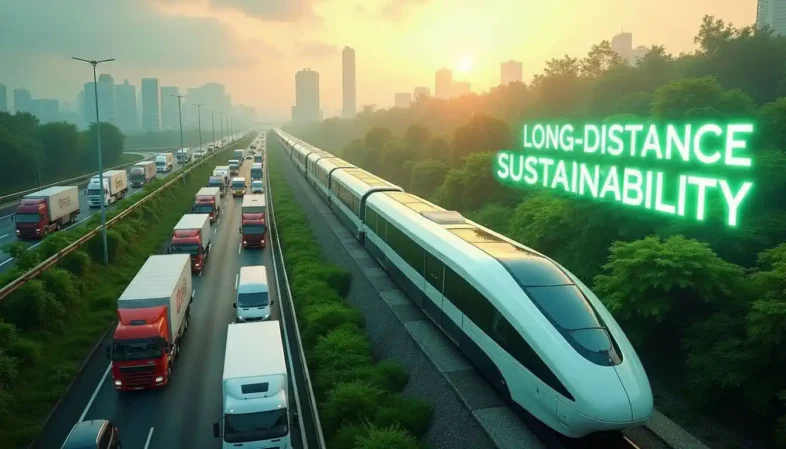
Long-distance transport sustainability has become one of the most important topics of all in modern sustainability discussions. As global trade, e-commerce, relocations, and freight demand continue growing, industries are under increasing pressure to reduce the environmental impact of moving goods and vehicles across large distances.
Consumers, businesses, and governments are all paying closer attention to how transportation affects emissions, fuel consumption, congestion, and long-term environmental goals. At the same time, the logistics industry faces the difficult challenge of balancing sustainability with speed, affordability, and rising customer expectations.
The conversation is no longer simply about moving goods efficiently. It is increasingly about how transportation systems can evolve in ways that reduce environmental impact while still supporting economic growth and consumer demand.
Transport Remains One of the Largest Environmental Challenges
Transportation remains one of the largest contributors to greenhouse gas emissions globally. According to the International Energy Agency, the transport sector accounts for a substantial share of global energy-related emissions, with road freight continuing to play a major role.
Long-distance transport is particularly difficult to decarbonise because it relies heavily on:
- Diesel-powered freight trucks
- Cargo ships
- Air freight
- Vehicle carriers
- Large logistics fleets
Unlike some industries that can transition more easily to renewable energy, transportation infrastructure often requires enormous investment and technological development before meaningful emissions reductions become possible at scale.
The long distance transport sustainability challenge becomes even greater when considering how much modern economies depend on long-distance transportation networks every day.
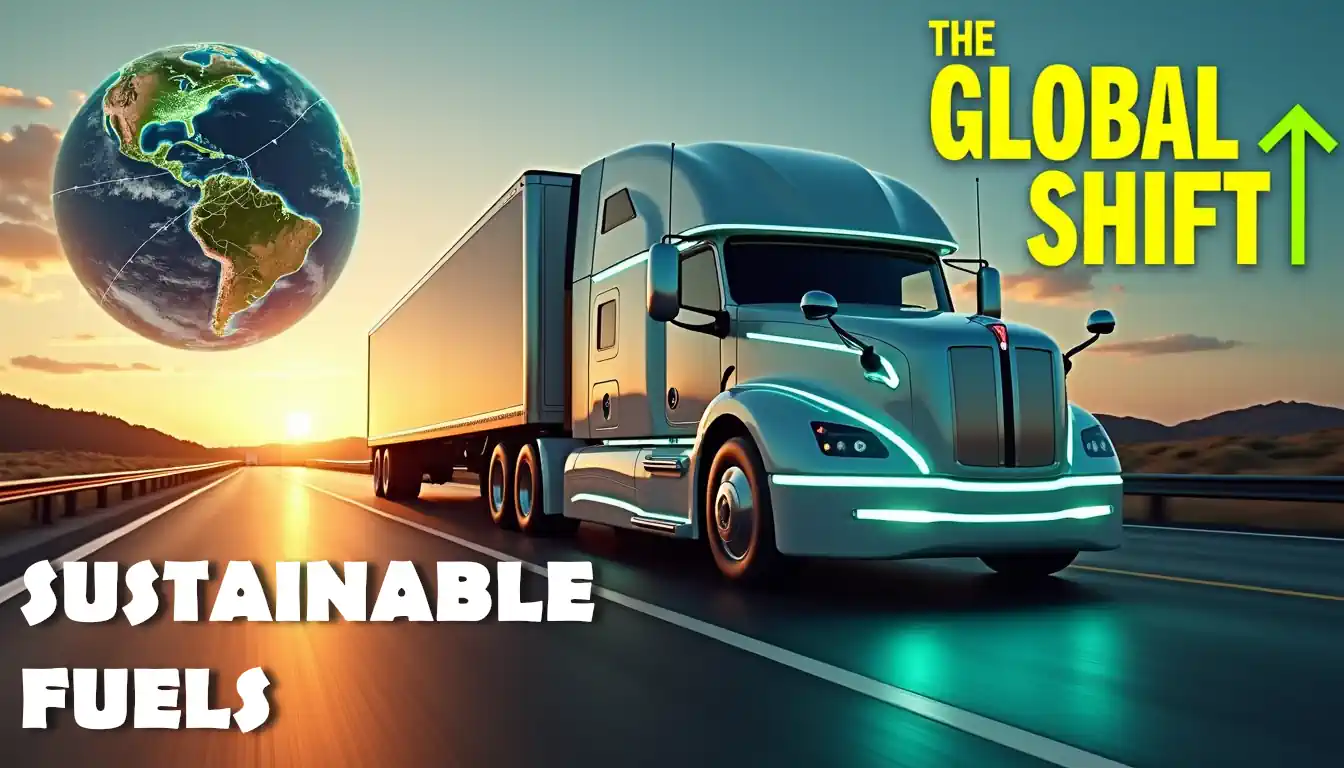
A New Boy in the Market May Solve Transport Fuel Decarbonisation
An emerging solution to these challenges is the integration of Renewable Natural Gas (RNG), or biomethane, into the heavy-duty transport sector. Derived from organic waste streams such as agricultural residue and food waste, RNG becomes a versatile fuel source when compressed (CNG) or liquified (LNG), offering a chemically identical but carbon-neutral alternative to fossil-based gases. Because it leverages existing gas engine technology and refuelling infrastructure, it provides a “drop-in” pathway for decarbonising long-haul freight trucks and vehicle carriers that are currently difficult to electrify.
By capturing methane that would otherwise escape into the atmosphere and repurposing it for transport, this circular energy model not only reduces tailpipe CO2 but can actually achieve negative carbon intensity, making it a cornerstone of sustainable logistics.
E-Commerce Has Changed Transportation Demand Completely
One of the biggest drivers behind modern transport growth is e-commerce. Consumers now expect products to arrive faster than ever, often within one or two days of ordering.
This shift has transformed logistics systems worldwide.
Instead of transporting large quantities of goods to physical stores only, businesses now manage millions of direct-to-consumer deliveries involving:
- Regional warehouses
- Last-mile delivery networks
- Rapid shipping routes
- Constant inventory movement
Research has shown that fast shipping expectations often increase emissions because vehicles operate with lighter loads and less efficient routing in order to prioritize speed.
Consumers may not always see the environmental impact behind rapid delivery systems, but the pressure for convenience significantly affects long distance transport sustainability.
How Biomethane Will Help Decarbonise the Convenience Economy
To address the environmental toll of the “convenience economy,” the logistics industry is increasingly turning toward biomethane as a high-impact sustainable fuel. As e-commerce giants and delivery providers face mounting pressure to offset the carbon footprint of rapid shipping, biomethane offers a scalable way to achieve immediate decarbonization without disrupting tight delivery schedules.
Unlike traditional fuels, biomethane is produced from circular waste systems, effectively turning the organic refuse of modern consumption into clean energy.
By transitioning last-mile delivery vans and regional heavy-freight fleets to this renewable gas, businesses can drastically lower their greenhouse gas contributions, proving that the speed of modern commerce does not have to come at the expense of the planet’s health.

The Industry Is Trying to Balance Efficiency and Environmental Goals
One of the biggest sustainability conversations happening within transport industries is how to reduce emissions without slowing economic activity.
Businesses cannot simply stop transporting goods or vehicles across long distances. Instead, companies are focusing heavily on improving efficiency in areas such as:
- Route planning
- Load optimization
- Fuel efficiency
- Driver scheduling
- Fleet management
- Warehouse positioning
AI-driven logistics systems are becoming increasingly important because they can reduce unnecessary mileage and improve route coordination.
Research within the logistics sector suggests that optimised transport systems can significantly lower fuel consumption while also reducing operational costs.
This is why long-distance transport sustainability is increasingly being viewed as both an environmental issue and a business efficiency strategy.

Electric Freight Vehicles Are Growing, But Challenges Remain
Electric vehicles are becoming more common across personal transportation, but long-distance freight creates unique complications.
Heavy-duty trucks require:
- Larger batteries
- Longer charging times
- Extensive charging infrastructure
- High energy capacity for heavy loads
While electric freight technology continues improving, long-haul transport remains more difficult to electrify than shorter urban delivery systems.
Many experts believe the future of sustainable freight will likely involve a combination of:
- Electric delivery fleets
- Hydrogen-powered trucking
- Biofuels
- Hybrid transport systems
- Rail freight expansion
Rather than relying on one single solution, the industry is gradually experimenting with multiple technologies simultaneously.
Advantages of Biomethane versus Electric Freight Vehicles
Within this diverse energy mix, the biofuel that is biomethane stands out as a practical and immediate solution for the heavy-duty sector, bridging the gap where battery technology currently falls short. By utilizing organic waste to create a carbon-neutral fuel, transporters can significantly reduce their environmental impact while maintaining the high power and range required for heavy loads.
Currently, the leading biofuel for land transport is liquified biomethane, which is stored in specialized cryogenic cylinders on the vehicle to maximize energy density. This sustainable fuel is already accessible to fleet operators through a growing infrastructure of natural gas fuel stations strategically located across the motorway network.
Rail Freight Is Receiving Renewed Attention
Rail transportation has re-entered sustainability conversations because of its potential to move large quantities of goods more efficiently than road transport alone.
Rail systems can reduce fuel usage per ton transported, particularly for long-distance freight routes.
Some automotive manufacturers and logistics providers are already increasing their use of rail transportation to reduce emissions associated with moving vehicles across countries and regions. However, rail cannot solve every transportation challenge. Final-mile delivery still requires road networks, meaning future systems will likely combine multiple transport methods together.

Interstate Migration Is Adding to Transportation Demand
Another major factor shaping transport sustainability discussions is population movement.
Millions of Americans continue relocating across states for:
- Lower living costs
- Hybrid work flexibility
- Lifestyle changes
- Career opportunities
- Retirement moves
These relocations create growing demand for long-distance moving services and vehicle transportation.
As a result, services that help transport your car Memphis and other major relocation hubs are becoming part of broader discussions around transportation efficiency and sustainability.
Consolidated vehicle transport may sometimes reduce emissions compared to multiple individuals driving separate long-distance routes independently.
Consumers Are Becoming More Aware of Transport Emissions
Public attitudes towards sustainability are shifting rapidly. More consumers now actively consider:
- Carbon footprints
- Sustainable shipping options
- Eco-friendly business practices
- Fuel usage
- Environmental reporting
Research suggests many consumers are increasingly willing to accept slightly slower shipping in exchange for more sustainable delivery methods.
However, there is still a major gap between environmental intentions and actual purchasing behavior. Convenience, low prices, and fast delivery often continue influencing consumer decisions more strongly than sustainability concerns alone.
This creates a difficult balancing act for logistics providers trying to satisfy both expectations simultaneously.
Biomethane as the Low-Compromise Alternative
To bridge this gap between consumer expectations and environmental responsibility, biomethane offers a solution that balances performance with planetary care. Because it is a drop-in fuel compatible with modern gas engines, moving to biomethane requires few, if any, compromises during adoption, allowing logistics providers to maintain the speed and reliability customers demand.
While it may not be as clean at the point of use as electricity, it is inherently a clean-burning fuel that is vastly superior to all current fossil-energy based fuels.
This transition allows brands to offer genuinely eco-friendly shipping options without sacrificing the convenience that still drives the majority of modern purchasing decisions.

Governments and Regulations Are Increasing Pressure
Governments worldwide are placing increasing pressure on transportation industries to reduce emissions and improve sustainability reporting.
This includes:
- Emissions targets
- Fuel efficiency regulations
- Fleet transition incentives
- Infrastructure investment
- Carbon reporting requirements
Research suggests transportation emissions reporting is becoming increasingly important for businesses operating across large supply chains.
Companies that fail to adapt may face growing pressure from regulators, investors, and environmentally conscious consumers.
Sustainability Is Now a Competitive Business Factor
Sustainability is no longer simply viewed as a corporate social responsibility topic. It is increasingly becoming a competitive business advantage.
Companies are using sustainable transport strategies to:
- Improve brand reputation
- Reduce operational costs
- Meet investor expectations
- Strengthen customer trust
- Differentiate themselves from competitors
Businesses that demonstrate environmental responsibility within their logistics operations may gain long-term advantages as sustainability becomes more important to customers and regulators alike.
The Future of Long-Distance Transport Will Be Complex
There is no single solution to the sustainability challenges facing long-distance transport. The future will likely involve gradual improvements across many different areas rather than one dramatic transformation overnight.
The industry is moving towards a future shaped by:
- Smarter logistics systems
- Cleaner energy sources
- More efficient routing
- Multi-modal transport
- Better emissions tracking
- Greater operational transparency
At the same time, global transportation demand is unlikely to slow significantly. Population growth, digital commerce, and economic expansion will continue placing pressure on logistics systems worldwide.
The sustainability conversation therefore, focuses not on eliminating long-distance transport, but on making it cleaner, smarter, and more efficient over time.
As technology, consumer behaviour, and environmental expectations continue evolving, transportation industries will remain at the centre of some of the most important sustainability discussions of the coming decades.
In this evolving landscape, biomethane provides a vital, pragmatic bridge between today’s fossil fuel reliance and tomorrow’s fully decarbonised goals.
By offering a high-performance, sustainable fuel that utilises existing infrastructure, it allows the industry to scale its green efforts without waiting for the decades-long overhaul of the global electrical grid. Because it addresses the immediate need for high-density energy in heavy-duty shipping, biomethane is sure to remain a permanent fixture in the global energy picture for years to come. Its role as a reliable, circular energy source ensures it will increasingly power the long-haul networks of the future.