


How industrial facilities, and that includes anaerobic digestion facilities, can improve Workplace Safety Preparedness
Industrial environments such as biogas facilities are built around precision, productivity, and performance, but none of those goals can be achieved without a strong commitment to workplace safety preparedness.
Whether operating a manufacturing plant, warehouse, energy facility, or renewable energy processing site, industrial businesses face a wide range of risks that can disrupt operations and endanger employees if the right systems are not in place. From equipment malfunctions and chemical spills to severe weather and fire hazards, emergencies can happen without warning.
Improving Emergency Communication Systems
Communication is one of the most critical elements of workplace safety preparedness. During an emergency, employees need accurate information delivered quickly and clearly. Delayed or inconsistent communication can increase panic, confusion, and risk.
Many industrial businesses are now investing in digital systems that allow real-time alerts and coordinated responses across entire operations. A reliable workplace emergency notification platform can help facilities send urgent updates instantly through multiple communication channels, ensuring employees receive important instructions regardless of their location within the site.
Traditional methods such as alarms or public announcements may not always be enough, particularly in large facilities where noise levels, shift changes, or multiple buildings can make communication difficult.
Modern communication systems can support:
- Emergency evacuation alerts
- Shelter-in-place instructions
- Severe weather notifications
- Chemical hazard warnings
- Lockdown procedures
- Operational updates during incidents
The ability to communicate rapidly across an entire workforce improves coordination and helps employees respond more confidently during high-pressure situations.
Understanding the Risks Facing Industrial Facilities
Every industrial workplace carries unique hazards depending on the equipment, materials, and processes involved. Heavy machinery, high temperatures, electrical systems, hazardous chemicals, and confined spaces all create potential dangers that require careful management.
Some of the most common workplace emergencies in industrial settings include:
- Fires and explosions
- Chemical leaks or spills
- Equipment failures
- Electrical incidents
- Severe weather events
- Structural damage
- Medical emergencies
- Cybersecurity breaches affecting operational systems
The scale of industrial operations means even a small incident can escalate quickly if employees are not informed and prepared. This is why emergency preparedness should never be treated as a one-time project. It requires continuous review and improvement as operations evolve.
Facilities that take a reactive approach to safety often struggle when real emergencies occur. Confusion, delayed communication, and inconsistent procedures can increase both risk and financial loss. Proactive preparedness helps reduce uncertainty and gives teams the confidence to respond appropriately under pressure.
Building a Strong Safety Culture
One of the most effective ways to improve workplace safety preparedness is by developing a strong safety culture across the organisation. Safety should not exist solely within management meetings or compliance documents. It needs to be integrated into daily operations and employee behaviour.
Workers who feel engaged in workplace safety are more likely to report hazards, follow procedures, and participate actively in emergency planning. Creating this environment starts with leadership.
Managers and supervisors should consistently communicate the importance of preparedness while leading by example. Employees need to see that safety is treated as a core operational priority rather than an afterthought.
A strong safety culture often includes:
- Regular safety meetings
- Open reporting systems for hazards
- Clear accountability across teams
- Ongoing emergency response training
- Recognition for safe workplace behavior
- Transparent communication during incidents
Preparedness becomes far more effective when employees understand their role within emergency procedures and feel empowered to act quickly when needed.

Conducting Thorough Risk Assessments
Preparedness begins with understanding where vulnerabilities exist. Industrial facilities should conduct regular risk assessments to identify hazards, evaluate potential consequences, and determine where improvements are needed.
A detailed assessment should review every aspect of the operation, including:
- Machinery and equipment
- Storage areas
- Production lines
- Electrical systems
- Emergency exits
- Hazardous material handling
- Communication systems
- Environmental risks
Risk assessments should also consider human factors, such as staffing levels, shift patterns, contractor access, and employee training gaps.
Importantly, industrial environments change over time. New equipment, updated workflows, and expanded facilities can introduce additional risks that require revised emergency procedures.
Facilities that regularly update risk assessments are better positioned to prevent incidents before they occur while improving their response capabilities for future emergencies.
Creating Clear Emergency Response Plans
Emergency plans should provide employees with clear guidance on what to do during different types of incidents. The more specific and organised these procedures are, the more effective the response will be when emergencies occur.
Strong emergency response plans typically include:
- Evacuation routes
- Emergency contact information
- Assembly point locations
- Equipment shutdown procedures
- Roles and responsibilities
- Medical response protocols
- Communication procedures
- Incident reporting requirements
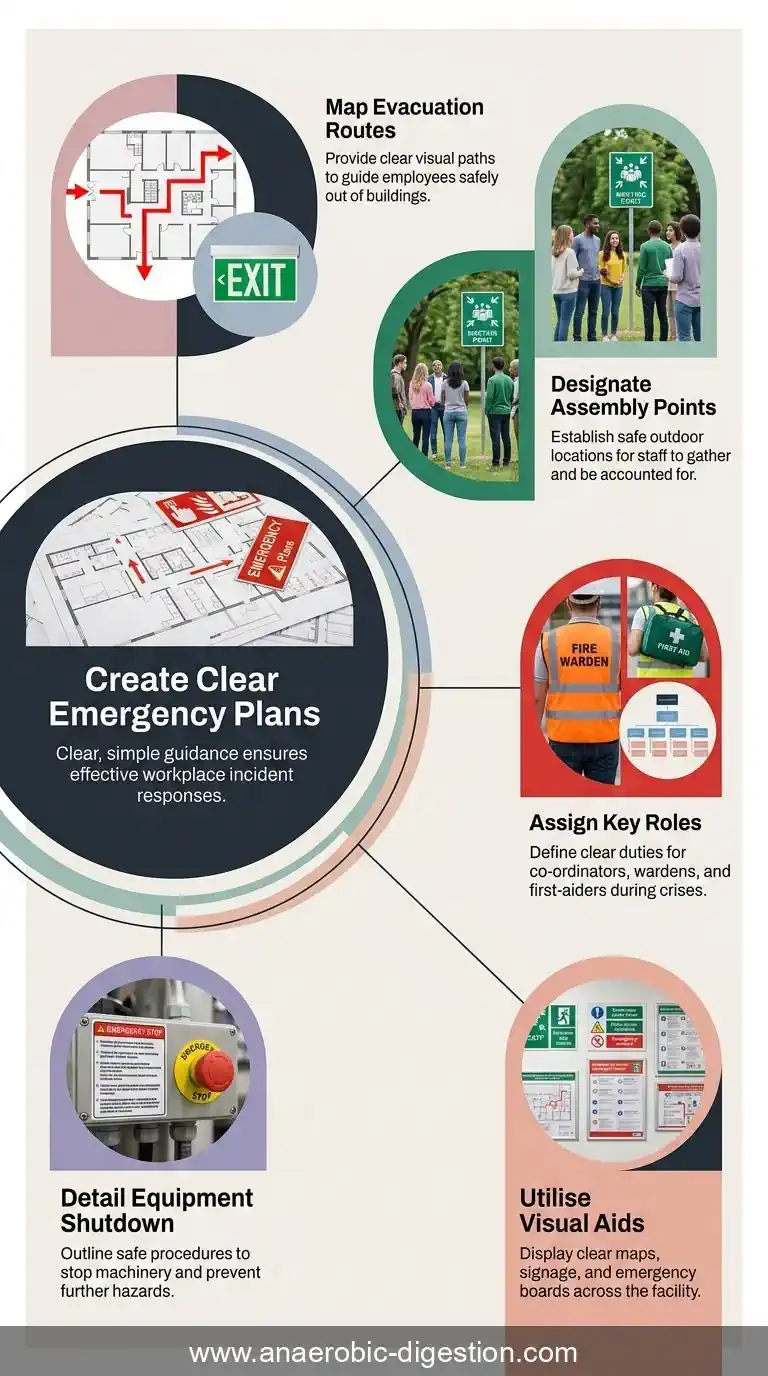
Industrial facilities should avoid creating overly complex plans that employees may struggle to remember during stressful situations. Procedures should be practical, easy to access, and regularly reinforced through training.
Visual aids such as facility maps, signage, and emergency instruction boards can also improve preparedness by helping employees quickly understand evacuation routes and safety procedures.

Prioritising Employee Training
Preparedness depends heavily on employee knowledge and confidence. Even the best safety systems become ineffective if workers are unsure how to respond during emergencies.
Industrial facilities should provide ongoing training that reflects the real risks employees may encounter. This includes both general workplace safety education and scenario-specific emergency response training.
Training may cover:
- Fire safety procedures
- Hazardous material handling
- First aid and CPR
- Equipment shutdown processes
- Evacuation drills
- Severe weather response
- Active threat procedures
Hands-on exercises and realistic drills are especially valuable because they allow employees to practice responding under pressure. Repetition helps build familiarity, making it easier for teams to react quickly during real emergencies.
Facilities should also ensure contractors, temporary staff, and visitors receive appropriate safety guidance before entering operational areas.

Using Technology to Strengthen Preparedness
Technology continues to play a major role in improving workplace safety across industrial environments. Advanced systems can help businesses detect risks earlier, monitor conditions in real time, and coordinate faster responses during emergencies.
Examples of safety technology used in industrial facilities include:
- Environmental monitoring sensors
- Automated alarm systems
- Wearable safety devices
- Digital inspection tools
- Emergency notification software
- Access control systems
- AI-powered predictive maintenance tools
Predictive maintenance technology, for example, can identify equipment issues before failures occur, reducing the likelihood of accidents caused by mechanical breakdowns.
Wearable devices can also improve worker safety by monitoring environmental conditions, detecting falls, or sending distress signals during emergencies.
The integration of technology allows facilities to move beyond reactive safety measures and adopt more proactive, data-driven approaches to preparedness.
Strengthening Coordination With Emergency Services
Industrial facilities should not prepare for emergencies in isolation. Building strong relationships with local emergency responders can significantly improve response times and coordination during critical incidents.
Facilities should regularly collaborate with:
- Fire departments
- Medical responders
- Law enforcement
- Hazardous material response teams
- Utility providers
Inviting emergency services to tour facilities and review site layouts can help them better understand operational risks before incidents occur.
Joint training exercises are also highly beneficial. These simulations allow both facility teams and external responders to practice coordination, identify weaknesses, and improve communication strategies before real emergencies happen.
Reviewing and Updating Safety Procedures Regularly
Preparedness is not static. Industrial facilities must continuously evaluate whether their safety procedures remain effective as operations evolve.
Changes in staffing, equipment, production capacity, or regulations may require updated emergency plans and training programs. Facilities should regularly review:
- Incident reports
- Near-miss events
- Drill performance
- Employee feedback
- Equipment inspections
- Regulatory updates
Lessons learned from previous incidents can provide valuable insight into areas requiring improvement.
Regular audits also demonstrate a commitment to workplace safety and help ensure preparedness strategies remain aligned with operational realities.
Supporting Employee Wellbeing During Emergencies
Preparedness is not only about physical safety. Emergencies can place significant emotional and psychological strain on employees, particularly after serious incidents.
Industrial businesses should consider how they support worker wellbeing before, during, and after emergencies occur.
This may include:
- Providing mental health resources
- Offering post-incident counselling
- Encouraging open communication
- Reducing panic through clear leadership
- Supporting employees returning after incidents
A workforce that feels supported is more likely to remain focused, cooperative, and resilient during challenging situations.
The Long-Term Benefits of Workplace Safety Preparedness
Strong workplace safety preparedness delivers benefits that extend far beyond regulatory compliance. Facilities that prioritise safety often experience:
- Reduced workplace injuries
- Lower operational disruptions
- Improved employee confidence
- Better workforce retention
- Reduced liability risks
- Stronger operational resilience
- Enhanced reputation with clients and partners
Preparedness also contributes to long-term business continuity. Industrial facilities that can respond effectively to emergencies are more likely to recover quickly and maintain productivity during difficult situations.
As industrial environments become increasingly complex, the importance of preparedness will only continue to grow. Businesses that invest in proactive safety strategies today will be far better equipped to handle the operational challenges of tomorrow.
Final Thoughts
Industrial workplace safety preparedness requires more than basic compliance measures. It demands continuous planning, employee engagement, effective communication, and the willingness to adapt as risks evolve.
Facilities that build strong safety cultures, invest in modern communication systems, and prioritise ongoing training create safer environments for everyone involved. Emergency preparedness is ultimately about protecting people while ensuring businesses can continue operating effectively during uncertain situations.
By taking a proactive approach to workplace safety, industrial organisations can reduce risk, strengthen resilience, and create a more confident and prepared workforce for the future.