




A biogas digester is a sealed reactor in which microorganisms break down organic material without oxygen. This process, called anaerobic digestion, produces biogas and a remaining material called digestate. “Methane digester” is another name people use for a biogas-producing anaerobic digester: methane is the energy-rich component of the gas, rather than a different digestion process.
Digesters range from small units that treat household or farm wastes to engineered reactors at large agricultural, food-waste and wastewater facilities. Their scale and design vary, but their central task is the same: maintain suitable conditions for microorganisms to convert biodegradable material into useful products.
Why we rewrote this guide: Our two short articles from 2018, “Biogas Digester Facts” and “Biogas Digester Lessons”, each explained part of this subject. We have brought their useful material together here, updated the explanation of small and commercial designs, and made the distinction between a digester and a whole biogas plant clearer. The links below lead to our detailed articles on individual designs.
Digester, Biogas Plant and Anaerobic Digestion: What Is the Difference?
These terms are related, but they do not describe exactly the same thing.
- Anaerobic digestion is the biological process.
- The digester is the sealed vessel or reactor where that process takes place.
- A biogas or anaerobic digestion plant is the wider facility. It may include feedstock reception and preparation, one or more digesters, gas storage and treatment, energy equipment, and digestate handling.
In everyday speech, people sometimes call the entire plant “a digester”. For understanding a design or comparing equipment, the distinction matters: a digester tank is one part of a working plant.
How Does a Biogas Digester Work?
Suitable organic material is collected and prepared for the chosen system. Depending on the plant, this might include animal manure, slurry, food waste, crop residues or wastewater solids. The material enters a reactor where oxygen is excluded.
Inside, communities of microorganisms work through a series of biological steps. They break down complex organic matter and ultimately produce biogas, principally methane and carbon dioxide. The remaining material leaves as digestate. The UK government’s explanation of anaerobic digestion describes these two outputs.
Raw biogas can be used in suitable equipment to generate heat or electricity. It can also be cleaned and upgraded to biomethane for other uses. Raw biogas and upgraded biomethane are not interchangeable fuels: the latter has undergone additional processing.
A working system must also manage what happens after the reactor. Gas needs appropriate collection and handling, while digestate needs storage, treatment or use suited to its composition and local requirements.
Main Types of Biogas Digester
There is no single best design for every feedstock or site. The distinctions below explain why several different systems are all called biogas digesters.
Small-Scale and Household Designs
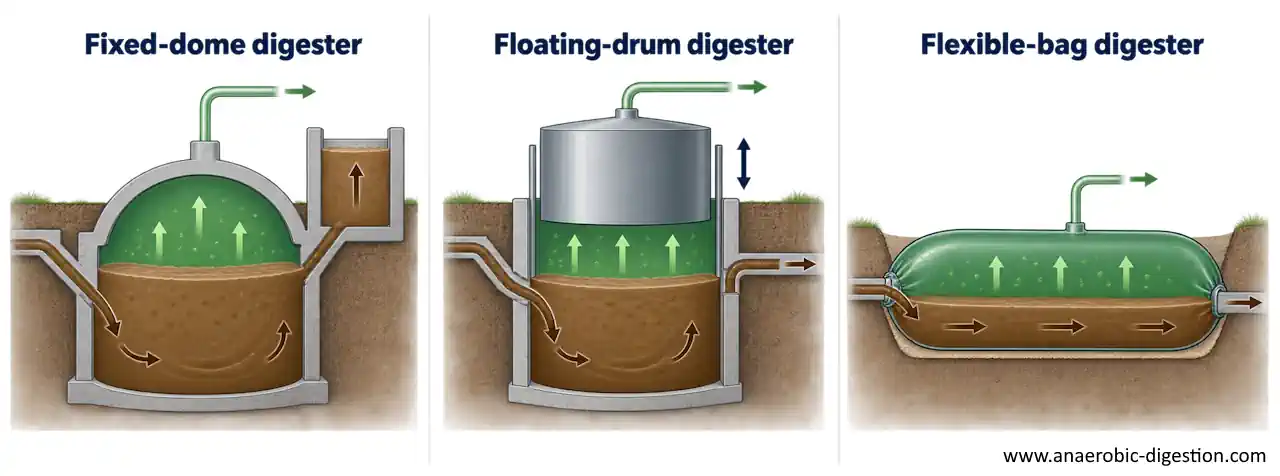
Fixed-dome digesters commonly place a rigid digester and gas space below ground. As gas accumulates, it displaces slurry into a compensation chamber. They have no moving gas-holder, although construction quality and gas tightness are critical.
Floating-drum digesters use a gas-holder that rises and falls as gas volume changes. This makes stored gas visible and can provide steadier pressure, but the moving holder needs maintenance.
Flexible-bag or tubular digesters use a sealed membrane instead of a rigid tank. They can be relatively simple to install, while durability, protection from damage and suitable operating temperature need attention.
People considering a ready-made household unit can compare the best biogas systems, home digesters and available kits before deciding whether a packaged system suits their climate, feedstock and expected gas use.
Readers interested in a small experimental system can also follow our guide to building a mini biogas plant at home, including the principal components, operating considerations and safety precautions.
These are established small-scale designs described in the FAO’s overview of biodigesters. An underground biogas digester usually describes how a fixed-dome or other reactor is installed; “underground” does not identify a separate biological process.
Farm and Commercial Designs
Complete-mix digesters (CSTRs, or continuous stirred-tank reactors) are enclosed tanks whose contents are mixed, often with heating. They suit feedstocks that can be managed as a pumpable liquid or slurry.
Plug-flow digesters move material through a reactor from inlet to outlet. They are associated with thicker feedstocks, including some scraped manures.
Covered lagoons capture biogas beneath a cover over a lagoon treating relatively dilute material. Climate, feedstock and operating conditions affect where they are appropriate.
Dry digesters, also known as solid-state anaerobic digestion (SSAD) systems, treat higher-solids organic material rather than a pumpable slurry. Designs include sealed batch chambers and continuous high-solids reactors. They can treat separately collected organic waste and, in mechanical biological treatment plants, the organic-rich fraction recovered from residual “black bag” municipal and similar commercial waste. This mixed-waste route requires sorting and careful management of contaminants and the resulting digestate.
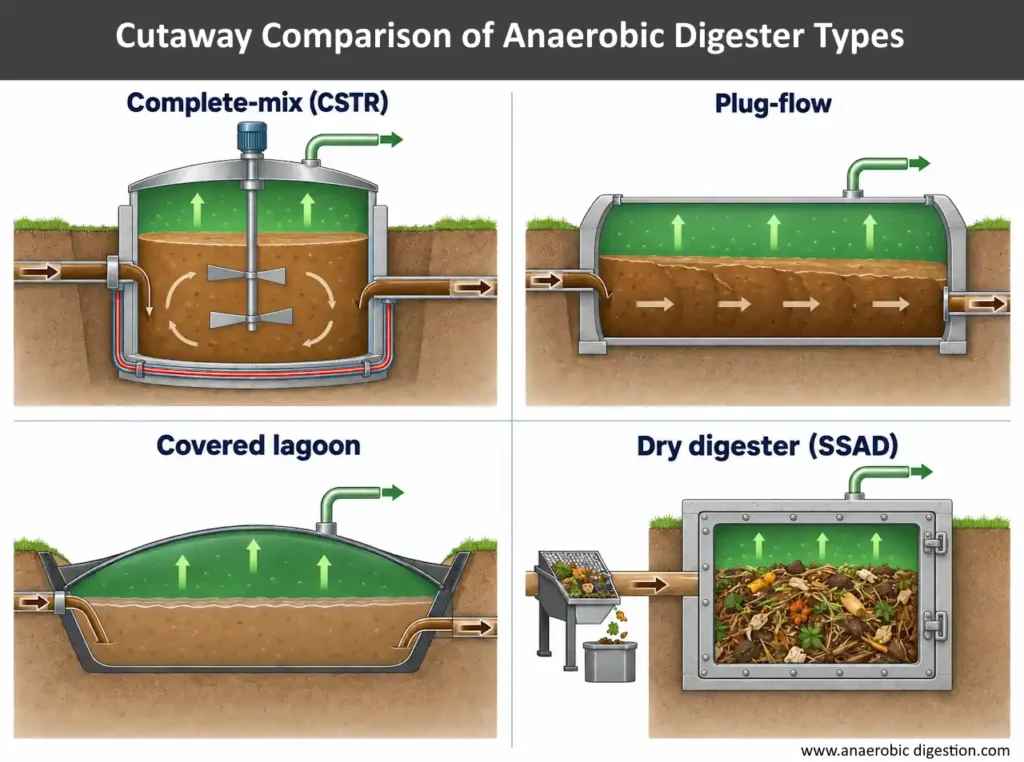
The US EPA’s digester operator guidebook describes several farm-scale designs and stresses that the right choice depends on the material being treated and the site. WRAP describes how mechanical biological treatment can recover an organic fraction from residual mixed waste for biological treatment.
How Do Construction and Climate Affect a Digester?
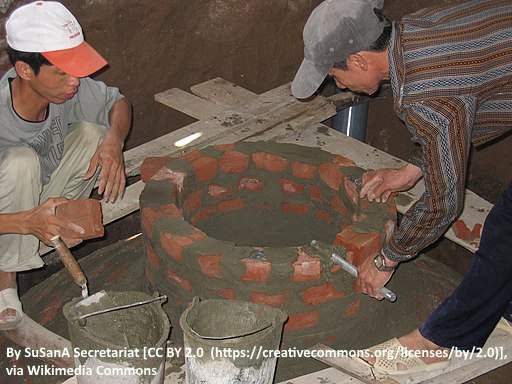
The original Lessons article raised a practical distinction worth keeping. Small fixed-dome systems are commonly built from masonry or concrete, while larger engineered reactors may use concrete or protected steel tanks. The material and construction method must suit the site, the feedstock, and the need to contain both liquids and gas.
Temperature matters as much as the structure. Building a small digester below ground can moderate changes in temperature, but burial alone does not guarantee good winter gas production in a cool climate. Larger systems may need insulation and heating to maintain suitable conditions. The UK Environment Agency’s guidance stresses the importance of keeping a digester at a stable operating temperature.
How Much Gas Will a Digester Produce?
There is no dependable gas yield per kilogram that applies to every waste. Feedstocks differ in the amount of material microorganisms can break down. Actual production also depends on preparation, loading, operating conditions and how well the digester is managed. The EPA’s project development handbook explains why feedstock yields vary widely.
A proposed project therefore needs an assessment of its specific feedstock and system. A single headline yield is a poor basis for sizing a digester or forecasting energy income.
What Makes a Digester Useful?
A well-managed digester can recover energy from organic material and retain nutrients in digestate. It can also help control methane emissions that might otherwise arise from some waste-management practices. Those benefits depend on the whole system, including gas handling and digestate storage. Methane leakage can erode the climate benefit, as the International Energy Agency explains.
The practical question is therefore larger than “Which tank makes the most gas?” A suitable design must match the available feedstock, intended gas use, digestate route, site conditions and ability to operate and maintain the system reliably.

Frequently Asked Questions
Is a methane digester the same as a biogas digester?
In this context, the names usually refer to the same kind of anaerobic digester. The reactor produces biogas, which contains methane alongside carbon dioxide and smaller amounts of other gases.
Is a biogas digester the same as a biogas plant?
The digester is the reactor. A plant is the wider facility needed to receive and treat material, manage the gas, and handle the digestate.
Does every digester have to be underground?
No. Fixed-dome designs are often built below ground, while many commercial digesters are above-ground tanks, covered lagoons or other engineered structures.
Which type of biogas digester is best?
The answer depends on feedstock characteristics, scale, climate, available space, the intended use of biogas and how digestate will be managed. Compare designs against those requirements rather than choosing by name alone.
Further Information on Digester Designs
For more detail on the designs introduced above, explore these guides:
- Fixed-dome biogas plant design and installation
- Floating-drum digesters and other small-scale technologies
- Balloon and flexible-bag biogas digesters
- Complete-mix digesters (CSTRs) compared with UASB reactors
- Plug-flow digesters and other biogas plant designs
- Covered-lagoon digesters
- Dry digesters and solid-state anaerobic digestion (SSAD)
Want structured training? Visit our Anaerobic Digestion Training Club to explore online courses on AD principles and home biogas systems.
[Published November 2018. Rewritten September 2026.]




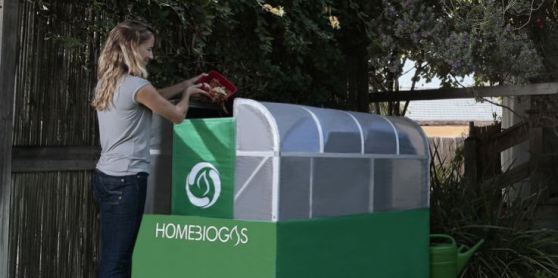
Good to highlight & point people to an alternative to the common home composting of organic waste (including foodwaste, which our council warns it’s taxpayers of the potential for vermin from protein inclusions!), but I think you might have also mentioned the interesting Israeli domestic design (https://homebiogas.com/) that had an introductory price here of around £600! However, as I have already informed the company it will need to have additional features for UK & Europe e.g. total light steel enclosures (instead of plastic!), a gas leakage sensor & simple battery-backed alert/alarm.
Brian. Yes. These are all good points. There is a danger that these plants if not well designed with gas-leak monitoring would result in so much methane loss to the atmosphere that the net reduction in Greenhouse effect would be nil! Similarly, it’s no good if the digester leaks and pollutes groundwater or drains into a local stream. I believe that WRAP did some work on home composting and again the concern was that poor home composting with saturated over-wet composting results in methane discharges.
Further to my comment above, the company has just launched an associated home biotoilet (https://homebiogas.com/blog/the-new-bio-toilet-a-bloggers-review/) and donated a dozen to the Guatemalan community development project (see link on same page).