


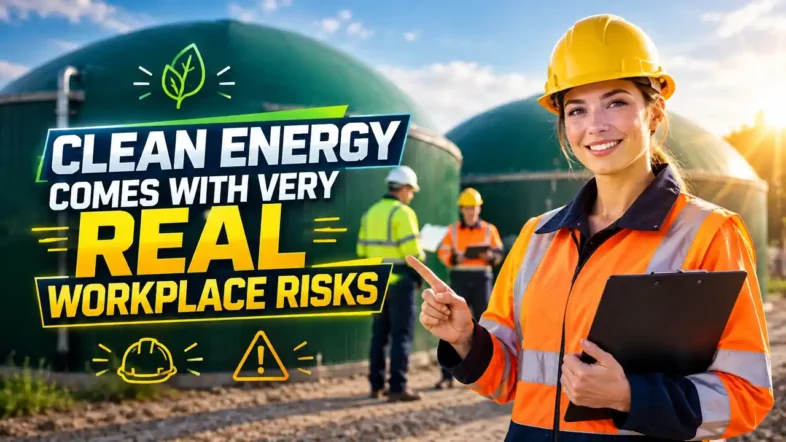
Discover the key clean energy workplace risks in anaerobic digestion facilities, from biogas hazards to working at height, and learn how to keep operations safe.
Anaerobic digestion plays an increasingly important role in renewable energy production, turning organic waste into useful biogas and digestate. For businesses looking to reduce waste and generate energy more sustainably, the technology offers considerable opportunities.
However, the environmental benefits of anaerobic digestion shouldn’t overshadow the practical challenges of operating these facilities safely. Behind every successful plant is a workforce responsible for managing complex equipment, handling potentially hazardous materials and maintaining systems that must operate reliably. Understanding the risks involved is essential for protecting employees, preventing disruption and keeping renewable energy facilities running effectively.
Understanding the Hazards Behind Biogas Production
Anaerobic digestion relies on microorganisms breaking down organic material in oxygen-free conditions. The process produces biogas containing methane and carbon dioxide, alongside potentially hazardous gases such as hydrogen sulphide. Although these gases are valuable or manageable within properly designed systems, uncontrolled releases can create serious dangers.
Methane is highly flammable, meaning leaks can present fire and explosion risks when suitable ignition sources are present. Hydrogen sulphide is particularly concerning because exposure can cause severe health effects, even at relatively low concentrations. Carbon dioxide can also displace oxygen in enclosed spaces, creating potentially dangerous atmospheres.
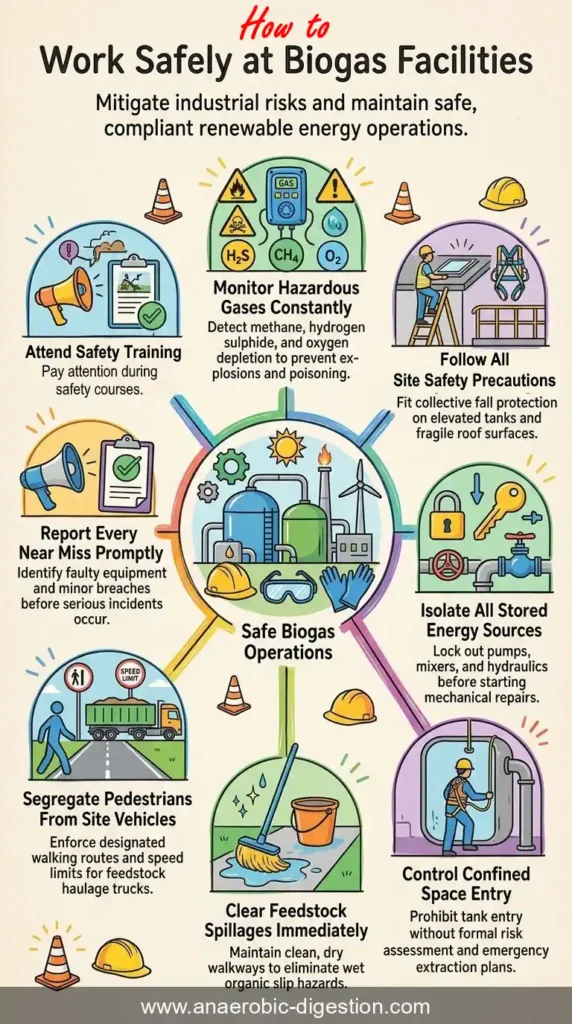
For plant operators, effective gas monitoring, suitable ventilation and properly maintained equipment are essential. Workers must understand the hazards associated with the materials they handle and recognise that dangerous atmospheres may develop without obvious warning signs.
Training should extend beyond routine operating procedures. Employees and contractors need to know how to respond to alarms, report suspected leaks and follow emergency arrangements without placing themselves at additional risk.
Working at Height Around Industrial Facilities
Gas management isn’t the only safety concern at anaerobic digestion plants. These facilities often contain elevated platforms, storage tanks, processing buildings and extensive pipework that require periodic inspection and maintenance. Accessing these areas can expose workers to significant fall hazards.
Roof maintenance deserves particular attention. Industrial buildings may contain fragile rooflights, ageing roofing materials or poorly protected edges. A surface that appears capable of supporting someone’s weight may be unsuitable for access, particularly when its condition has deteriorated over time.
Suitable collective protection can help reduce these risks. For example, skylight covers from Universal Safety Systems provide a rooflight protection option that may be considered where fragile roof openings present a fall hazard. Any installation must be assessed for compatibility with the roof structure, intended use and relevant safety requirements.
Before work begins, operators should consider whether roof access is necessary at all. Where possible, inspections may be completed using alternative methods that avoid exposing workers to height-related risks.
When access cannot be avoided, competent personnel, suitable equipment and clearly established procedures become essential.
Maintenance Work Can Introduce Unexpected Dangers
Routine maintenance is necessary for reliable biogas production, but it can also introduce hazards that aren’t present during normal operation. Opening equipment, removing guards or isolating machinery may expose workers to moving parts, stored energy or hazardous substances.
Pumps, mixers and conveyors are particularly important examples. These systems may contain mechanical components capable of causing serious injuries if maintenance begins before equipment has been properly isolated.
Effective isolation procedures should address electrical, mechanical, hydraulic and other stored energy sources. Workers must understand how to verify that equipment is safe before starting repairs, rather than assuming that switching off a machine removes every hazard.
Confined spaces present another significant concern. Tanks, pits and enclosed processing areas may contain oxygen-deficient atmospheres or dangerous concentrations of gases. Entry should be avoided wherever reasonably practicable, with appropriate assessment, controls and emergency arrangements established whenever entry is necessary.
Contractor management is equally important. External specialists may understand the equipment they’re repairing but be unfamiliar with the specific hazards of an anaerobic digestion facility.
Clear communication between contractors and site operators helps ensure that maintenance activities don’t create additional risks for other employees.
Preventing Slips, Trips and Vehicle Accidents
Some workplace hazards receive less attention because they’re familiar rather than technically complex. Yet slips, trips and vehicle movements can create serious problems across busy renewable energy facilities.
Anaerobic digestion sites frequently handle wet feedstocks, organic residues and other materials that can contaminate walking surfaces. Spills, uneven ground and poorly maintained drainage may increase the likelihood of accidents, particularly during periods of heavy rainfall.
Good housekeeping should therefore be treated as an operational priority. Keeping access routes clear, addressing spillages promptly and maintaining suitable walking surfaces can reduce avoidable incidents.
Vehicle movements also require careful planning. Deliveries of feedstock, removal of digestate and routine maintenance activities can bring heavy vehicles into areas where employees are working on foot.
Separating pedestrian routes from vehicle operations, establishing suitable speed limits and providing clear traffic arrangements can help reduce collision risks.
These measures may seem straightforward, but their effectiveness depends on consistent implementation rather than written policies alone.
Creating a Stronger Safety Culture
Effective workplace safety involves more than installing protective equipment or completing occasional inspections. It requires a culture in which employees understand the hazards associated with their work and feel confident raising concerns.
Regular training helps maintain awareness, particularly when equipment, operating procedures or personnel change. However, training should reflect real site conditions rather than relying entirely on generic presentations.
Encouraging workers to report near misses can also reveal weaknesses before serious incidents occur. A blocked access route, damaged guard or malfunctioning gas detector deserves attention even when nobody has been injured.
Management plays an important role by providing adequate resources, reviewing risk assessments and ensuring maintenance schedules remain realistic. Production targets should never encourage employees to bypass essential precautions.
Emergency planning deserves the same commitment. Facilities should establish appropriate arrangements for fires, gas releases, injuries and other foreseeable incidents, with responsibilities clearly communicated and procedures reviewed regularly.
Keeping Renewable Energy Safe and Sustainable
Anaerobic digestion can contribute to a more sustainable energy system, but responsible operation requires continued investment in workplace safety. Gas hazards, machinery, confined spaces and work at height all demand careful assessment and appropriate controls.
For plant operators, the challenge is maintaining reliable production while protecting everyone who works on or visits the site. That means recognising both obvious industrial hazards and smaller problems that can develop during everyday operations.
Clean energy should be produced through safe working practices, not at their expense. By combining competent supervision, suitable protective measures, effective maintenance and open communication, anaerobic digestion facilities can support environmental progress while safeguarding the people who make it possible.