
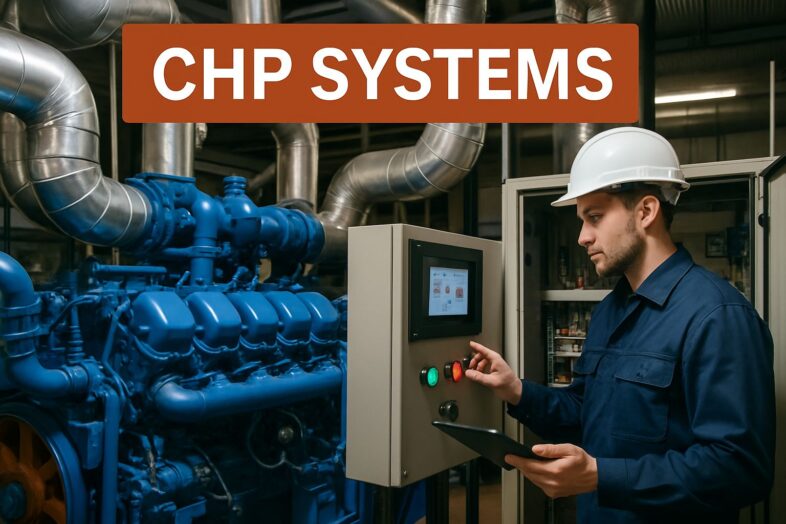
Biogas CHP units generate renewable electricity and usable heat, as hot water or hot air, simultaneously. Fuelled by this source of methane-rich biogas, they can often achieve over 80% efficiency. Ideal for on-site energy, for room and barn heating and anything else that needs hot water, or warm/hot air, these systems, ranging from 2kWe to 4,500kW+, convert waste (sewage, food, organic slurry) into sustainable power, significantly lowering energy bills and reducing carbon emissions.
Summary of Main Points About Biogas CHP
Biogas Combined Heat and Power (CHP) units generate renewable electricity and usable heat simultaneously from methane-rich biogas, often achieving over 80% efficiency. Ideal for on-site energy, these systems, ranging from 2kWe to 4,500kW+, convert waste (sewage, food, slurry) into sustainable power, significantly lowering energy bills and reducing carbon emissions. in this Article:
- Biogas CHP systems can achieve total system efficiencies of 65 to 80 percent — far outperforming conventional separate heat and power generation, which tops out around 50 percent.
- Agricultural producers, wastewater treatment plants, and landfill gas operators are already leading adopters of biogas CHP, turning organic waste streams into reliable on-site energy.
- The biggest hurdle is upfront capital cost — but state incentive programs and long-term fuel savings make the return on investment compelling for the right facilities.
- A single 1 MW biogas CHP system can dramatically cut both electricity bills and grid dependence, while simultaneously reducing CO2, NOx, and SO2 emissions compared to conventional generation.
- Keep reading to find out which facilities benefit most — and why some biogas projects are now integrating CHP even when their primary output is biomethane, not electricity.
Biogas CHP Systems Turn Waste Into Power and Profit
Most energy systems waste more than half the fuel they burn — biogas CHP systems are built specifically to fix that problem.
Biogas Combined Heat and Power (CHP) technology is one of the most effective and time-tested renewable energy techniques currently available. It uses something that most facilities already produce — organic waste — and transforms it into electricity and useful heat at the same time, extracting much more value from each fuel unit. It is one of the most obvious examples of closed-loop energy thinking for both renewable energy enthusiasts and facility operators. Comprehending how these systems function is the first step to unlocking their full potential.

“Cogeneration – Wikipedia” from en.wikipedia.org and used with no modifications.
What is a Biogas CHP System?
A biogas CHP system is a system that combines an anaerobic digestion process, which produces biogas from organic material, with a cogeneration unit that transforms this biogas into electricity and thermal energy simultaneously. Unlike traditional power plants that allow heat to escape as waste during power generation, a CHP system captures this heat and uses it.
The Process of Creating Biogas from Organic Waste
Biogas is created when organic matter is broken down by microorganisms without the presence of oxygen. This process is known as anaerobic digestion and it occurs naturally in places like landfills, manure lagoons, and wastewater treatment digesters. The gas that is produced is made up mainly of methane and carbon dioxide and can be used directly as a fuel for generating power.
Typical raw materials include livestock waste, food processing waste, municipal wastewater solids, and landfill gas. This versatility is one of the major advantages of biogas – almost any facility that produces a significant amount of organic waste already has the raw materials it needs.
How a CHP System Turns Biogas into Heat and Power
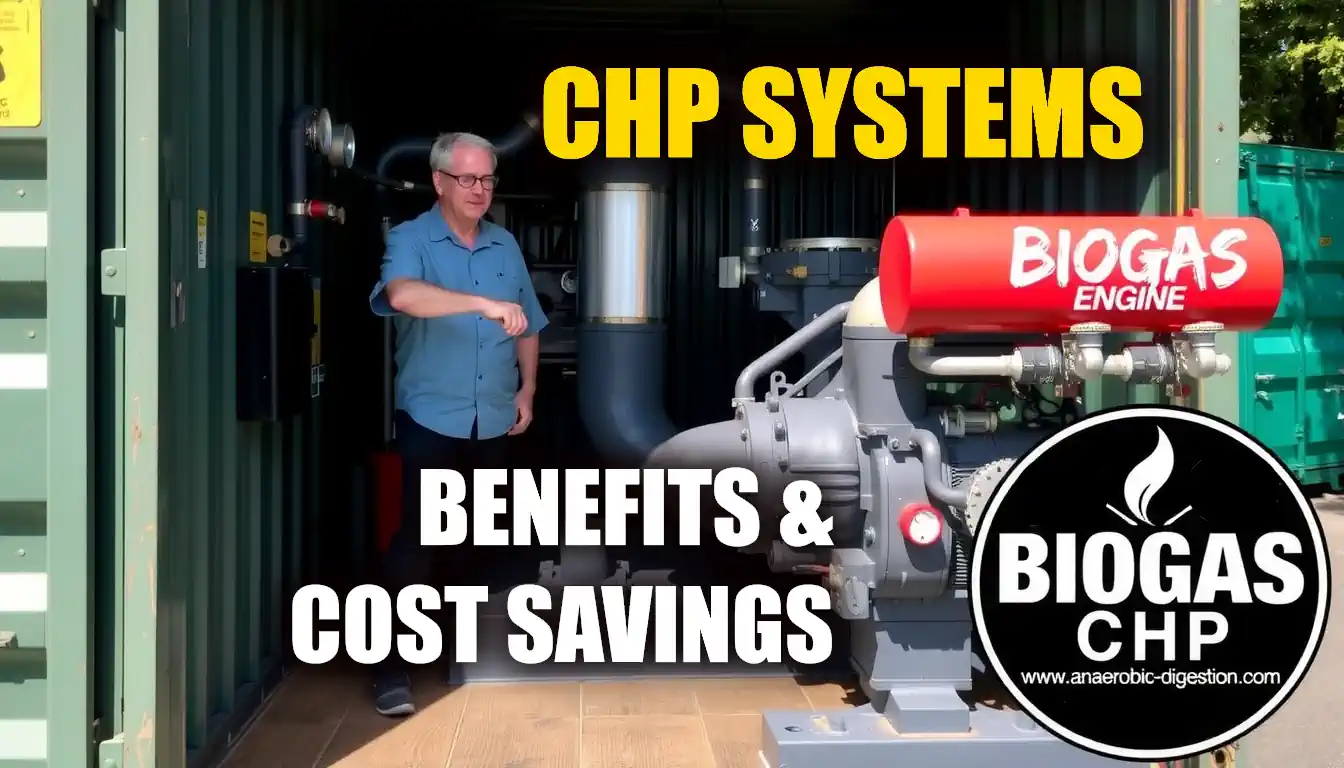
Once the biogas is captured, it is then fed into a CHP unit – typically a reciprocating internal combustion engine or a microturbine. The engine then burns the biogas to generate electricity directly on-site. But here is where the CHP is different from standard generation: the heat that is produced by the combustion process, which would otherwise vent into the atmosphere, is captured through a heat exchanger and redirected for space heating, water heating, industrial process heat, or even absorption cooling.
What sets CHP apart from a generator is its dual-output design. Each unit of biogas that enters the system is doing double duty — it's used once for electricity and once for heat.
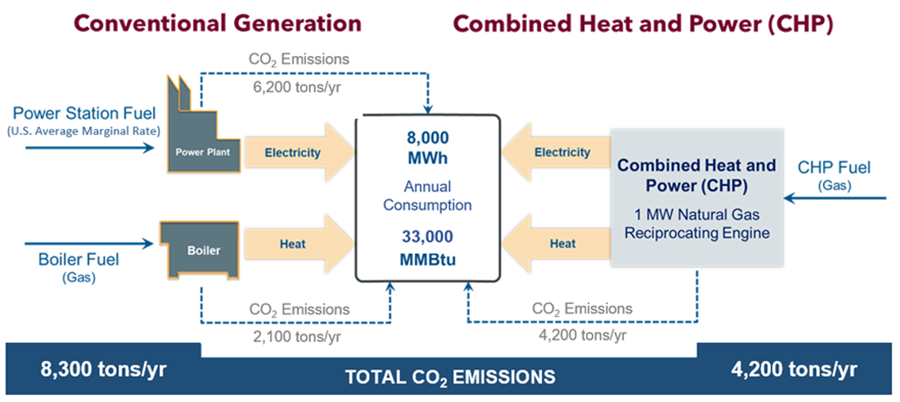
Example: Comparing a 1 MW Reciprocating Engine CHP System to Separate Heat & Power
When you compare a 1 MW natural-gas-fired reciprocating engine CHP system to the conventional separate production of electricity (purchased grid power) and useful thermal energy (on-site boiler), you can see that there are significant efficiency gains. The separate heat and power approach typically operates at around 50% combined efficiency. The CHP system achieves 65–80% total system efficiency by recovering heat that conventional systems simply discard.
Why CHP Is More Efficient Than Separate Heat and Power Generation
CHP systems typically achieve total system efficiencies of 65 to 80 percent by recovering and using heat from on-site electricity production. Some advanced configurations can even approach 90 percent. Conventional separate systems — a utility grid connection plus an on-site boiler — typically max out around 50 percent. This efficiency gap directly translates into fuel savings, lower operating costs, and reduced emissions.
The Fundamental Financial Advantages of Biogas CHP
The financial benefits of biogas CHP boil down to one main concept: achieving more with less fuel. Each percentage point of efficiency gained translates to a dollar saved on energy acquisition.
Reduced Electricity Costs with On-Site Power Generation
When a facility generates its own electricity from biogas, it can buy much less power from the utility grid. This can lead to significant yearly savings for operations that use a lot of energy, such as large livestock farms, food processing plants, or wastewater treatment facilities. The electricity that is generated essentially comes from a waste stream that the facility was already managing.
Generating power on-site can also cut or even eliminate transmission and distribution charges, which can form a significant part of a commercial electricity bill. This is a cost saving before even considering the value of the recovered heat.
Reduced Vulnerability to Fluctuating Energy Prices
One of the lesser-known benefits of biogas CHP is the protection it offers against the unpredictability of energy markets. Facilities that depend solely on grid electricity are at the mercy of rate hikes, demand charges, and supply interruptions. A biogas CHP system greatly alters this scenario.
The fuel, biogas, is produced on-site from organic waste, so its cost is primarily based on the operating costs of the digestion system instead of fluctuating commodity prices. This predictability allows for more stable long-term energy budgeting.
CHP systems have the ability to operate on a variety of fuel types, such as natural gas, biogas, coal, and biomass. This ability to switch fuels provides facilities with an extra level of protection against price increases in any single energy market. This is a strategic advantage that operations that are solely dependent on the grid do not have.
| Energy Approach | Fuel Cost Exposure | System Efficiency | On-Site Heat Recovery |
|---|---|---|---|
| Grid Electricity + On-Site Boiler | High (market rates) | ~50% | None |
| Biogas CHP System | Low (waste-derived fuel) | 65–80%+ | Yes |
| Biogas CHP (Advanced Config) | Low | Up to ~90% | Yes (maximized) |
Revenue From Selling Excess Electricity to the Grid
When a biogas CHP system generates more electricity than a facility needs, that surplus can often be sold back to the utility grid. This net metering or power purchase arrangement turns an energy system into an active revenue source, not just a cost-reduction tool.
Whether or not you can sell electricity back to the grid depends on the regulations and interconnection agreements in your area. However, for properly sized systems at productive biogas sites, the potential to earn money is real and should be considered when deciding whether or not to invest in a system.
Lowered Costs for Transmission and Distribution
Each kilowatt-hour produced in-house is one that doesn't need to be transported or distributed. This is more important than it might seem at first glance. The costs for transmitting and distributing electricity can make up a substantial chunk of a commercial or industrial power bill, sometimes even equaling the cost of the energy itself.
Biogas CHP systems produce power right where it's used, which means they avoid all charges for the electricity they produce. For large facilities that are always operational, this alone can lead to annual savings of tens of thousands of dollars, not to mention the savings on fuel costs.
Having on-site power generation also improves the reliability of your energy. A facility with a working biogas CHP system is less likely to be affected by power outages, spikes in demand, or supply issues. This advantage has become more and more real as concerns about the reliability of the power grid grow in many areas.
Why Biogas CHP Is Good for the Environment
Biogas CHP systems aren’t just good for your wallet. They’re also good for the planet. CHP systems are much greener than buying electricity and producing thermal energy on-site. This is mainly because they capture and use heat that would normally go to waste. This means you don’t have to burn as much fuel to get the same amount of energy.
Using less fuel results in less pollution. However, the environmental benefits extend beyond mere efficiency improvements. When derived from organic waste streams, biogas is a carbon-neutral fuel. As a result, the combination of biogas and CHP is one of the cleanest methods of power generation currently available on a commercial scale.
“CHP Benefits | US EPA” from www.epa.gov and used with no modifications.
Reduced CO2 Emissions Compared to Traditional Generation
When you replace a fossil fuel power plant and a natural gas boiler with a biogas CHP system, you see a significant reduction in CO2 emissions. CHP systems are more efficient, so they consume fewer total units of fuel to deliver the same amount of electricity and heat. When the fuel is biogas from organic waste — which would have decomposed and released methane into the atmosphere anyway — the net carbon impact is even more positive. When you capture and combust methane as biogas, you're actually converting a potent greenhouse gas into CO2, which has a much lower global warming potential.
Decreased Nitrogen Oxides and Sulfur Dioxide Air Contaminants
In addition to CO2, biogas CHP systems emit less nitrogen oxides (NOx) and sulfur dioxide (SO2) than traditional separate heat and power generation. Contemporary reciprocating engine CHP units are engineered with emissions controls that maintain these contaminants well within regulatory standards. As biogas contains almost no sulfur compared to coal or heavy fuel oil, SO2 emissions are significantly decreased — a significant air quality advantage for communities near agricultural, landfill, or wastewater locations.
The Role of CHP in Decarbonizing Energy Production
CHP technology is not just a stopgap measure — it is a significant player in the decarbonization process in the present. CHP maximizes the energy we can get from each unit of fuel, reducing the total amount of primary energy our economy needs. When combined with biogas from organic waste, it creates a system where waste is turned into fuel, fuel is turned into power and heat, and emissions are kept as low as possible at each step. This is the kind of holistic approach that is necessary for true decarbonization.
Who is the ideal user of Biogas CHP Systems?
Biogas CHP is not a technology that only a few specialised facilities can use. In fact, it is already in use in several major industries. The best candidates for this system are those with a reliable, large-volume supply of organic waste and a consistent on-site demand for both electricity and heat. Learn more about biogas utilisation combining heat and power units to understand its applications.
Farmers and Livestock Raisers
Farmers, especially those who run large livestock operations, were some of the first to adopt biogas CHP. They had a good reason to do so. Large scale livestock operations produce a lot of manure, which is perfect for anaerobic digestion. The manure was already a waste management problem, but biogas CHP turns it into a source of power and heat.
Heat recuperated from a CHP system based on a farm can be utilised to keep digester temperatures stable (which boosts biogas production), warm farm structures, or supply process heat for operations on-site. The electricity reduces grid purchases or directly powers the operations of the farm. For large-scale dairy or hog operations, the economics can be truly revolutionary.
Wastewater Treatment Facilities
Wastewater treatment facilities are ideal for biogas CHP systems. These facilities already use anaerobic digesters for treating solids, so they are already producing biogas, whether or not a CHP system is in place to utilize it. By implementing a CHP system, the energy from the biogas can be captured and used to power the facility — which uses a significant amount of energy — and provide heat for the digester operations.
Real-World Application: Wastewater Treatment Plant CHP Integration
A wastewater treatment plant can operate an anaerobic digester and feed the digester gas directly into an on-site reciprocating engine CHP unit. The electricity generated offsets the plant's substantial grid power consumption, while recovered heat is looped back into the digester to maintain optimal operating temperatures — improving both gas yield and system efficiency simultaneously. This closed-loop design is one of the most efficient configurations in the biogas CHP sector.
Wastewater treatment plant managers have been recognised as early adopters of CHP systems, and the sector continues to expand its use of the technology. The combination of a captive biogas supply and a large, consistent on-site energy demand makes the business case straightforward compared to many other deployment scenarios.
Many municipal wastewater authorities have already shifted from merely deploying CHP to optimising their digestion processes specifically to maximise biogas output. They co-digest food waste or fats, oils, and greases with sewage solids to increase fuel production and improve the system's overall economics.
Landfill Gas Operators
Landfills are a constant source of biogas, a byproduct of the decomposition of organic waste. Traditionally, much of this gas was simply burned off, a complete waste of its energy potential. However, landfill gas-to-energy CHP projects capture this methane before it can be released or burned off, converting it into electricity and heat for nearby communities or industrial users.
Landfill gas CHP projects are often large-scale operations, often running at several megawatts, and are some of the most established biogas energy installations in the United States. These projects have proven to be a successful way to turn a former environmental problem into a productive, revenue-generating energy asset.
The Major Hurdle: Initial Investment Costs
Despite its many benefits, biogas CHP does have a significant drawback: the initial investment is quite large. A full system — which includes the anaerobic digester, biogas conditioning equipment, CHP generator, and heat recovery infrastructure — requires a considerable initial outlay that can be difficult to fund, especially for smaller farms or municipalities with tight budgets.
| Cost Component | Description | Relative Cost Impact |
|---|---|---|
| Building an Anaerobic Digester | Infrastructure for tank, mixing, and controls | High |
| Biogas Conditioning Equipment | Equipment for moisture removal, H2S scrubbing, and compression | Moderate |
| CHP Generating Unit | Reciprocating engine or microturbine with a generator | High |
| Heat Recovery System | Heat exchangers, piping, and distribution infrastructure | Moderate |
| Grid Interconnection | Connection to the utility for export or backup | Low to Moderate |
While the return on investment for a biogas CHP system may take some time to become apparent, it is indeed achievable. The combination of reduced electricity purchases, the value of recovered heat, the potential revenue from grid sales, and the savings from waste management costs all contribute to a financial case that becomes more robust with each passing year. Facilities that take the time to conduct a full lifecycle analysis, as opposed to a simple short-term payback calculation, consistently find the numbers more convincing.
The crux of the matter is setting up the project financing and incentive stack correctly from the get-go, which is where many novice developers lose steam. Collaborating with seasoned project developers and fully utilizing available incentive programs can significantly impact the overall project economics.
Understanding the Slow Return on Investment
It's important for any facility operator to know that Biogas CHP projects are not a quick fix for financial gain. The initial investment is substantial, and the savings are gradual, coming from less electricity usage, recovered heat value, and avoided waste disposal costs over a long period of time. How long it takes to see a return on investment can vary greatly depending on the size of the system, local energy prices, and how much a facility takes advantage of available incentives. However, it's usually a matter of years, not weeks or months.
Despite this, the long-term outlook is quite optimistic. Once the initial investment has been recouped, the only remaining costs are those associated with managing a waste stream that the facility was already responsible for. From there, the system starts to produce electricity and heat from what was once a liability. Few energy investments can boast such a structural advantage, which is why facilities that have been running biogas CHP systems for ten years or more seldom contemplate shutting them down.
How State Incentive Programs Can Reduce Costs
With the right combination of incentives, the financial timeline for a biogas CHP project can change dramatically. There are a lot of states that offer renewable energy incentives, grants, and favourable interconnection policies that are aimed specifically at biogas and CHP deployments. The programs can vary quite a bit from state to state, so one of the most valuable things a facility can do in the early planning stages is to work with a project developer who understands the local incentive landscape. If you can pair state incentives with federal investment tax credits and any rebates that are available from utilities, you can significantly shorten the payback period and improve the overall returns on the project.
Biogas CHP is a Trusted, Ready-to-Use Technology
One of the most crucial yet overlooked aspects of biogas CHP is that it's not a new or experimental technology. It's a well-established, commercially ready technology with decades of practical operational data to back it up. Agricultural producers, wastewater treatment plant operators, and landfill gas operators have been operating these systems dependably for years. The equipment — reciprocating engines, heat exchangers, biogas conditioning systems — is produced on a commercial scale, supported by established service networks, and proven in challenging operational environments. For those interested in renewable energy and wondering when the “right time” to advocate for or implement biogas CHP is, that time is now. The technology is effective, the economics make sense, and there is still a huge amount of untapped potential in the U.S. biogas sector. Increasing the focus on CHP implementation is one of the most practical and immediately actionable strategies for tapping into that potential.
Common Questions
We've gathered answers to the most frequently asked questions about biogas CHP systems, including topics like efficiency, size, feedstocks, and financial benefits.
How Does the Efficiency of a Biogas CHP System Compare to Separate Heat and Power?
Biogas CHP systems usually reach total system efficiencies of 65% to 80%, with some more advanced setups getting close to 90 percent. This is a much better rate than conventional separate heat and power approaches — like a grid electricity supply paired with an on-site boiler — which usually only reach about 50% combined efficiency.
Heat recovery is the sole source of the efficiency advantage. In a traditional power generation setup, the thermal energy created during combustion is viewed as waste and is vented. A CHP system, on the other hand, captures that heat through a heat exchanger and redirects it for beneficial purposes such as space heating, water heating, process heat, or absorption cooling. Once the system is operational, that recovered energy is essentially free — it's the same fuel performing two tasks instead of one.
The benefits are substantial. Every unit of biogas that is fed into a CHP system provides a facility with much more usable energy than it would get from generating electricity separately and using a standalone boiler. Over the course of a full year of operation at a large agricultural or industrial site, that difference in efficiency results in significant savings in terms of both purchased energy and operating costs.
- Conventional separate heat and power: ~50% total system efficiency
- Standard biogas CHP system: 65–80% total system efficiency
- Advanced biogas CHP configurations: up to ~90% total system efficiency
- Key driver of the efficiency gain: recovery and use of heat that conventional systems discard as waste
- Practical result: less fuel consumed, lower operating costs, and reduced emissions for the same energy output
Can a Biogas CHP System Work for Small Farms or Facilities?
Scale matters significantly with biogas CHP. The technology is most economically compelling at larger scales where biogas production is consistent and high-volume — large dairy operations, hog farms, municipal wastewater plants, and landfills are the clearest fits. At smaller scales, the capital cost per unit of output rises while the revenue and savings potential shrinks, which can make standalone project economics challenging without substantial grant support.
However, this doesn't mean that smaller facilities are left out. Co-digestion arrangements, where several farms or facilities merge their organic waste streams and share a centralised biogas CHP system, can make the numbers add up in a way that wouldn't be possible on an individual basis. Some states have created specific programs and financing structures to back smaller agricultural biogas projects, acknowledging that the combined potential across numerous small farms is significant, even if individual projects need extra help to make financial sense.
How Much Electricity Can a Biogas CHP System Produce?
The amount of electricity that a biogas CHP system can produce will depend on the volume and methane content of the biogas available and the size of the CHP generator. A 1 MW reciprocating engine CHP system is a commonly used benchmark in the industry, and is a good size for large farms or medium-sized wastewater treatment plants. Landfill gas CHP projects often operate at several megawatts. The electricity produced can be used to power the host facility's operations, reduce the amount of electricity purchased from the grid, and, in systems that are sized correctly, produce surplus power that can be sold back to the grid.
What Kind of Organic Waste Can Be Turned into Biogas for CHP?
One of the most versatile aspects of this technology is the wide array of biogas feedstocks that can be used. Livestock manure, especially from dairy, swine, and poultry operations, is one of the most common inputs. Municipal wastewater treatment plants often use sewage solids from their existing digesters. Landfills also capture gas from decomposing municipal solid waste. Food processing facilities can use organic waste streams from production. More advanced projects often use co-digestion, which is a process that blends multiple feedstocks, such as food waste, fats, oils, and greases, with primary inputs to increase the yield of methane and improve the overall economics of the system. Any facility that consistently generates a large volume of organic waste has the potential to support a biogas CHP project.
Can I Get Federal or State Incentives for Installing a Biogas CHP System?
Absolutely — and it's crucial to make the most of these incentives to make your biogas CHP project financially feasible. On a federal level, you can significantly cut down the effective capital cost of a qualifying CHP installation with investment tax credits and accelerated depreciation schedules. The details will depend on the system configuration, fuel source, and the current provisions of the tax code, so it's important to work with a tax advisor who has experience with financing energy projects.
The availability of incentives at the state level varies greatly. Some states offer direct grants for biogas and CHP projects, especially for agricultural digesters. Others offer renewable energy certificates, favourable net metering rates for electricity generated by biogas, or low-interest financing through green energy programs. States with strong agricultural sectors or significant resources of landfill gas have tended to develop the most robust support structures for the deployment of biogas CHP.
It is best to incorporate the incentive analysis into the feasibility stage of the project rather than considering it after the system has already been designed. Incentive programs have application periods, funding limits, and eligibility criteria that need to be proactively managed. A full incentive stack that includes federal tax benefits, state grants or rebates, and utility programs can make the difference between a project that is just viable and one that provides an impressive return. For facilities that are ready to explore what is available, the quickest way to get a clear financial picture is to connect with a renewable energy project developer who specialises in biogas CHP.