




UK biogas funding has played a major part in shaping the anaerobic digestion industry we see today. Over the past two decades, government support has encouraged renewable electricity from biogas, rewarded useful renewable heat and, more recently, shifted strongly towards producing biomethane for injection into the gas grid.
That history matters because government incentives did more than make individual projects financially viable. They influenced what developers built. Support for renewable electricity helped make biogas CHP engines almost synonymous with AD plants for a period, while later support for renewable heat encouraged developers to look harder for useful heat loads. Today’s Green Gas Support Scheme points in a different direction again, towards biomethane.
The older versions of this article followed those schemes while they were unfolding. That made sense at the time, but the Renewables Obligation, Feed-in Tariffs and Non-Domestic Renewable Heat Incentive are all now closed to new applicants. They are better understood as chapters in the development of the UK biogas industry rather than current funding opportunities.
This updated guide explains what each scheme did, why it mattered to anaerobic digestion, what replaced it and what the changing pattern of support tells us about the future use of biogas.
Key Takeaways
- UK government incentives helped accelerate commercial anaerobic digestion. They reduced the financial disadvantage renewable energy initially faced against established fossil-energy systems.
- The Renewables Obligation (RO) supported renewable electricity. It became an important mechanism for larger biogas electricity and CHP projects before closing to new generating capacity in 2017.
- Feed-in Tariffs (FITs) supported smaller renewable electricity generators. Anaerobic digestion was one of the eligible technologies before the scheme closed to new applications in 2019.
- The Non-Domestic Renewable Heat Incentive (RHI) supported renewable heat and biomethane. It helped change the economics of making productive use of biogas heat and supported biomethane-to-grid projects before closing to new applicants in 2021.
- Those incentives influenced technology choices. Electricity support contributed to widespread CHP deployment, while renewable-gas support helped establish biomethane upgrading.
- The Green Gas Support Scheme (GGSS) is the principal current UK support mechanism specifically relevant to new AD biomethane projects in Great Britain.
- The GGSS supports eligible biomethane injected into the gas grid rather than electricity generated in a CHP engine.
- New GGSS Stage 1 applications are currently due by 31 March 2028. Government has also announced plans to allow qualifying projects more time to commission, subject to the applicable regulations.
- For developers, the lesson is not to design an AD plant around yesterday’s subsidy. Feedstock, energy demand, gas utilisation and underlying project economics should remain viable as policy changes.
Why UK Biogas Funding Matters
Anaerobic digestion creates several different products. It treats biodegradable material, produces biogas and leaves digestate containing nutrients and organic matter. The biogas can then be used in several ways.
It can fuel a combined heat and power engine, be burned directly for heat, be upgraded into biomethane or, in suitable circumstances, be used for other energy applications.
Which option looks most attractive depends partly on engineering and partly on economics. Government policy has repeatedly changed that economic balance.
For example, if electricity generated from biogas attracts an additional payment, installing a CHP engine becomes more attractive. If renewable heat is rewarded, finding a genuine use for the engine’s thermal output becomes more valuable. If biomethane injected into the gas grid receives long-term tariff support, gas upgrading becomes easier to finance.
That is exactly what happened in Britain.

The 2011 Anaerobic Digestion Strategy and Action Plan
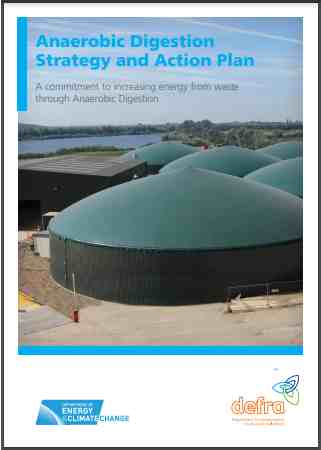
An important milestone came in 2011 when the UK government published its Anaerobic Digestion Strategy and Action Plan for England.
At the time, AD was seen as a technology capable of addressing several policy objectives simultaneously. It could divert biodegradable material from landfill, produce renewable energy, reduce greenhouse gas emissions and recycle nutrients back to land.
The strategy did not rely on a single “AD grant”. Instead, developers could potentially obtain support for the renewable energy their plants produced through broader energy-support mechanisms.
Three schemes became particularly important:
- the Renewables Obligation (RO);
- the Feed-in Tariffs scheme (FITs); and
- the Renewable Heat Incentive (RHI).
Those three acronyms tell much of the story of UK anaerobic digestion during the following decade.
1. The Renewables Obligation: Supporting Biogas Electricity
The Renewables Obligation was one of the UK’s principal mechanisms for supporting large-scale renewable electricity generation.
Eligible generators received Renewables Obligation Certificates, normally known as ROCs, according to the renewable electricity they produced and the band applicable to their technology.
Electricity suppliers had obligations relating to the presentation of ROCs, which gave the certificates a financial value. For a qualifying renewable generator, this created income in addition to the underlying value of the electricity.
Anaerobic digestion received favourable treatment during important periods of the scheme. That strengthened the business case for producing electricity from biogas.
Why the RO Encouraged Biogas CHP
Once electricity from biogas carried additional value, the reciprocating gas engine became an obvious technology. Biogas could be produced continuously, stored for short periods and supplied to an engine-generator to create renewable electricity.
The engine also produced considerable heat. Recovering that thermal energy converted the generating set into a combined heat and power system.
This is one reason CHP became so closely associated with British anaerobic digestion. It was not simply an engineering fashion. The financial support available for renewable electricity made electricity generation commercially attractive.
For the engineering side of this technology, see our Biogas CHP Systems: Benefits, Efficiency, Costs and Design guide.
When Did the Renewables Obligation Close?
The Renewables Obligation closed to all new generating capacity on 31 March 2017, subject to the specific closure arrangements and grace periods that applied at the time.
Closure did not mean that every existing RO-accredited biogas plant suddenly lost its support. Existing qualifying generating capacity continued under the scheme rules applicable to it.
But for new AD developments, the closure removed one of the important support mechanisms that had helped drive electricity generation from biogas.
2. Feed-in Tariffs and Smaller AD Electricity Projects
The Feed-in Tariffs scheme took a somewhat different approach. Introduced in 2010, it was intended to encourage smaller-scale low-carbon electricity generation.
Eligible anaerobic digestion installations could receive payments associated with the renewable electricity they generated, with arrangements also covering electricity exported to the grid.
This helped make smaller biogas electricity projects more investable and gave developers greater certainty about future income.
For a farmer or smaller waste business considering an AD plant, predictable electricity payments could materially change the financial calculation.
Why FITs Were Important to Agricultural AD
Agricultural AD often sits in an awkward economic position. A farm may have manure, slurry and crop residues available, but converting those materials into useful energy requires substantial capital investment.
The digester, feed system, tanks, gas holder, CHP engine, grid connection and associated infrastructure all need to be paid for before much renewable electricity is produced.
A guaranteed or predictable electricity-support mechanism helped lenders and investors forecast income. That certainty can be almost as important as the tariff level itself when financing capital-intensive infrastructure.
The resulting growth was not entirely driven by waste. Energy crops also became an important feedstock for some agricultural plants, which subsequently generated debate about land use and the wisdom of growing crops primarily for digestion.
When Did the Feed-in Tariff Scheme Close?
The Feed-in Tariffs scheme closed to new applications from 1 April 2019.
Existing accredited installations were not automatically removed from the scheme. Eligible generators could continue receiving support for their applicable eligibility period.
But once again, a support mechanism that had influenced the design and financing of new AD plants had effectively become a legacy scheme.
3. The Renewable Heat Incentive Changed the Question
Electricity was only part of the energy produced by a CHP engine. A substantial proportion of the biogas energy emerges as heat.
Historically, some AD plants used enough of that heat to maintain digester temperature but rejected much of the remainder. The Renewable Heat Incentive helped make renewable heat more economically valuable.
The Great Britain Non-Domestic RHI supported qualifying renewable heat technologies and also became particularly important to the emerging biomethane-to-grid sector.
For AD developers, it helped change the question from simply:
“How much electricity can we generate?”
to:
“How much useful renewable heat or renewable gas can this project supply?”
The RHI and Useful Heat
In principle, rewarding useful renewable heat was sensible. If heat recovered from a biogas CHP engine displaced fossil-fuel heating in a factory, greenhouse, drying process or other genuine load, more of the energy in the biogas was being put to productive use.
The difficulty is contained in the word useful.
An incentive based on measured heat needs safeguards against creating heat demand simply to obtain subsidy. The notorious problems with the separate Northern Ireland RHI scheme demonstrated what can happen when the financial incentive to consume fuel is badly designed.
It would nevertheless be misleading to present unnecessary heating as uniquely a Northern Ireland issue. Concerns about demonstrating genuine heat use have arisen more broadly whenever subsidies depend on thermal output.
We have covered that history separately in Renewable Heat Incentive (RHI): What It Was, Why It Closed and Lessons for Biogas CHP.
The RHI Also Helped Establish Biomethane
For the biogas industry, one of the RHI’s most important long-term effects may have been its role in encouraging biomethane.
Raw biogas typically contains methane and a substantial proportion of carbon dioxide, together with water vapour and trace contaminants. Instead of burning that gas in a CHP engine, it can be treated and upgraded so that the resulting biomethane meets the necessary specification for its intended use.
Where the infrastructure and regulatory requirements are satisfied, biomethane can be injected into the gas grid.
This gave AD developers another major utilisation route. A project no longer necessarily needed a large local electricity or heat customer to extract value from its gas.
When Did the Non-Domestic RHI Close?
The Great Britain Non-Domestic Renewable Heat Incentive closed to new applicants on 31 March 2021, subject to limited transitional arrangements for qualifying projects.
This corrects an error in an earlier version of this article, which stated that the RHI ended on 31 March 2022.
Existing accredited installations could continue to receive payments according to the applicable scheme rules, but the RHI ceased to be a general route for new applicants.
From CHP Support to Biomethane Support
Look at the sequence of these schemes and an interesting policy change becomes visible.
The RO and FITs primarily rewarded renewable electricity. This favoured generating electricity from biogas and contributed to the expansion of CHP.
The RHI placed greater value on renewable heat and biomethane.
The current Green Gas Support Scheme focuses specifically on eligible biomethane injected into the gas grid.
In simplified terms, the centre of gravity moved:
biogas → electricity → useful heat → biomethane.
That does not mean one technology simply replaced another. Many existing CHP plants continue operating successfully, and CHP can still be an excellent use of biogas where electricity and heat have sufficient value.
What changed was the policy signal given to developers considering the next project.
4. The Green Gas Support Scheme
The Green Gas Support Scheme (GGSS) opened for applications on 30 November 2021.
It provides tariff support for eligible biomethane produced through anaerobic digestion and injected into the gas grid in England, Scotland and Wales.
Registered participants receive payments based on the quantity of eligible biomethane they inject, subject to the scheme rules.
The scheme is administered by Ofgem and funded through the associated Green Gas Levy on licensed fossil-fuel gas suppliers.
What Does the GGSS Support?
The GGSS is much more specific than a general renewable-energy grant.
Its central purpose is to encourage new AD biomethane production for gas-grid injection.
That means a developer normally needs much more than a digester. A biomethane project may require:
- biogas cleaning;
- carbon dioxide removal;
- gas drying;
- gas-quality monitoring;
- propane addition where required to meet calorific-value requirements;
- odourisation and other grid-entry provisions;
- compression;
- a suitable gas-grid connection;
- metering;
- feedstock and sustainability compliance; and
- the necessary regulatory approvals.
Biomethane upgrading can therefore involve substantially more gas-processing equipment than supplying raw biogas to a CHP engine.
Its attraction is that the gas network provides access to a much larger energy market than a single local heat customer.
How Long Is the GGSS Open?
Under the current scheme arrangements, new Stage 1 applications can be submitted until 31 March 2028.
The government has also announced its intention to extend the final commissioning deadline for qualifying projects to 31 March 2030. Developers should check the latest Ofgem and government guidance because commissioning dates, tariff-guarantee conditions and other detailed rules can change through regulations.
This distinction is important. The deadline for making a new application and the deadline by which an approved plant must commission are not necessarily the same thing.
How Are GGSS Payments Made?
Registered GGSS participants receive quarterly payments based on eligible biomethane injected into the gas grid.
The standard support period is designed around a long-term tariff framework, although the actual payment period can depend on commissioning timing and the detailed scheme rules.
For an investor, this long-term revenue visibility can make a major difference. Biomethane plants involve significant upfront expenditure, so predictable support can improve finance ability.
Why Has UK Policy Shifted Towards Biomethane?
There are several reasons why biomethane has become attractive from a policy perspective.
First, the existing gas network can transport renewable gas to users far from the AD plant. This avoids one of the fundamental limitations of heat: hot water is expensive to transport over long distances.
Second, biomethane can displace fossil natural gas in applications where direct electrification may be difficult or expensive.
 Third, a gas-grid connection separates gas production geographically from final energy use. An AD plant no longer needs to sit beside a factory capable of consuming all its heat.
There are disadvantages as well. Gas upgrading, grid entry and compression cost money and consume energy, and not every AD site is close to a suitable gas main with adequate capacity.
This is why biomethane should not automatically be assumed to be superior to CHP.
Does UK Biogas Funding Still Support CHP?
Not in the same straightforward way that the historic RO and FIT schemes supported new renewable electricity projects.
That changes the economics of new CHP installations, but it does not make CHP obsolete.
If an AD plant has a substantial on-site electricity demand, generating electricity behind the meter can avoid purchased electricity. If the recovered heat also has a genuine use, the same biogas can provide two valuable energy services.
CHP can therefore stand on its own economic merits where the site’s energy balance supports it.
The question is no longer simply, “What subsidy will the electricity receive?” It is increasingly, “What is this electricity worth to the site, and can we also use the heat?”
CHP Versus Biomethane Under Today’s Economics
The decline of direct support for new biogas electricity generation and the availability of GGSS support for biomethane have clearly altered the comparison, but the correct answer remains site-specific.
| Site Characteristic | Option Worth Investigating |
|---|---|
| High on-site electricity demand and useful heat demand | CHP |
| Strong continuous heat demand but modest electricity requirement | Direct biogas heating |
| Limited local energy demand and viable gas-grid connection | Biomethane upgrading |
| Large AD plant close to suitable gas infrastructure | Biomethane deserves detailed assessment |
| Existing CHP with valuable behind-the-meter electricity | Continued CHP operation may remain attractive |
| No viable grid connection but substantial local energy demand | CHP or direct heat may be more practical |
Our main Biogas Utilisation: CHP, Biomethane, Heat and the Best Uses for Biogas guide looks at this decision in more detail.
What Happened to Government Grants for AD Plants?
People searching for “UK biogas funding” often expect to find a grant that will pay a substantial proportion of the cost of building an anaerobic digestion plant.
That is not how the major support mechanisms described in this article generally worked.
The RO, FITs, RHI and GGSS principally created support linked to renewable energy production rather than simply handing every developer an upfront cheque for constructing a digester.
From time to time, separate grant programmes, innovation competitions, rural-development funds and regional schemes may become available. Their eligibility and availability can change rapidly.
A developer should therefore distinguish between:
- capital grants – contributions towards eligible project expenditure;
- production tariffs – payments linked to eligible energy produced;
- certificates – tradable or compliance-related instruments such as ROCs;
- contracts or offtake revenues – payments for electricity, gas or heat sold;
- avoided energy costs – savings from using energy on site; and
- waste-treatment revenues – gate fees or other income associated with accepting feedstock.
These are economically very different sources of project revenue.
The Forgotten Funding Source: Avoided Energy Purchases
Government support tends to attract attention because it is visible and politically debated. Yet one of the most robust sources of value from biogas can be much simpler: energy the operator no longer has to buy.
If CHP electricity is consumed on site, every useful kilowatt-hour can reduce grid imports. If biogas heat replaces natural gas or another purchased fuel, the project avoids that expenditure.
These savings can be particularly valuable because they do not necessarily depend on selling energy into an external market.
This is one reason an AD plant at a food factory, wastewater treatment works or other energy-intensive site can have very different economics from an otherwise identical plant with little on-site demand.
Waste Gate Fees Are Not an Energy Subsidy
Waste-fed AD plants may also receive income for accepting biodegradable material. This can be a crucial part of the business model, but it should not be confused with renewable-energy support.
A gate fee pays the operator to provide a waste-management service. Its value depends on local waste markets, competing treatment capacity, feedstock quality, contracts and regulation.
In some circumstances a particularly desirable feedstock may have little or no gate fee, or the AD operator may even need to pay for it.
A robust financial model should therefore treat feedstock revenue and energy revenue separately.
Why Subsidy-Driven Plant Design Can Be Dangerous
There is a broader lesson in the history of UK biogas funding. Government incentives can be extremely effective at stimulating investment, but they can also distort engineering decisions.
If electricity receives the strongest support, developers naturally optimise for electricity. If measured heat receives a generous tariff, finding heat consumption becomes financially important. If biomethane receives long-term support, upgrading equipment becomes easier to justify.
None of this is necessarily wrong. Changing investment behaviour is precisely what an incentive is intended to do.
The danger arises when the subsidy becomes the project rather than supporting a fundamentally useful project.
An AD plant may operate for twenty years or more. Government policy can change several times during that period.
Design the Plant Around Real Value
A strong project should therefore start with questions that remain relevant even when support schemes change.
- Is there a dependable feedstock supply?
- What is the realistic methane yield?
- What does the feedstock cost, or what gate revenue does it earn?
- What electricity does the site consume?
- Is there a genuine heat demand?
- Is there a viable gas-grid connection?
- What value does each possible energy route provide?
- What will digestate management cost?
- What happens when energy prices change?
- What happens when the support period ends?
A government tariff can then strengthen the project rather than disguise weaknesses in it.
How Government Support Shaped CHP Sizing
The history of electricity incentives also helps explain some older CHP installations.
When exported renewable electricity attracted strong support, maximising electrical generation could be economically rational. That encouraged developers to install enough engine capacity to consume as much available biogas as possible.
Today, the calculation may be different. Where the greatest value comes from avoiding expensive imported electricity, the optimum engine size may be closer to the site’s dependable electrical demand rather than its maximum theoretical biogas output.
Similarly, there is little merit in claiming very high overall CHP efficiency if much of the recovered heat has no genuine use.
Our Biogas CHP Design: Selecting and Sizing a CHP System article considers these issues in more detail.
The Changing Value of Heat
The RHI encouraged the industry to think more seriously about heat. That was valuable because early biogas projects sometimes concentrated heavily on electricity while treating engine heat almost as a by-product.
But useful heat should have value even without a subsidy.
If CHP heat replaces purchased boiler fuel, heats the digester, provides pasteurisation energy or serves a real industrial process, it contributes to the economics of the plant.
If it is simply rejected through a radiator, it does not.
The practical engineering challenge is getting heat from the engine or boiler to the process that needs it. Our guide to Anaerobic Digestion Heat Exchangers: Types, Uses, Fouling and Heat Recovery explains that part of the system.
What Does This History Tell Us About the Future?
One conclusion is obvious: support mechanisms change.
In little more than a decade, a new UK AD developer moved from a policy environment dominated by renewable electricity incentives to one in which the principal dedicated support for new AD energy production favours biomethane.
The next policy shift may be different again.
Future priorities could place greater value on greenhouse-gas performance, methane-emission control, difficult-to-decarbonise industrial energy, manure management, food-waste treatment, nutrient recycling or other environmental services provided by AD.
For that reason, it would be unwise to assume that the future of anaerobic digestion is simply “more biomethane” in every situation.
The underlying strength of AD is that it does several jobs at once. It manages biodegradable materials, produces renewable gas and recycles nutrients. The most resilient policy should recognise that wider system value.
A Timeline of UK Biogas Support
| Period / Date | Development | Importance to AD |
|---|---|---|
| 2002 onwards | Renewables Obligation | Supported renewable electricity and helped the economics of biogas generation |
| 1 April 2010 | Feed-in Tariffs introduced | Supported smaller renewable electricity installations including eligible AD |
| 2011 | Anaerobic Digestion Strategy and Action Plan | Set out government and industry ambitions for expanding AD in England |
| 2011 | Non-Domestic RHI introduced | Supported eligible renewable heat and later became highly important to biomethane |
| 31 March 2017 | RO closed to new generating capacity | Reduced the support options for new biogas electricity projects |
| 31 March 2019 | Final general day for new FIT applications | FIT closed to new applicants from 1 April 2019 |
| 31 March 2021 | Non-Domestic RHI closed to new applicants | Ended the main RHI route for new renewable heat and biomethane applicants |
| 30 November 2021 | Green Gas Support Scheme opened | Created dedicated support for eligible AD biomethane injected into the grid |
| 31 March 2028 | Current GGSS deadline for new Stage 1 applications | Important deadline for prospective new biomethane projects |

Frequently Asked Questions About UK Biogas Funding
Is there government funding for anaerobic digestion in the UK?
Government support exists in several forms, but there is no universal grant that simply pays for a new AD plant. The principal dedicated operating-support mechanism currently relevant to new AD biomethane projects in Great Britain is the Green Gas Support Scheme. Other grants and innovation programmes may become available separately and should be checked at the time a project is developed.
Can a new biogas CHP plant get Feed-in Tariffs?
No. The Feed-in Tariffs scheme closed to new applications from 1 April 2019. Existing accredited installations can continue under their applicable scheme arrangements.
Can a new AD plant claim Renewable Heat Incentive payments?
The Great Britain Non-Domestic RHI closed to new applicants on 31 March 2021, subject to the transitional provisions that applied to certain projects. It is therefore not a general support route for a new project today.
Is the Renewables Obligation still available for new biogas generators?
No. The Renewables Obligation closed to all new generating capacity on 31 March 2017, subject to the relevant grace-period arrangements. Existing accredited generating capacity can remain within the legacy scheme according to its rules.
What is the Green Gas Support Scheme?
The GGSS provides financial support for eligible biomethane produced by anaerobic digestion and injected into the gas grid in England, Scotland and Wales. Ofgem administers the scheme.
When does the Green Gas Support Scheme close?
Under the current arrangements, the deadline for new Stage 1 applications is 31 March 2028. Government has announced plans to extend the commissioning window for qualifying projects, so developers should check the latest Ofgem guidance when making investment decisions.
Does the GGSS support biogas CHP?
The GGSS is designed around eligible biomethane injected into the gas grid, not electricity generated by burning raw biogas in a CHP engine.
Why did so many UK AD plants install CHP engines?
CHP is technically well suited to biogas, but historic renewable-electricity support also made generation financially attractive. The RO and FIT schemes therefore influenced the widespread adoption of CHP in the UK AD industry.
Is biomethane now better than CHP?
Not automatically. Biomethane can be attractive where there is a viable gas-grid connection and insufficient local electricity or heat demand. CHP can remain highly competitive where electricity can be consumed on site and recovered heat has a genuine use.
Can AD plants make money without subsidies?
Some can. Revenue and savings may come from waste gate fees, avoided electricity purchases, heat savings, energy sales, biomethane sales and other products or services. Whether these are sufficient depends entirely on the individual project’s capital cost, feedstock, energy markets and operating costs.
Should I build an AD plant because a government support scheme is available?
A support scheme can improve a good project’s economics, but it should not substitute for a sound underlying business case. AD assets are long-lived, while energy policy and tariff mechanisms can change considerably during their operating life.
Conclusion: UK Biogas Funding Changed the Industry – and the Industry Must Keep Changing
The development of UK anaerobic digestion cannot be separated from the history of renewable-energy policy.
The Renewables Obligation and Feed-in Tariffs helped make electricity generation from biogas commercially attractive. That contributed to the widespread adoption of gas engines and CHP. The Renewable Heat Incentive then placed greater value on renewable heat and helped establish biomethane-to-grid as a serious alternative.
Today, the Green Gas Support Scheme sends the clearest policy signal towards new biomethane production.
But perhaps the most useful lesson from this history is that the signal will change again.
An anaerobic digestion plant is a long-lived piece of environmental infrastructure. Its value should ultimately come from doing useful things: treating appropriate biodegradable materials, reducing avoidable emissions, producing energy people genuinely need and recycling nutrients responsibly.
Government support can accelerate those benefits, and historically it clearly has. But the strongest projects are those in which the underlying engineering and resource balance still make sense when yesterday’s acronym – whether RO, FIT or RHI – disappears from the funding landscape.
Further Reading
- Biogas Utilisation: CHP, Biomethane, Heat and the Best Uses for Biogas – choosing the best use for the gas produced by an AD plant.
- Biogas CHP Systems: Benefits, Efficiency, Costs and Design – the main guide to generating electricity and useful heat from biogas.
- Biogas Engines and Generators: How They Turn Biogas into Electricity – gas quality, electrical efficiency, engine sizing and maintenance.
- Renewable Heat Incentive (RHI): What It Was, Why It Closed and Lessons for Biogas CHP – a detailed look at the UK’s former renewable-heat support scheme.
- Biogas Heating Systems: Boilers, Direct Heat and When They Beat CHP – when using biogas directly for heat may be preferable to generating electricity.
- Anaerobic Digestion Heat Exchangers: Types, Uses, Fouling and Heat Recovery – transferring and recovering useful process heat.
Official Sources and Current Scheme Information
- Ofgem – Renewables Obligation closure
- Ofgem – Feed-in Tariffs scheme closure
- Ofgem – Non-Domestic Renewable Heat Incentive
- Ofgem – Green Gas Support Scheme and Green Gas Levy
- UK Government – Green Gas Support Scheme
Energy-support schemes and eligibility rules change. This article provides historical and general information and should not be used as a substitute for checking current Ofgem and UK Government requirements when developing or financing a project.
[Published April 2021. Rewritten August 2026.]



Northern Ireland has its own Renewable Heat Incentive, both domestic and non-domestic, and makes its own regulations for the schemes and sets its own tariffs and technologies.
Sir. Your website is good. Please tell your readers we open new biogas plant. Much celebration! we held opening ceremony for the first Biogest biogas plant in Romania we help to build this and it will be run by the company’s Plant Operations business unit for biogas facilities.
As a novice in this subject biogas, I am constantly browsing online for articles that can aid me. Thank you