

Shifting toward a more sustainable lifestyle does not have to mean overhauling everything at once. In fact, some of the most meaningful changes come from small, consistent choices made in everyday life.
The idea behind a circular economy is simple: reduce waste, keep materials in use for as long as possible, and rethink how products are made and used. By making a few thoughtful swaps, individuals can play a real role in supporting this system without sacrificing convenience or comfort. Continue reading to learn more.
What Is a Circular Economy?
A circular economy focuses on minimising waste and maximising resources. Instead of the traditional “take, make, dispose” model, it encourages reuse, repair, recycling, and smarter design. Products are created with longevity in mind, and materials are kept in circulation rather than ending up in landfills.
While large-scale change often depends on businesses and policy, everyday consumer habits still matter. Simple swaps in how people shop, store, and consume goods can help reduce waste and extend the life cycle of products.
Swap Single-Use Bags for Reusable Options
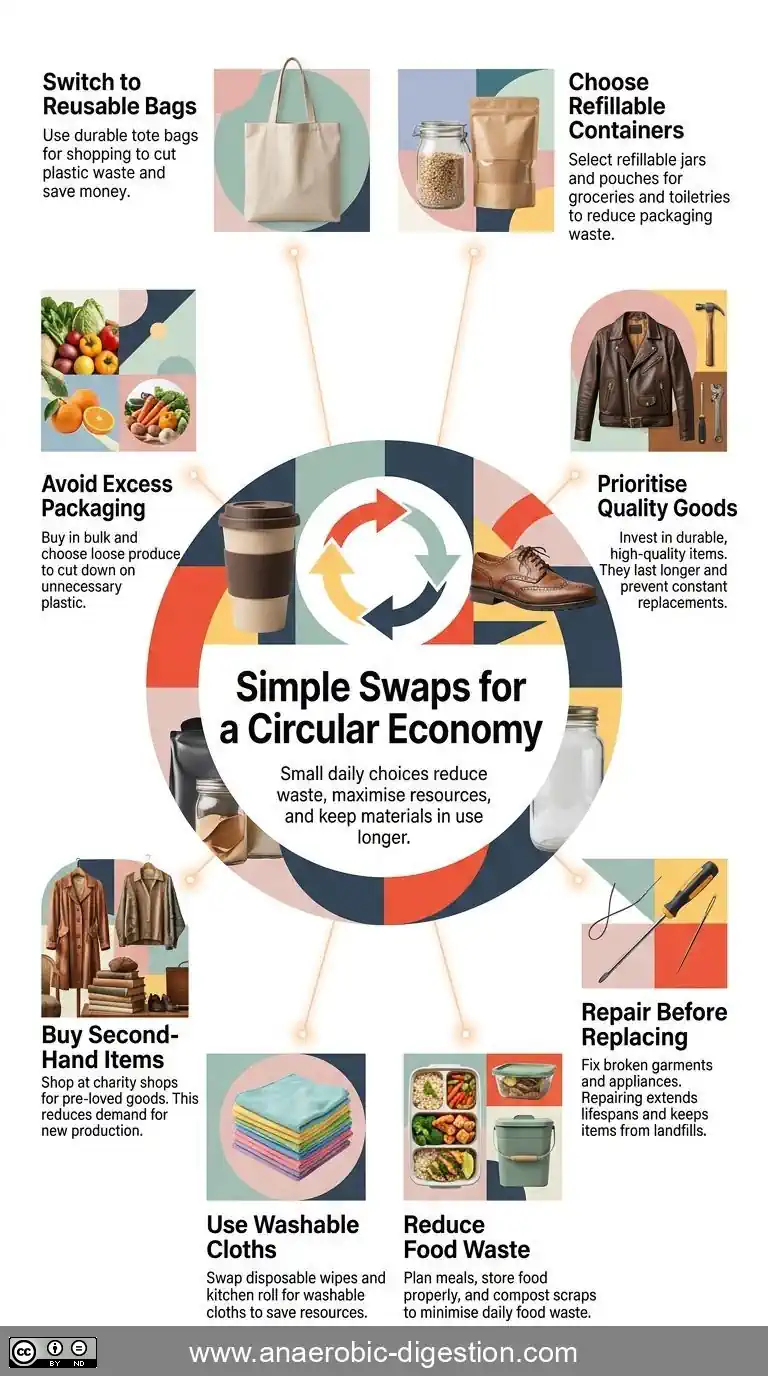
Plastic bags are one of the most visible sources of everyday waste. Switching to reusable bags is one of the easiest ways to cut down on single-use plastics. Durable tote bags can be used for groceries, errands, and even travel.
Choosing well-made, reusable options not only reduces waste but also saves money over time. Many people now keep a few bags in their car or by the front door as a reminder. Investing in quality options from sites like totebagsnow.com can make this swap even more practical, as sturdy designs last longer and handle repeated use without wear.
Choose Refillable and Reusable Containers
Another impactful swap is moving away from disposable packaging. Instead of buying products that come in single-use containers, look for refillable alternatives. This applies to everything from cleaning supplies and toiletries to pantry staples.
Glass jars, stainless steel containers, and refill pouches are all excellent options. Many stores now offer refill stations for items like soap, shampoo, and even dry foods. Over time, this reduces both packaging waste and the demand for new materials.
Opt for Quality Over Quantity
Fast consumption habits often lead to waste. Cheap, low-quality items tend to wear out quickly and end up being replaced frequently. Choosing higher-quality products that are built to last is a key principle of the circular economy.
This applies to clothing, home goods, electronics, and more. While the upfront cost may be higher, durable items reduce the need for constant replacement. They can also often be repaired, resold, or donated when no longer needed.
Repair Instead of Replace
It is easy to throw something away when it breaks, but repair is an essential part of keeping products in circulation. From sewing a torn garment to fixing a small appliance, repairing items extends their lifespan and reduces waste.
There has been a growing interest in repair culture, with online tutorials and local repair services making it easier than ever. Even simple fixes can prevent items from ending up in landfills and reduce the need for new production.
Rethink Everyday Food Habits
Food waste plays a significant role in environmental impact. Simple changes in how food is bought, stored, and consumed can make a big difference.
Planning meals ahead of time helps reduce overbuying, while proper storage keeps food fresh longer. Leftovers can be repurposed into new meals, and composting can turn food scraps into something useful rather than waste.
Buying local and seasonal produce also supports a more sustainable system by reducing transportation and packaging needs.
Switch to Reusable Cleaning Materials
Paper towels and disposable wipes are commonly used but quickly add up in terms of waste. Reusable cloths, washable mop pads, and refillable spray bottles are easy alternatives that support a circular approach.
These swaps are not only better for the environment but also more cost-effective over time. Many reusable cleaning products are designed to last for months or even years with proper care.
Buy Secondhand or Upcycled Items
Shopping secondhand is one of the most effective ways to participate in a circular economy. Thrift stores, online marketplaces, and vintage shops offer a wide range of items that still have plenty of life left.
Upcycled products are another great option. These items are made from existing materials that have been creatively transformed into something new. Choosing secondhand or upcycled goods reduces demand for new production and keeps materials in use longer.
Support Brands That Prioritize Sustainability
Not all products are created with circular principles in mind. Supporting brands that focus on sustainable sourcing, ethical production, and recyclable materials can encourage wider change.
Look for companies that offer repair programs, recycling initiatives, or take-back schemes. Transparency in how products are made and what happens at the end of their life cycle is also a good sign of a responsible brand.
Reduce Packaging Wherever Possible
Excess packaging is a major contributor to waste. Choosing products with minimal or recyclable packaging can help reduce environmental impact.
Buying in bulk, selecting loose produce, and avoiding individually wrapped items are simple ways to cut down on unnecessary materials. Bringing reusable containers when shopping is another effective habit that supports waste reduction.
Make Small Changes That Add Up and Support Circular Economy Principles
The shift toward a circular economy does not happen overnight. It is built on everyday decisions that gradually become habits. Each small swap, whether it is using a reusable bag or repairing a broken item, contributes to a larger system of sustainability.
What matters most is consistency rather than perfection. By focusing on practical, manageable changes, individuals can reduce waste, save resources, and support a more sustainable future without feeling overwhelmed.
In the end, a circular economy is not just about products. It is about changing the way people think about consumption, value, and responsibility. Simple swaps may seem small on their own, but together they create meaningful progress toward a more sustainable world.