

As global energy systems transition toward lower emissions and cleaner technologies, conversations often focus on renewables such as wind, solar, and bioenergy.
While these developments are vital, traditional liquid fuels still play a role in heating, backup generation, agriculture, and industrial operations.
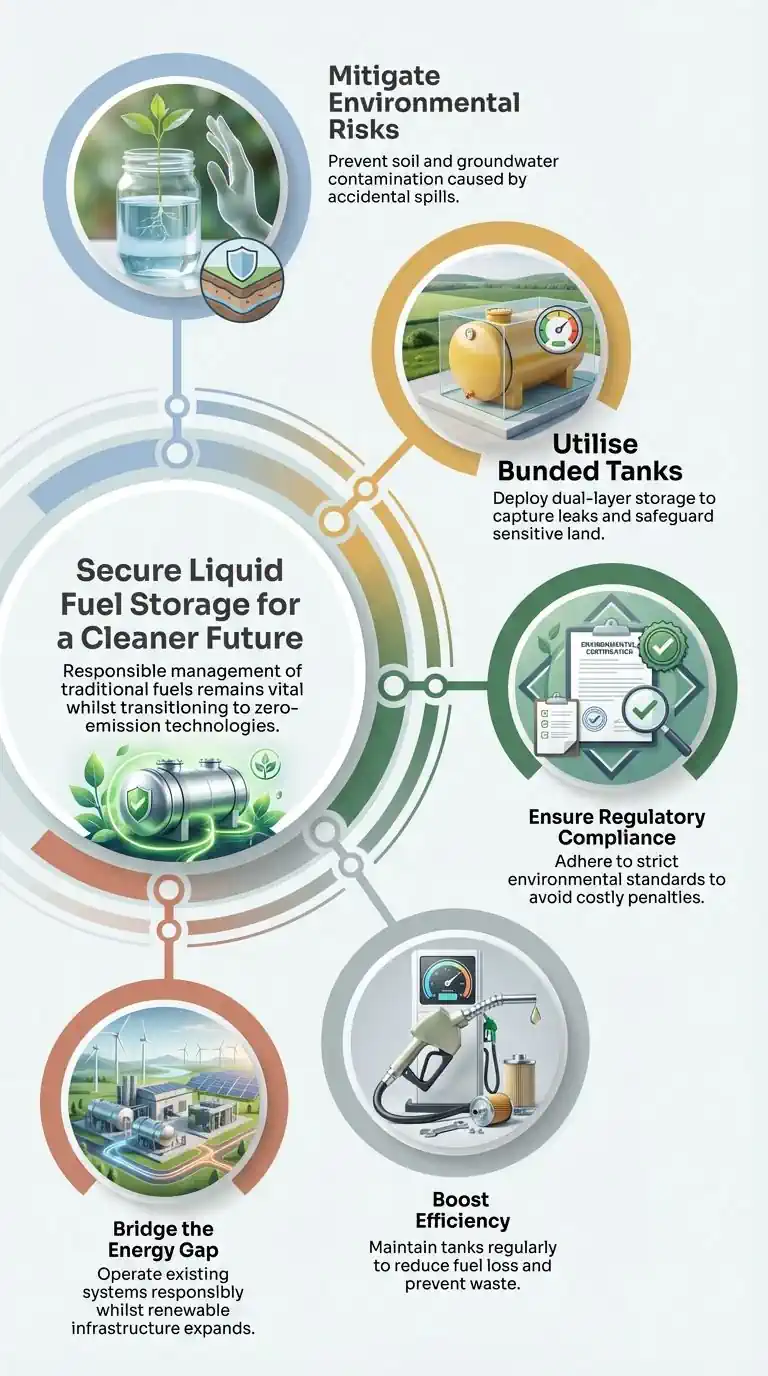
In this transitional period, the way liquid fuels are stored and managed has significant environmental implications. Secure storage is not simply a regulatory requirement. It is a practical step toward reducing environmental risk and supporting responsible energy use.
Managing Environmental Risk
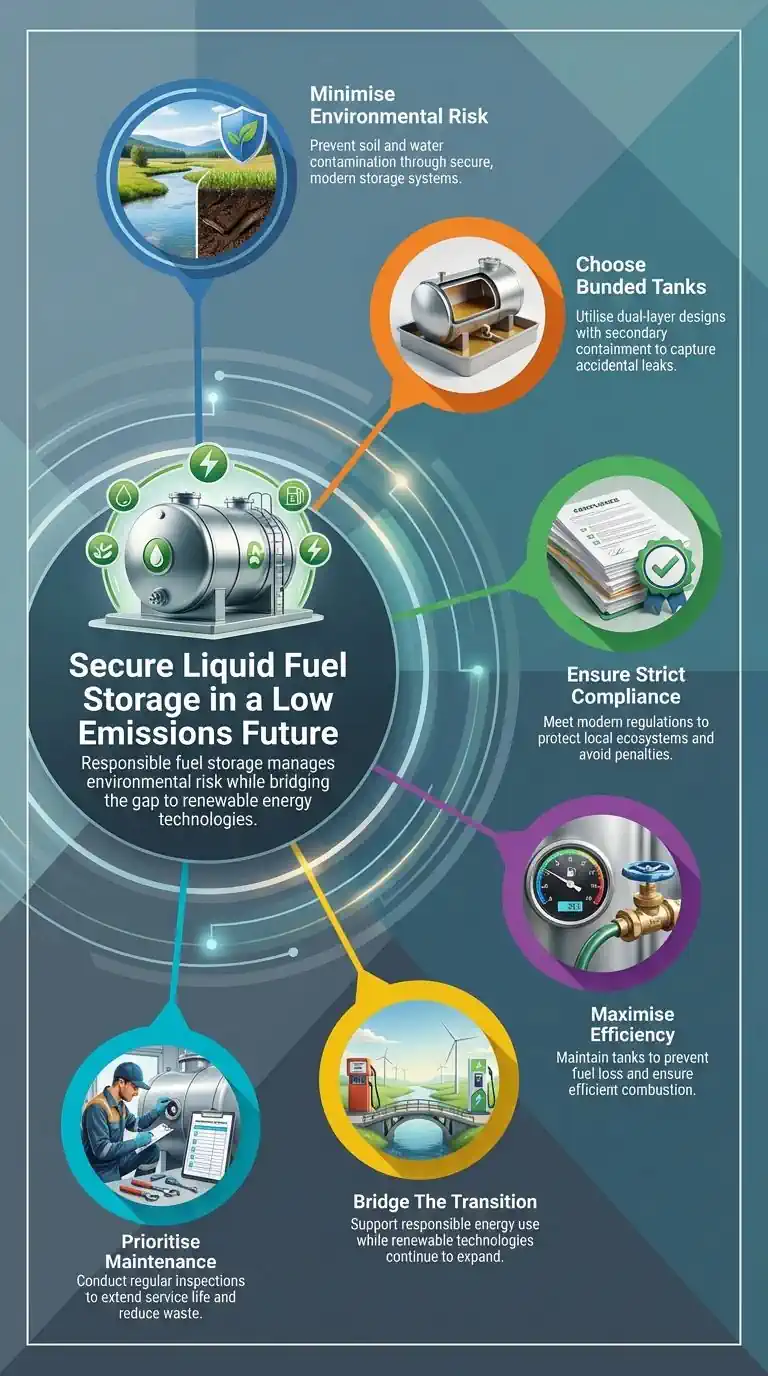
Liquid fuels, including heating oil and other petroleum-based products, present clear environmental risks if not stored correctly. Leaks or spills can contaminate soil and groundwater, damage ecosystems, and lead to costly remediation efforts. In rural and off-grid areas where fuel storage is common, these risks are especially important to address.
Secure storage systems minimise the chance of accidental release. Modern tank designs incorporate protective features such as secondary containment, durable materials, and improved fittings. These safeguards reduce the likelihood of environmental damage and contribute to more responsible fuel management practices.
The Role of Bunded Storage
Bunded oil tanks are widely recognised as a safer storage option because they include a secondary outer layer that captures leaks from the primary tank. This dual-layer system offers an added level of security, particularly in locations where fuel is stored close to property boundaries, water sources, or sensitive land.
Investing in high-quality storage solutions is a proactive approach to environmental protection. Homeowners and businesses looking to improve safety standards may choose to buy bunded oil tanks that meet modern regulatory expectations. By upgrading storage infrastructure, fuel users reduce the likelihood of contamination and demonstrate commitment to environmental stewardship.
Supporting Compliance and Best Practice
US Regulations surrounding fuel storage have become more stringent as awareness of environmental protection has grown. Compliance is not only about avoiding penalties. It reflects a broader understanding of shared responsibility. Secure liquid fuel storage aligns with best practice guidelines that aim to protect communities and ecosystems.
Beyond meeting minimum standards, adopting robust storage systems signals long-term planning. In a low-emissions future, energy systems must balance practicality with sustainability. Secure storage allows existing fuel-dependent systems to operate responsibly while alternative energy solutions continue to expand.
Efficiency and Emissions Management
Although fuel storage itself does not directly reduce emissions, it plays an indirect role in overall environmental performance. Properly maintained tanks reduce fuel loss and prevent contamination that could lead to inefficient combustion. When storage systems are stable and reliable, users can manage fuel consumption more effectively.
Regular inspections, correct installation, and ongoing maintenance further enhance environmental outcomes. These practices ensure that storage systems perform as intended and extend their service life, reducing waste associated with premature replacement.
A Transitional Energy Perspective
The path to a low-emissions future will not be uniform. Different regions and sectors will move at varying speeds based on infrastructure, geography, and economic considerations. During this transition, responsible management of existing fuel systems remains essential.
Secure liquid fuel storage represents a practical bridge between current energy realities and future ambitions. By prioritising safety, containment, and environmental awareness, individuals and organisations contribute to broader sustainability goals.
A low emissions future is not only about adopting new technologies. It is also about improving how existing systems are managed. Through thoughtful storage solutions and adherence to best practices, liquid fuel users can reduce environmental risk while supporting a more responsible energy landscape.