
Tired of high energy bills and a kitchen bin full of food waste? 1. Introduction, anaerobic digestion turns organic waste into methane-rich gas, a form of renewable energy you can capture at home with a digester container, pipes and a gas detector.
This guide, How To Build A Mini Biogas Plant, shows ten easy steps to set up the system, make a slurry, start biogas production and use the leftover as organic fertiliser for your garden.
Ready to start?
Key Takeaways
- A 1,000âlitre airtight digester fed with 5â10 kg batches of slurry can produce methane for cooking while yielding nutrientârich digestate fertiliser.
- Use HDPE or PVC tanks with an airtight gas holder, seal joints with Teflon and sealant, test leaks with soapy water and a gas detector.
- Insulate the digester for UK winter, monitor temperature, avoid plastics, add cow dung to boost yield, and confirm gas quality by a steady blue flame.
- Wear gloves and goggles, use a gas detector and fire extinguisher, manage hydrogen sulphide, and apply digestate as fertiliser to cut bills and emissions.
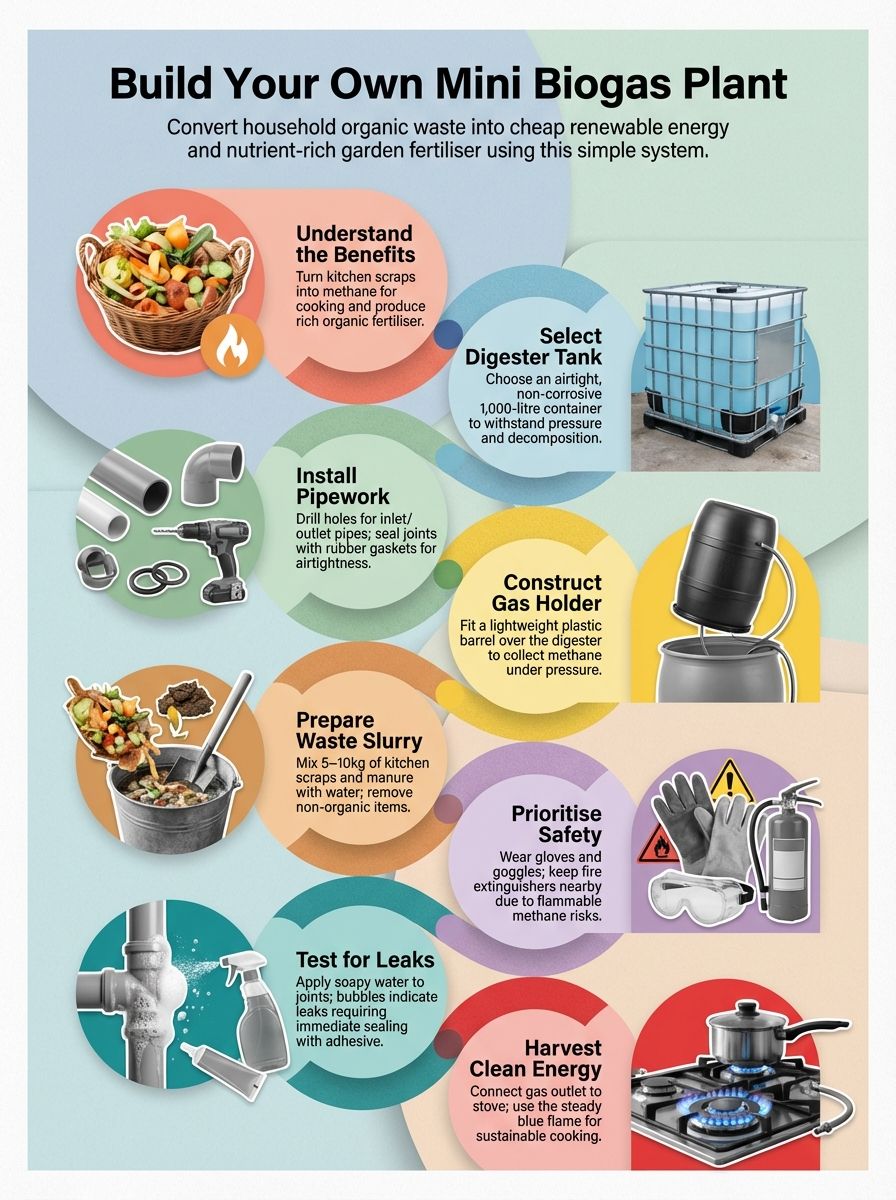
Advantages of a Mini Biogas Plant at Home
A mini biogas plant uses anaerobic digestion to turn food waste and livestock manure into methane. You get cheap renewable energy, lower methane emissions, and a nutrient-rich fertiliser from the slurry, read on for the ten easy steps using a digester tank, gas outlet pipe and simple biogas storage.
What renewable energy benefits does a mini biogas plant provide?
Your DIY biogas plant converts kitchen scraps and animal manure into methane, a practical form of renewable energy. The biogas digester uses anaerobic digestion to break down organic waste, it feeds a gas holder and a gas outlet pipe for home use.
Lab testing with a Bunsen burner checks gas quality, a steady blue flame shows strong methane content. This clean energy from biogas systems can run cookers and lights, cut fossil fuel use, and contribute to carbon offsetting.
A small plant boosts energy production at home, it also reduces waste pollution and makes nutrient-rich fertiliser.
How does a mini biogas plant reduce waste pollution?
A mini biogas plant cuts waste pollution by diverting kitchen scraps, garden waste and cow dung from landfill. The digester tank uses anaerobic digestion to drive biogas production and produce a nutrient-rich fertiliser.
It captures methane that would otherwise leak from rubbish sites, so fewer greenhouse gases enter the air.
Household scraps feed the digester through an inlet pipe. Microbes drive methanogenesis inside, producing methane and carbon dioxide. A gas holder stores the fuel for stoves and water heating, giving a local renewable energy source and raising energy efficiency.
This anaerobic digestion stops uncontrolled decomposition in landfills, improving solid waste management by converting waste into valuable products.
In what ways does it produce organic fertiliser?
Anaerobic digestion in the biogas digester breaks down organic waste into gas and a solid by-product. Specialised bacteria feed on kitchen scraps, animal manure, and agricultural residues.
They produce methane and a nutrient-rich slurry. Cow dung speeds biogas production and lifts the quality of the final fertiliser. Digestate, the slurry left after gas extraction, acts as a nutrient-rich fertiliser for gardens and farms.
You can spread digestate as a soil amendment, it improves soil quality and cuts the need for chemical fertilisers. Apply it on lawns, kitchen gardens, or fields, crops get steady nutrients.
Simple plumbing, an inlet pipe and an outlet pipe, helps you harvest the slurry safely. Store gas in a storage tank, then use the methane for clean cooking or to power a biogas burner.
Essential Materials and Tools for Building a Mini Biogas Plant
Gather the right materials and tools for anaerobic digestion, and plan the build.
This guide covers gas pipes, storage, a gas detector, temperature control and ventilation, plus safe handling of hydrogen sulphide, to turn food waste and manure into clean gas and nutrient-rich fertiliser.
What is a digester tank and why is it needed?
A digester tank is an airtight container that holds organic waste for anaerobic digestion. Think of it as a sealed stomach for scraps, it feeds methanogenic bacteria that drive biogas production.
It must be made from reinforced plastic or another durable, non-corrosive material, to withstand pressure and last. Experts recommend at least 1.5 cubic metres for a robust unit; portable models like the Nano 500 V1 and Home Biogas Plant 3CBM often hold up to 1,000 litres.
The tank is where methane capture and nutrient-rich organic fertiliser form, as bacteria decompose food waste and animal manure. You can run a gas outlet pipe to a burner or store gas in basic biogas storage, saving on conventional energy and cutting waste pollution.
What role does the gas holder play?
This sealed chamber collects biogas under pressure. Homebuilders often make it from an old plastic barrel, so it sits tightly over the biogas digester. It must hold pressure and stay airtight, to keep biogas storage safe.
Cut holes for a gas outlet pipe, to link the holder to biogas burners or a stove. Test the drum for leaks with soap and water, bubbles mean leaks and need sealing. Use a gas detector while you test, hydrogen sulfide can appear in gas from anaerobic digestion of organic waste.
How are inlet and outlet pipes used in the system?
Inlet sink and outlet pipes feed organic waste, like kitchen scraps and animal manure, into the biogas digester. Durable plastic pipes, fitted through holes drilled in the digester tank, prevent leaks and help the anaerobic digestion process.
All joints use strong adhesive or rubber gaskets to seal, for airtight operation and correct liquid removal.
A gas outlet pipe carries produced biogas to burners, cook stoves or biogas storage, so you get usable renewable energy. Reducer fittings let you regulate flow to a cook stove, or to a small compressor for combined heat and power.
Use a power drill to cut neat holes, and check seals often, do not let gas escape.
What types of organic waste can be used?
Kitchen scraps, garden waste, animal manure and human manure all work well as organic waste for a mini biogas plant. Cow dung gives strong biogas yields, and it also produces nutrient-rich fertiliser after anaerobic digestion.
Feed these materials as a slurry to the biogas digester, mix them with water so the inlet and outlet pipes flow smoothly.
Avoid plastics and other non-recyclable items, they clog the system and cut biogas production. Use mainly food waste and garden trimmings, this keeps the digester healthy and boosts renewable energy output.
What safety gear is necessary for construction?
Wear protective gloves, and eye protection, to guard against spills, splashes and exposure to biogas while handling organic waste for the biogas digester. Carry a gas detector, and keep a fire extinguisher close, since natural gas in biogas can ignite.
Apply septic tank sealant to joints, and wrap threaded pipes with Teflon tape, to stop harmful gas leaks during collection and biogas storage. Check the gas outlet pipe and all inlet and outlet joints with soap water for bubbles; this leak testing step is critical before operation.
Step-by-Step Guide to Building a Mini Biogas Plant
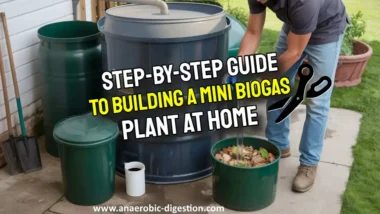
Roll up your sleeves, and follow ten clear steps to build a mini biogas digester at home. You will fit a sealed digester tank, link inlet and outlet pipes to a gas holder and gas outlet pipe, feed organic waste or animal manure for anaerobic digestion, and monitor temperature control to kickstart steady biogas production and nutrient-rich fertiliser for the garden.
How do I choose the right container for the plant?
Pick a digester tank that fits your waste and yard. Aim for a unit that holds up to 1,000 litres, and stays airtight.
- Match household input to capacity, count kitchen scraps, food waste and animal manure; a 1,000 litres digester tank suits many homes for steady biogas production and routine anaerobic digestion.
- Use thick-walled, non-corrosive plastic or lined concrete for longevity and pressure handling, these materials resist corrosion and support anaerobic decomposition in biodigesters.
- Select an airtight design, check seals and lids, good sealing keeps biogas inside for storage and safe delivery to biogas burners, gas outlet pipe, and use gas detectors for leak checks.
- Compare off-the-shelf options like Home Biogas Plant 3CBM, Sh7,722,000, and Nano 500 V1, Sh2,425,500; weigh cost, capacity and included gas outlet pipe for practical biogas plant design choices.
- Pick portable digester tanks if you rent or move, portability eases installation and allows simple connection to inlet and outlet pipes for effective waste management, level the base with bricks or concrete.
- Plan for temperature control and winter use, add heating elements or insulation to prevent freezing, this keeps anaerobic digestion active and lifts energy efficiency for steady energy production.
- Store effluent as nutrient-rich fertiliser, use it on soil to aid sustainable farming, this links organic waste management to carbon credit opportunities and improves return on investment.
What is the correct way to install inlet and outlet pipes?
Fit the inlet and outlet pipes with care. They keep the biogas digester airtight.
- Locate inlet and outlet positions on the digester tank, mark feed and effluent points clearly, then drill holes in the digester tank at appropriate locations for the inlet and outlet, place the gas outlet higher than slurry ports.
- Drill holes to match pipe diameter, use a power drill and a spanner for fittings, wear goggles and gloves, and keep a tidy work area; safety gear protects you during anaerobic digestion system construction.
- Use durable plastic pipes, such as HDPE or PVC, to prevent leaks and ensure longevity, pick thicker wall pipe for outdoor runs, avoid metal that may corrode and harm biogas production.
- The inlet pipe must allow for easy entry of organic waste mixture into the tank, angle it slightly downward and keep it short, so kitchen scraps and animal waste flow in without blockages.
- Ensure the outlet pipe facilitates efficient removal of liquid by-products, set the outlet at the lowest point with a steady downward slope and a simple valve, this helps recover nutrient-rich fertiliser.
- Seal all pipe connections with strong adhesive or rubber gaskets for airtightness, tighten couplings with a spanner and check seals carefully; airtight joins protect biogas and the gas holder from leaks.
- Test the full assembly with water first, watch the gas outlet pipe and all joints for bubbles, run a small batch of organic waste and confirm steady gas flow to the gas holder before using biogas with burners.
How do I construct the gas holder effectively?
Build a strong gas holder to keep your biogas safe. Use simple tools and common materials for a tight, pressure-ready cover.
- Choose a lightweight plastic barrel that fits tightly over the biogas digester, this supports biogas storage, and helps the gas holder hold internal pressure for efficient anaerobic digestion and renewable energy use.
- Cut precise holes in the barrel for the gas outlet pipe, mark positions for PVC tubing to biogas burners and stove connectors, use a drill and hole saw sized to the pipe, then deburr edges for a tight fit.
- Create airtight seals at every joint, use rubber gaskets, silicone sealant and hose clamps, seal thoroughly to avoid leaks near the outlet and the biogas storage area.
- Attach pipe connections tightly, use threaded connectors or jubilee clips on PVC tubing to stoves or burners, check the outlet line points away from heat or open flame for safe energy production.
- Test the gas holder with soap water over all joints and cut-outs, watch for bubbles, then seal any area where bubbles form using extra sealant or fresh gasket material until no bubbles appear.
- Control internal pressure, let the barrel move a little over the digester so the holder maintains airtight pressure during anaerobic digestion of kitchen scraps, animal manure and other organic waste for energy production.
- Wear gloves and eye protection, use an adjustable spanner, drill, hole saw and sealant, keep a fire extinguisher nearby, and follow safe practice while you build a biogas reservoir, then hook it to the digester.
How should I prepare the organic waste mixture?
Mixing waste correctly boosts biogas production. Follow these steps to make a smooth slurry for your biogas digester.
- Collect 5 to 10 kilograms of kitchen scraps and animal manure in a bucket or container, use a measuring scale for accuracy, record the weight to match your biogas plant design and optimise renewable energy output.
- Remove any plastic, metal or non-recyclable items from the feedstock, wear gloves while sorting, discard packaging and stickers to protect the anaerobic digester and the nutrient-rich fertiliser you want to produce.
- Chop large vegetable pieces and fibrous stalks, use a hand shredder or mixer to make small particles, finer material speeds acidogenesis and boosts biogas production in the digester.
- Mix the waste with water to create a smooth, porridge-like slurry for easy feeding into the biogas digester, aim for the correct consistency to support effective anaerobic digestion and steady gas output.
- Use a sieve or strainer to remove bones, shells and hard bits, keep inlet and outlet pipes clear, this prevents blockages and protects downstream gear like a gas compressor or biogas burners.
- Weigh batches at 5 to 10 kilograms per feed, if you make less, store composted material in a sealed container until you hit the target, steady input keeps biogas production reliable.
- Wear PPE, gloves, goggles and a mask while mixing, clean tools and the bucket after use, good hygiene keeps organic materials fit for digestion and the resulting fertiliser safe for soil conditioning.
How can I test if the mini biogas plant is working properly?
Testing your mini biogas plant takes a few quick checks. These steps confirm anaerobic digestion and biogas production from kitchen scraps and animal manure.
- Make sure all pipe fittings and connections are securely sealed before you start the system, tighten clamps, replace worn washers, and pressure-test joints to protect energy production and avoid gas leaks that reduce energy efficiency.
- Conduct leak tests using soap water around the storage bag to detect bubbles indicating leaks, mark any bubbly spots, fix the seals, and repeat the test until no bubbles form, to keep biogas storage safe.
- Attach a biogas stovetop or small bunsen burner to the gas outlet pipe, open the valve slowly, ignite the flame, and look for a steady blue flame, which confirms successful biogas production and safe combustion.
- Use a pressure gauge on the fermenter or attach a clear, marked bag to the gas outlet to record daily volume changes; log readings over several days to confirm steady anaerobic digestion and rising energy production.
- Monitor digester temperature with a thermometer, keep levels in the optimal range for anaerobic digestion, adjust feedstock like kitchen scraps and agricultural residues, and avoid sudden overfeeding that slows biogas production.
- Inspect joints and valves weekly, repair any small leak as necessary, run another soap water test after fixes, and log maintenance to maintain energy efficiency and long term waste management benefits.
Key Takeaways
Get quick takeaways on anaerobic digestion, how a digester tank and a sealed gas outlet turn food waste into biogas and garden fertiliser. Read on to learn safe slurry mixing, soap leak tests, and how to light a biogas stove, so you can cut waste and boost energy efficiency at home.
How does utilising organic waste aid biogas production?
Kitchen scraps, garden waste, cow dung and animal manure feed the digester tank. Inside the biogas digester, anaerobic digestion breaks down the organic waste, producing biogas, digestate and renewable energy.
Animal farming waste boosts biogas production and raises nutrient-rich fertiliser yield. Add 5 to 10 kilograms of input per batch, mix with water, and monitor the gas holder and gas outlet pipe for steady flow.
What are the important preparation and safety measures?
Put on safety gloves and goggles before you touch slurry or pipework, they stop splashes and cuts. Seal all pipe joints with Teflon tape and septic tank sealant, this protects the gas outlet pipe and inlet pipes.
Do a leak test with soap water around every connection, watch for bubbles and seal any hole. Fix leaks, re-test, and only then attach biogas storage or a small gas pump.
Keep only organic waste, such as food waste, animal manure and vegetable scraps, inside the biogas digester or digester tank. Never add plastic or other non-recyclable items, they block anaerobic digestion and reduce biogas production.
Insulate the tank for British weather to hold heat, this raises energy efficiency and speeds up renewable energy output. The spent slurry becomes nutrient-rich fertiliser for your garden, so treat handling with care.
What are the main benefits of completing the mini biogas plant project?
Building a mini biogas plant cuts household energy bills by producing fuel for cooking and heating. Home anaerobic digestion drives biogas production inside a biogas digester, so you can run biogas burners or route a gas outlet pipe to your cooktop.
That saves LPG, delivers energy savings, and boosts energy efficiency while adding renewable energy and sustainable energy to your home.
Your kitchen scraps and other organic waste stop piling in the bin, they feed the digester tank and cut household waste sent to landfill. The leftover digestate becomes nutrient-rich fertiliser for gardens and farms, and that lowers the need for chemical fertiliser.
This process cuts methane and carbon emissions, it supports climate action and improves local waste management.
Conclusion
Turn kitchen scraps and garden trimmings into fuel and fertiliser at home. A simple digester tank, or container, uses anaerobic digestion to make clean biogas. Fit a sealed gas holder, add a gas outlet pipe, and wear safety gear.
Attach inlet and outlet pipes carefully, and test joints with soapy water. The digestate doubles as nutrient rich fertiliser for your garden, and it cuts compost bills. You cut waste, lower carbon emissions, and power a stove with greener energy.
Frequently Asked Questions (FAQs)
A mini biogas plant converts organic waste into renewable energy, using anaerobic digestion inside a digester tank. Householders feed kitchen waste, animal manure and garden trimmings into an inlet sink, to start biogas production.
You need a gas outlet pipe, gas collection pipes, and a stove or biogas burners for cooking or heating. A fixed-dome digester or a portable biogas digester suits most DIY builds.
It cuts methane emissions and offsets carbon by replacing fossil fuels, so the project helps green energy goals. In Britain, insulate the digester and manage temperature control for winter operation.
Animal manure boosts yield and produces nutrient-rich fertiliser for gardens. DIY construction saves money compared with commercial systems, and adding a combined heat and power unit raises energy efficiency.
Compressors and gas storage can buffer supply, and simple tests of gas flow confirm the system works.
FAQs
1. What materials do I need to build a mini biogas plant at home?
You need basic construction materials, a small biogas digester or fixed-dome digester plan, pipes for a gas outlet pipe, a tank for biogas storage, and simple biogas burners. You will also need tools and safe seals, for a tidy build.
2. How does anaerobic digestion make biogas?
Anaerobic digestion breaks down organic matter without air, and it decomposes food into biogas. Microbes eat organic waste like kitchen scraps and animal manure, they make methane, this drives biogas production, which gives you usable energy.
3. What waste can I feed into a mini biogas plant?
Feed food waste, kitchen scraps, vegetables, biscuits, animal manure, and agricultural residues. Do not add plastics or chemicals. Keep the mix mostly organic matter for steady energy production.
4. Is a home biogas plant safe, and what about ignition?
Yes, if you follow good waste management and temperature control, and fit a proper gas outlet pipe and valves. Keep biogas storage sealed, use certified biogas burners for ignition, and ventilate well. If in doubt, get help from a skilled person.
5. What do I do with the leftover material?
The leftover is rich, nutrient-rich fertiliser, use it for your garden or composting heap. It closes the lifecycle, it feeds the soil, it cuts disposal costs, and it beats chemical fertiliser for earth-friendly results.
6. Will a mini biogas plant save money, and where do subsidies fit in?
It can cut energy bills, it boosts energy efficiency and local energy production, and it links to green energy and sustainable energy goals. Look into local subsidies, they can help pay for the build, and they support wider energy infrastructure and new energy technologies.