Knowing how to plan a small biogas plant sounds simple at first: take the organic material you have, digest it, produce gas and put the output to use. In practice, the idea quickly turns into a tangle of linked questions. How much feedstock is really available? What gas yield is realistic? What digester size do you actually need? Which design suits your material? Which equipment is essential, and which is complexity that will only create work later? And how do you turn all of that into a biogas plant blueprint you can trust before construction starts?
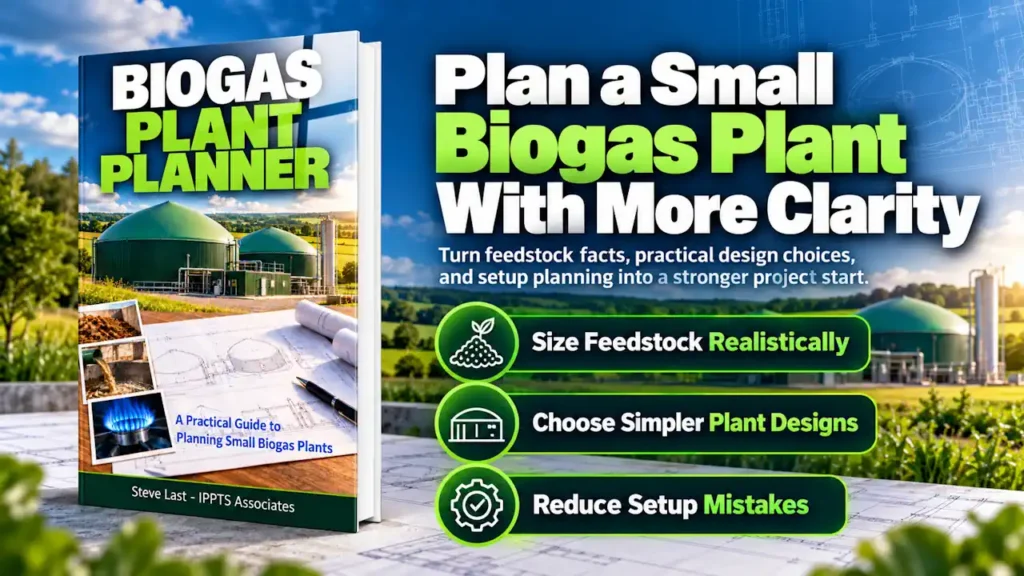
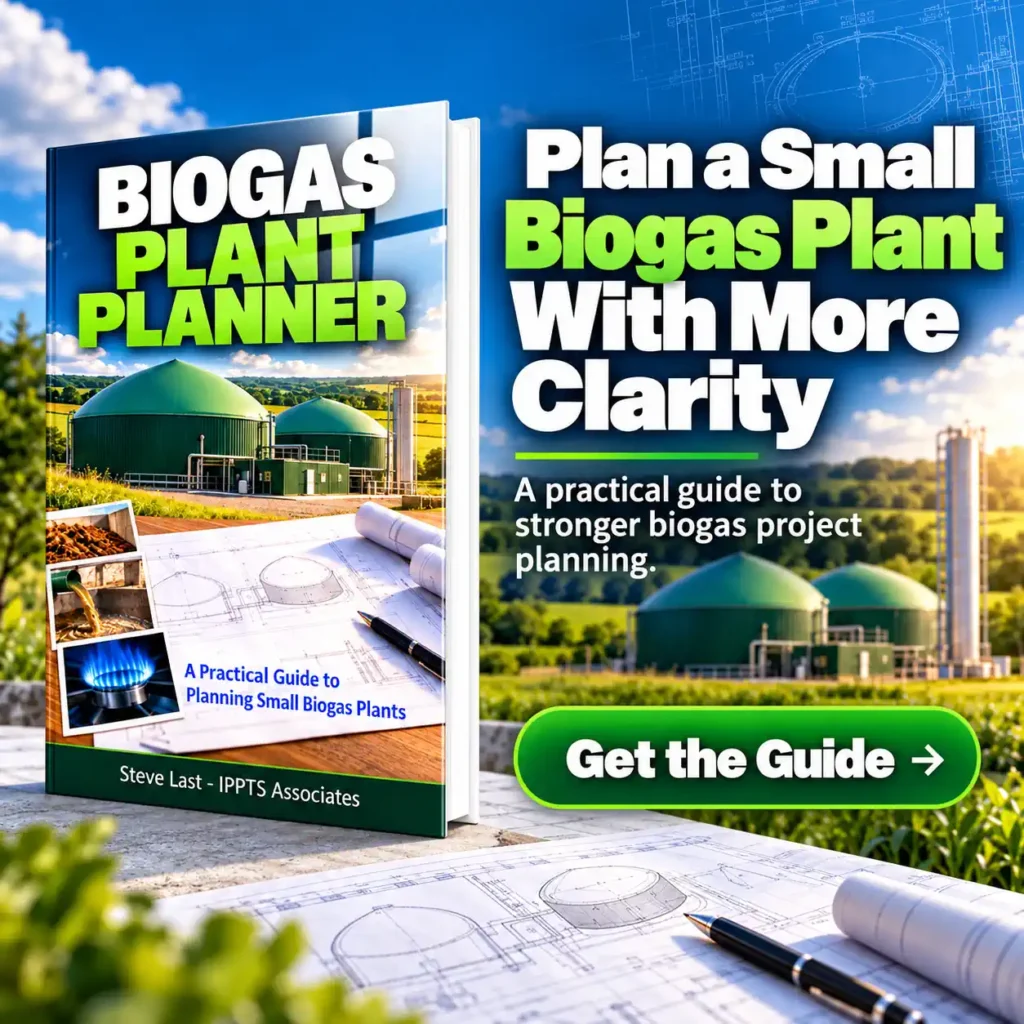
That is the problem BIOGAS PLANT PLANNER by Steve Last of IPPTS Associates is built to solve. Its promise is precise: how to plan a small biogas plant without getting lost in confusing designs, equipment choices and setup decisions. This review looks at what the Biogas Plant Planner covers, how it approaches small biogas plant planning, who it suits and where its limits lie.
What Is the Biogas Plant Planner?
The Biogas Plant Planner is a focused digital planning guide for small biogas projects. It is not a broad encyclopedia of anaerobic digestion. It stays on one job, helping you move from a rough idea to a coherent, step-by-step plan, through three connected outcomes:
- Work out the feedstock, digester size and gas-production potential needed for a realistic small biogas plant.
- Choose a practical digester configuration, gas-storage arrangement and essential equipment without overcomplicating the system.
- Turn the design into a clear plant setup plan that reduces avoidable mistakes before construction begins.
These three outcomes form a progression. The first creates the foundation, the second turns it into a workable concept, and the third turns that concept into a more buildable biogas plant blueprint.
Check the Current PriceHow to Plan a Small Biogas Plant: The Feedstock-First Approach
The most distinctive thing about the Biogas Plant Planner is its planning logic. It does not start with the digester, a supplier package or a piece of equipment. It starts with the feedstock and works outward.
Much weak early planning begins with the question, “What size digester should I build?” The guide explains why that question is premature. Before you can sensibly choose a digester, you need a realistic basis for what the plant will receive, process and produce. That means understanding the material available, its likely gas potential, its handling characteristics and how it fits into the wider system.
The guide frames the whole plant as a connected chain:
Feedstock → Digestion → Gas → Storage → Use → Digestate
This helps you stop making isolated equipment decisions and start thinking in systems, which is the real starting point for planning a small biogas plant.
What the Guide Covers
Step 1: Feedstock realism and preliminary sizing
General statements such as “we have plenty of manure” or “food waste is available” are not yet a planning basis. The guide walks you toward a more disciplined approach, including:
- the difference between produced feedstock and collectable feedstock
- daily and seasonal availability
- the danger of relying on wet tonnage alone
- treating gas-yield estimates as ranges rather than precise promises
- distinguishing total biogas from methane
- sizing the digester using both hydraulic retention and organic loading, rather than one simplified calculation
Step 2: Process choice and equipment
Next, the guide shows how to match the design to the physical behaviour of the feedstock rather than forcing the feedstock into an unsuitable process. It covers pumpable versus thick or stackable feed, essential equipment versus unnecessary complexity, the role of mixing and heating, gas storage as a process component, matching gas treatment to end use, and digestate handling.
Step 3: From concept to pre-construction plan
The final section turns the concept into a clearer setup plan. It covers freezing a design basis, checking site layout and levels, thinking through interfaces, resolving high-consequence unknowns, using pre-construction review logic, and understanding commissioning as more than simply finishing construction.
Why It Works as a Biogas Plant Blueprint for Planning
To be clear, this is a planning blueprint, not a set of engineering drawings. As a planning framework, though, it is practical without being shallow. Five ideas stand out.
1. Collectable versus theoretical feedstock
This is one of the most valuable concepts in the guide. It corrects the common error of assuming that everything theoretically produced on a site is available to the plant. Collection patterns, seasonality, bedding, contamination and dilution all matter, and the guide gives you a more grounded starting point.
2. Yield ranges instead of false precision
Rather than treating gas output as one exact number, the guide encourages conservative, central and optimistic cases. That is a much stronger planning habit than trusting a single neat-looking figure.
3. Hydraulic reality versus biological reality
Early biogas discussions often blur these two. The guide explains why a digester has to make sense both hydraulically and biologically, which can prevent flawed sizing assumptions.
4. The minimum machinery mindset
Complexity is not automatically better design. Every pump, mixer or powered component carries long-term consequences for energy use, maintenance, access and failure points. The guide’s message is not that equipment is bad, but that each item should have a defined job worth the burden it creates.
5. Moving from concept to setup planning
Many resources stop at concept-level discussion. This one goes on to layout logic, access, levels, pre-construction review, interface checking and commissioning stages, which gives it more real-world usefulness.
Key Takeaways for Planning a Small Biogas Plant
- Plan from the feedstock outward. This one principle improves almost every downstream decision.
- Storage and gas use are not side issues. Producing gas and using gas are different operational realities, and storage exists because they do not always happen on the same schedule.
- Layout can create or remove complexity. What looks like an equipment problem later may really be a planning problem earlier. Levels, gravity, access and maintenance all matter.
- Construction readiness is not biological readiness. A plant can be physically complete and still not be ready for stable operation.
- A good outcome is not always “build now.” Sometimes the most useful result is identifying what still needs to be verified before the project goes ahead.
Who Is the Biogas Plant Planner Best For?
It suits readers who want to shape a small biogas concept into something coherent and grounded, including people who are:
- exploring a farm-scale or rural biogas idea
- assessing food waste or other organic feedstocks and trying to understand early-stage feasibility
- comparing design options without getting lost in supplier-led thinking
- wanting better questions to ask before detailed design or procurement
- looking for a structured planning sequence instead of scattered technical fragments
It is aimed at people who want to think clearly about the planning process itself, not at those after generic motivation or a general introduction to biogas.
What to Expect
Expect a focused, practical digital guide rather than a technical manual covering every aspect of anaerobic digestion. The tone is clear, structured and reader-facing. It explains concepts in plain language while respecting the real complexity of the topic, and it uses frameworks, distinctions, checklists, decision logic and planning sequences throughout. It is easy to follow without reducing the subject to empty “just do this” advice.
It is also realistic about scope. It does not replace site-specific engineering, regulatory advice or detailed design. It helps you reach a far better planning position before those steps.
Limitations
The main limitation is that the Biogas Plant Planner is a focused planning guide, not a comprehensive reference. If you need deep specialist treatment of advanced topics, full design calculations or detailed regulatory interpretation for every jurisdiction, you will need additional resources. That is a reflection of disciplined scope rather than a flaw.
Judged against its purpose, helping you plan a small biogas plant more clearly and avoid weak assumptions and avoidable setup mistakes, it is well aligned.
Final Verdict: Is the Biogas Plant Planner Worth It?
The Biogas Plant Planner addresses a real bottleneck: the gap between “I want to build or explore a small biogas plant” and “I have a concept I trust enough to move forward.” Its value lies in structure, clarity and practical reasoning. It helps you think better, not just know more, and it shows why confusion happens, what to do differently, and how to move from rough idea to stronger concept in three logical steps.
If you want a practical guide on how to plan a small biogas plant without getting lost in confusing designs, equipment choices and setup decisions, the BIOGAS PLANT PLANNER by Steve Last, IPPTS Associates is a strong, focused resource. Use it as your planning companion for defining feedstock, estimating scale, comparing designs, thinking through storage and equipment, and building a clearer, better-grounded biogas plant blueprint before construction begins.
Frequently Asked Questions About the Biogas Plant Planner
What is the Biogas Plant Planner?
The Biogas Plant Planner is a focused digital guide by Steve Last of IPPTS Associates. It helps you plan a small biogas plant by working out feedstock, digester size and gas-production potential, choosing a practical design and essential equipment, and turning the concept into a step-by-step setup plan before construction begins.
How do you plan a small biogas plant?
Start with the feedstock and work outward. First establish how much material is realistically collectable, then estimate gas yield as a range, then size the digester using both hydraulic retention and organic loading. Only after that should you choose the process design, gas storage and equipment, and finally freeze a design basis and check layout, levels and interfaces before construction.
Why start with feedstock rather than the digester?
Asking “What size digester should I build?” too early leads to weak assumptions. Until you know what the plant will actually receive, process and produce, any digester size is a guess. Planning from the feedstock outward improves almost every later decision.
What is the difference between collectable and theoretical feedstock?
Theoretical feedstock is everything produced on a site. Collectable feedstock is what the plant can actually receive, once collection patterns, seasonality, bedding, contamination and dilution are taken into account. Planning on the collectable figure gives a far more realistic starting point.
Is the Biogas Plant Planner a biogas plant blueprint?
It is a planning blueprint rather than a set of engineering drawings. It gives you a structured sequence for defining your concept, choosing a design and preparing for construction, but it does not replace site-specific engineering, regulatory advice or detailed design.
Who is the Biogas Plant Planner for?
It suits people exploring a farm-scale or rural biogas idea, those assessing food waste or other organic feedstocks at an early stage, and anyone who wants to compare design options without relying on supplier-led thinking.
Does the guide cover gas storage and digestate?
Yes. It treats gas storage as a process component, explains why gas production and gas use do not always happen on the same schedule, and gives digestate handling equal importance in the plant system.
Does the guide cover commissioning?
Yes. It explains that construction readiness and biological readiness are not the same thing, so a physically complete plant may still not be ready for stable operation.
Will the Biogas Plant Planner replace professional engineering advice?
No. It is designed to get you to a much stronger planning position before detailed design, procurement and regulatory steps, not to replace them.
Check the Current Price