Feedstocks and acceptance
Evaluate composition, contamination, pumpability, ammonia risk, variability and security of supply—not gas yield alone.
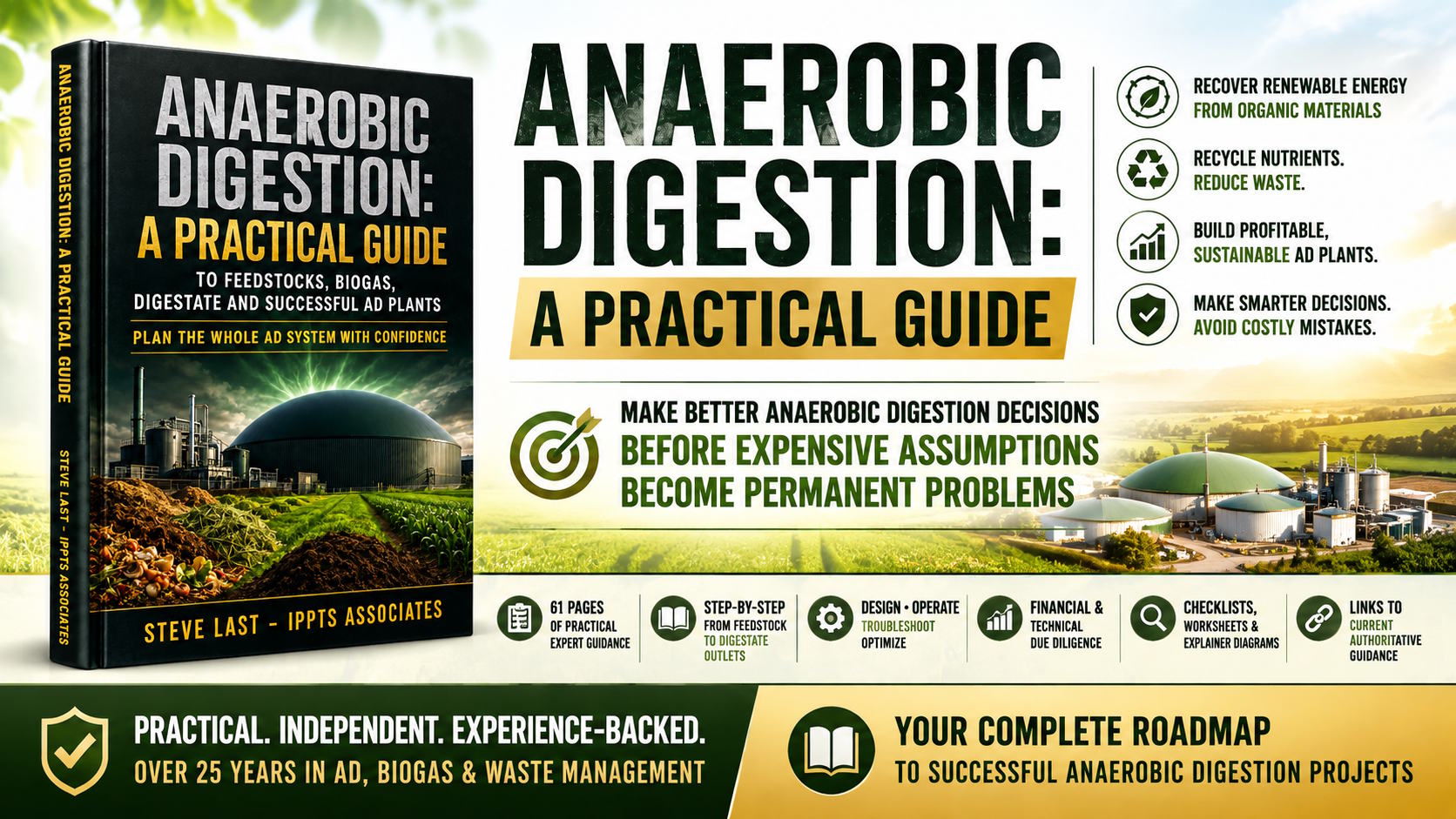
Anaerobic Digestion: A Practical Guide to Feedstocks, Biogas, Digestate and Successful AD Plants explains how the biology, equipment, inputs and outputs must work together for a viable AD project.
61-page illustrated PDF · approximately 20,000 words · immediate delivery through Gumroad
Anaerobic digestion projects bring together biology, waste handling, mechanical equipment, energy production, regulation and nutrient management. A weakness in any one part can affect everything downstream.
An attractive gate fee can be wiped out by contamination or inhibition. High theoretical gas yield means little if the material cannot be handled reliably. Valuable digestate nutrients can become a liability when there is no secure, lawful outlet.
This guide helps you examine those connections before accepting assumptions, selecting equipment or committing money.
“Its success depends on matching the feedstock, process design, gas use and digestate outlet very specifically to the site and the available organic waste supply.”
The guide is structured to help you see how each decision influences plant reliability, energy recovery and digestate management.
Evaluate composition, contamination, pumpability, ammonia risk, variability and security of supply—not gas yield alone.
Understand the linked stages of digestion and why stable feeding, temperature and loading matter to the microbial community.
Compare important reactor distinctions and relate them to solids content, feed characteristics, retention and treatment objectives.
Recognise why poor mixing, floating crusts, viscosity and unsuitable handling equipment can undermine otherwise sound biology.
Follow raw biogas through cleaning and use, including CHP, upgrading, methane control and the role of biogenic carbon dioxide.
Treat digestate quality, storage, nutrients, contamination and end use as fundamental project requirements—not afterthoughts.
This is more than a continuous block of text. Diagrams, tables and checklists make the important relationships easier to review and discuss.
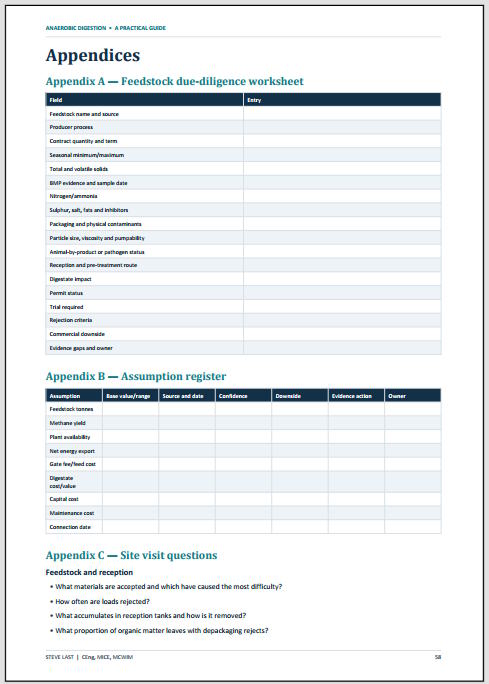
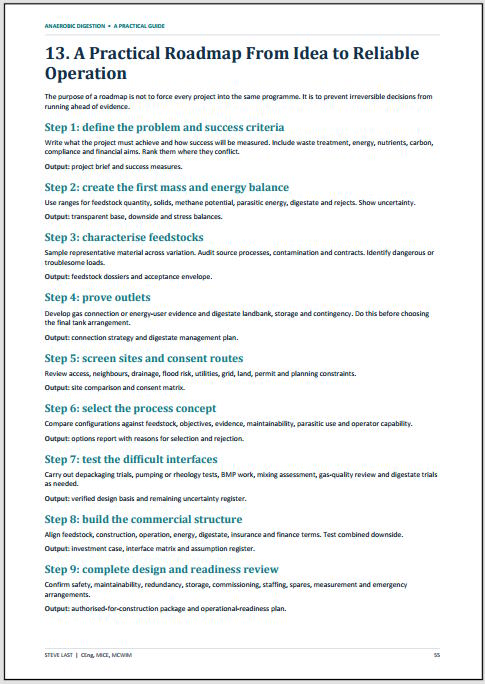
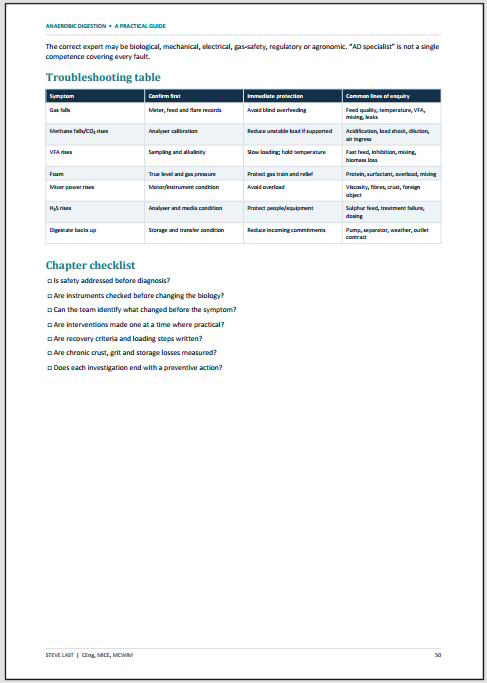
The guide will help you recognise where a proposal needs better evidence, closer investigation or specialist advice.
It provides a clear, practical framework for understanding and evaluating AD projects. It is not a substitute for feedstock testing, site-specific engineering, regulatory advice, process guarantees or a detailed feasibility study.
Its purpose is to help you approach those specialist stages better informed and less likely to overlook a critical dependency.
Use the guide while learning about the industry, reviewing an opportunity, preparing questions for suppliers or checking whether a proposal has addressed the essentials.
Clickable contents and source links make it easy to move between sections and continue your research.
Yes. It explains the essential biology, plant components, feedstocks and outputs in accessible language. More experienced readers can use the tables, cautions and checklists as a practical reference.
No. The scientific and engineering principles apply internationally. The guide uses British English and includes some UK context, but readers elsewhere can apply its decision-making framework while checking their own laws and standards.
No. It will help you understand plant selection and recognise important design dependencies, but it does not replace site-specific engineering, laboratory tests, safety assessments, permits or supplier guarantees.
You will receive the finished 61-page guide as a PDF suitable for reading on a computer or tablet and for personal reference printing.
Payment and delivery are handled securely by Gumroad. After completing checkout, you will receive access to the downloadable PDF.
No publication can guarantee that. The guide helps you test assumptions and recognise the evidence a credible assessment needs. A real project still requires representative feedstock data, site investigation, commercial checks, regulatory review and competent professional advice.
Get the practical framework for assessing feedstocks, plant selection, biogas, digestate and the dependencies that determine whether an anaerobic digestion project works in practice.
£27
Get Instant Access
One-time payment · secure Gumroad checkout · immediate PDF delivery